Cristina Sernadas - Böcker
Visar alla böcker från författaren Cristina Sernadas. Handla med fri frakt och snabb leverans.
7 produkter
7 produkter
1 578 kr
Skickas inom 10-15 vardagar
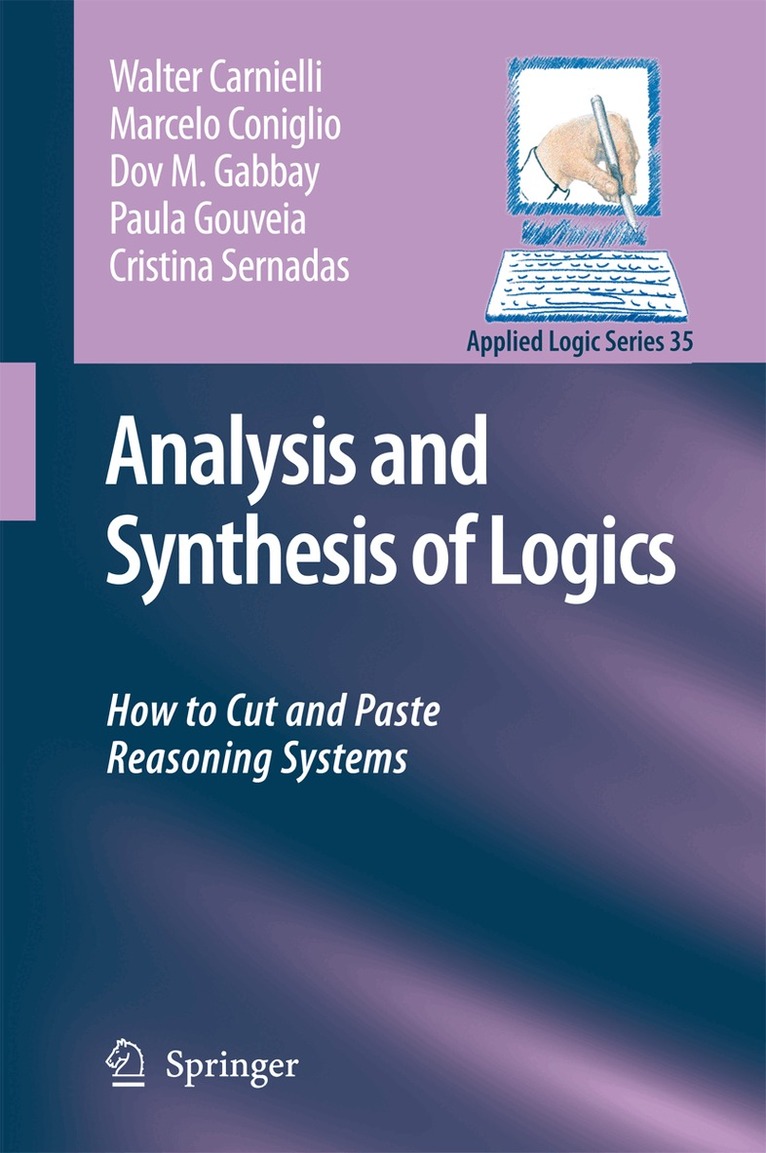
Starting with simple examples showing the relevance of cutting and pasting logics, the monograph develops a mathematical theory of combining and decomposing logics, ranging from propositional and first-order based logics to higher-order based logics as well as to non-truth functional logics. The theory covers mechanisms for combining semantic structures and deductive systems either of the same or different nature (for instance, two Hilbert calculi or a Hilbert calculus and a tableau calculus). The important issue of preservation of properties is extensively addressed. For instance, sufficient conditions are provided for a combined logic to be sound and complete when the original component logics are known to be sound and complete.The book brings the reader to the front line of current research in the field by showing both recent achievements and directions of future investigations (in particular, multiple open problems). It also provides examples of potential applications in emergent fields like security protocols, quantum computing, networks and argumentation theory, besides discussing more classical applications like software specification, knowledge representation, computational linguistics and modular automated reasoning.This monograph will be of interest to researchers and graduate students in mathematical logic, theory of computation and philosophical logic with no previous knowledge of the subject of combining and decomposing logics, but with a working knowledge of first-order logic. The book will also be relevant for people involved in research projects where logic is used as a tool and the need for working with several logics at the same time is mandatory (for instance, temporal, epistemic and probabilistic logics).
232 kr
Skickas inom 5-8 vardagar
232 kr
Skickas inom 5-8 vardagar
211 kr
Skickas inom 5-8 vardagar
641 kr
Skickas inom 10-15 vardagar
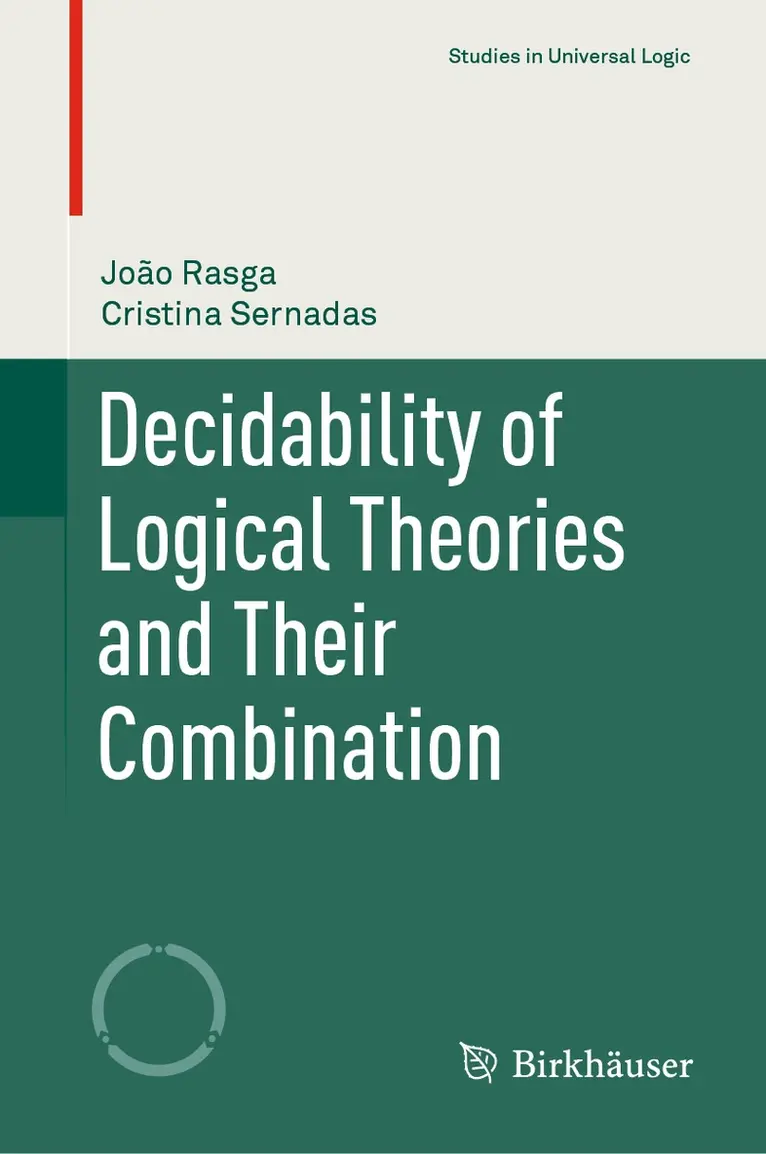
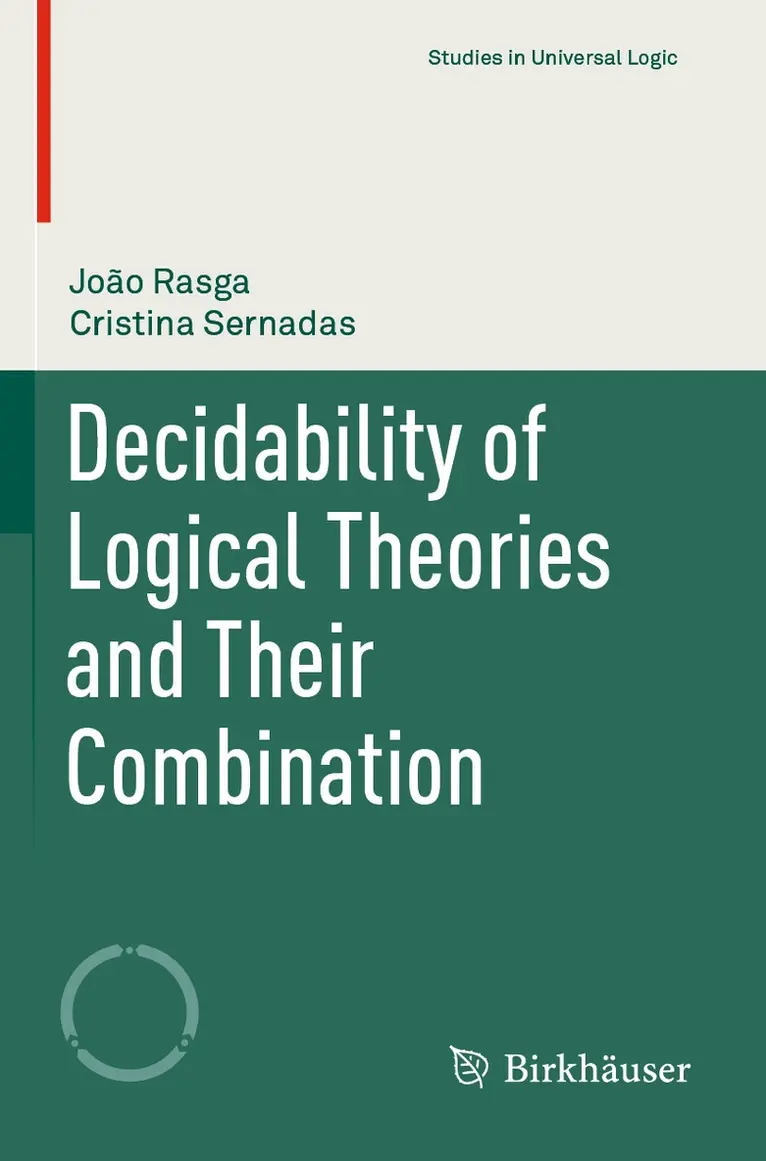
This textbook provides a self-contained introduction to decidability of first-order theories and their combination. The technical material is presented in a systematic and universal way and illustrated with plenty of examples and a range of proposed exercises.After an overview of basic first-order logic concepts, the authors discuss some model-theoretic notions like embeddings, diagrams, and elementary substructures. The text then goes on to explore an applicable way to deduce logical consequences from a given theory and presents sufficient conditions for a theory to be decidable. The chapters that follow focus on quantifier elimination, decidability of the combination of first-order theories and the basics of computability theory. The inclusion of a chapter on Gentzen calculus, cut elimination, and Craig interpolation, as well as a chapter on combination of theories and preservation of decidability, help to set this volume apart from similar books in the field.Decidability of Logical Theories and their Combination is ideal for graduate students of Mathematics and is equally suitable for Computer Science, Philosophy and Physics students who are interested in gaining a deeper understanding of the subject. The book is also directed to researchers that intend to get acquainted with first-order theories and their combination.
641 kr
Skickas inom 10-15 vardagar
This textbook provides a self-contained introduction to decidability of first-order theories and their combination. The technical material is presented in a systematic and universal way and illustrated with plenty of examples and a range of proposed exercises.After an overview of basic first-order logic concepts, the authors discuss some model-theoretic notions like embeddings, diagrams, and elementary substructures. The text then goes on to explore an applicable way to deduce logical consequences from a given theory and presents sufficient conditions for a theory to be decidable. The chapters that follow focus on quantifier elimination, decidability of the combination of first-order theories and the basics of computability theory. The inclusion of a chapter on Gentzen calculus, cut elimination, and Craig interpolation, as well as a chapter on combination of theories and preservation of decidability, help to set this volume apart from similar books in the field.Decidability of Logical Theories and their Combination is ideal for graduate students of Mathematics and is equally suitable for Computer Science, Philosophy and Physics students who are interested in gaining a deeper understanding of the subject. The book is also directed to researchers that intend to get acquainted with first-order theories and their combination.
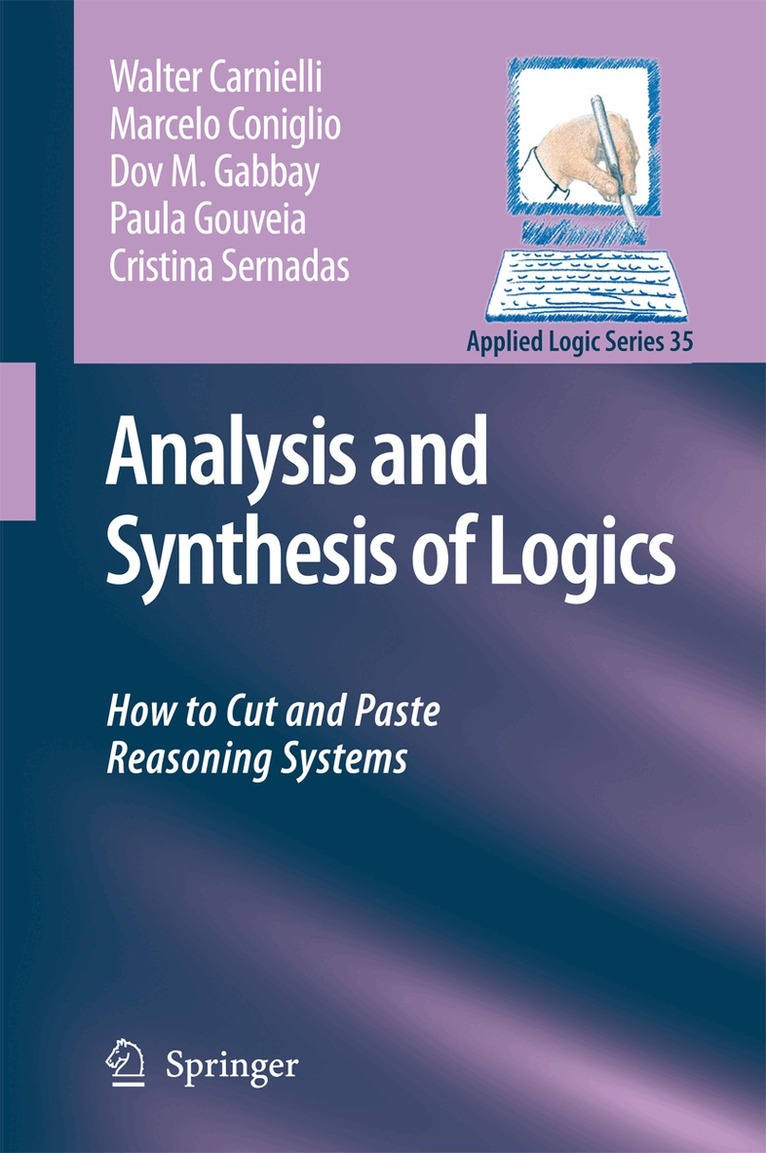
Del 35 - Applied Logic Series
Analysis and Synthesis of Logics
How to Cut and Paste Reasoning Systems
Häftad, Engelska, 2010
1 578 kr
Skickas inom 10-15 vardagar
Starting with simple examples showing the relevance of cutting and pasting logics, the monograph develops a mathematical theory of combining and decomposing logics, ranging from propositional and first-order based logics to higher-order based logics as well as to non-truth functional logics. The theory covers mechanisms for combining semantic structures and deductive systems either of the same or different nature (for instance, two Hilbert calculi or a Hilbert calculus and a tableau calculus). The important issue of preservation of properties is extensively addressed. For instance, sufficient conditions are provided for a combined logic to be sound and complete when the original component logics are known to be sound and complete.The book brings the reader to the front line of current research in the field by showing both recent achievements and directions of future investigations (in particular, multiple open problems). It also provides examples of potential applications in emergent fields like security protocols, quantum computing, networks and argumentation theory, besides discussing more classical applications like software specification, knowledge representation, computational linguistics and modular automated reasoning.This monograph will be of interest to researchers and graduate students in mathematical logic, theory of computation and philosophical logic with no previous knowledge of the subject of combining and decomposing logics, but with a working knowledge of first-order logic. The book will also be relevant for people involved in research projects where logic is used as a tool and the need for working with several logics at the same time is mandatory (for instance, temporal, epistemic and probabilistic logics).