Cyril E. Black – författare
Visar alla böcker från författaren Cyril E. Black. Handla med fri frakt och snabb leverans.
29 produkter
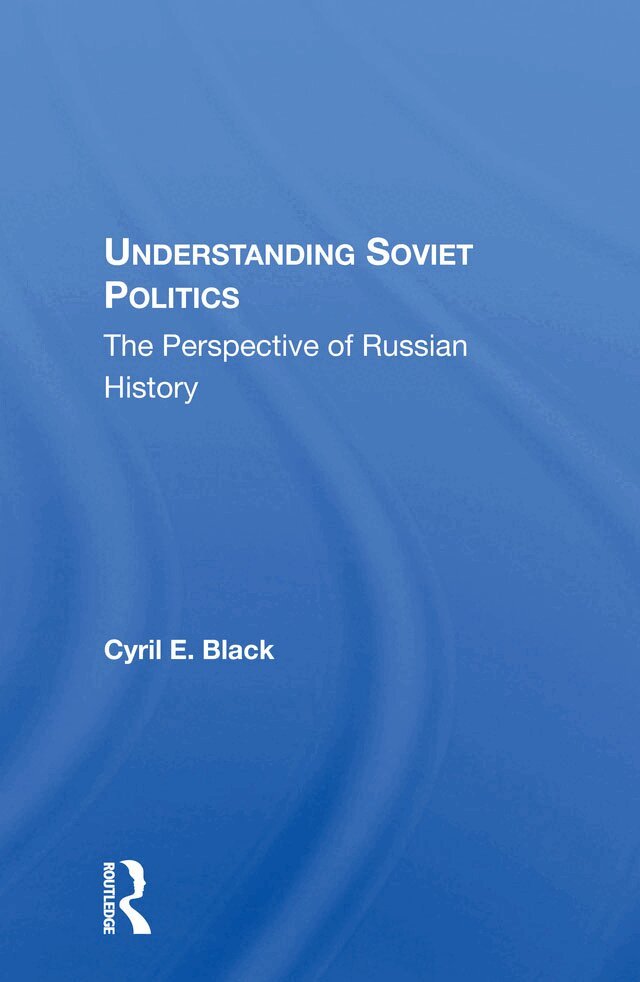
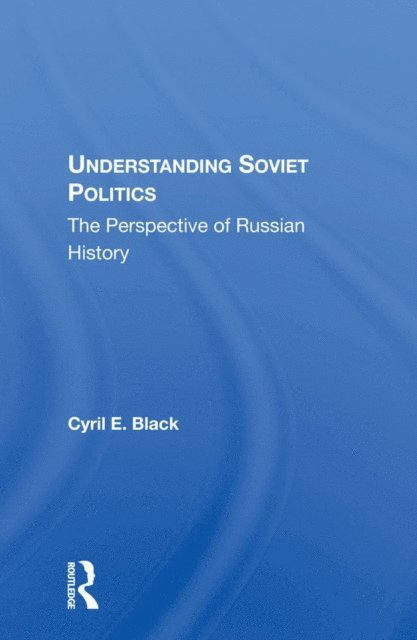
Understanding Soviet Politics
The Perspective Of Russian History
Inbunden, 2024
2190 kr
Lägg i varukorg
To what extent did the Russian revolution of 1917 bring about the changes wanted by the Bolsheviks? Why did many of these changes fail to materialize? How has the Russian heritage adapted to the challenges facing all modernizing societies? What does Russia's past tell us about the present role of …
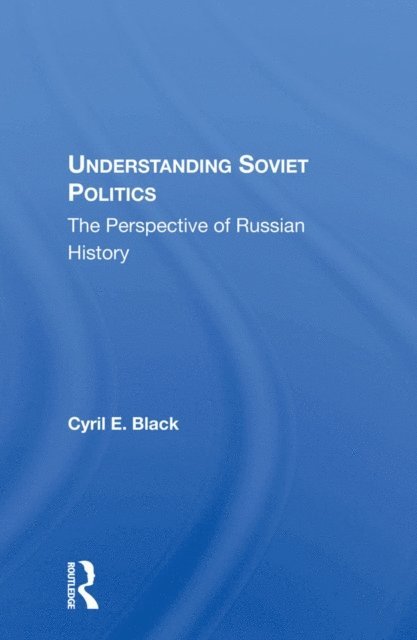
Understanding Soviet Politics
The Perspective Of Russian History
Häftad, 2020
665 kr
Lägg i varukorg
To what extent did the Russian revolution of 1917 bring about the changes wanted by the Bolsheviks? Why did many of these changes fail to materialize? How has the Russian heritage adapted to the challenges facing all modernizing societies? What does Russia's past tell us about the present role of …
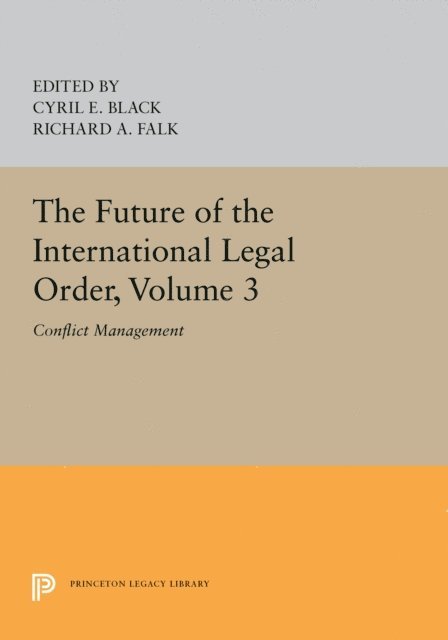
Future of the International Legal Order, Volume 3
Conflict Management
Av Richard A. Falk, Cyril E. Black
E-bok, 2019
1024 kr
Lägg i varukorg
The eleven contributors to this volume come to grips with the hard realities of controlling war in our modern, interrelated world. All of them deal directly with the role of law in the management of conflict. From Cyril E. Black''s introductory chapter, "Conflict Management and World Order," to …
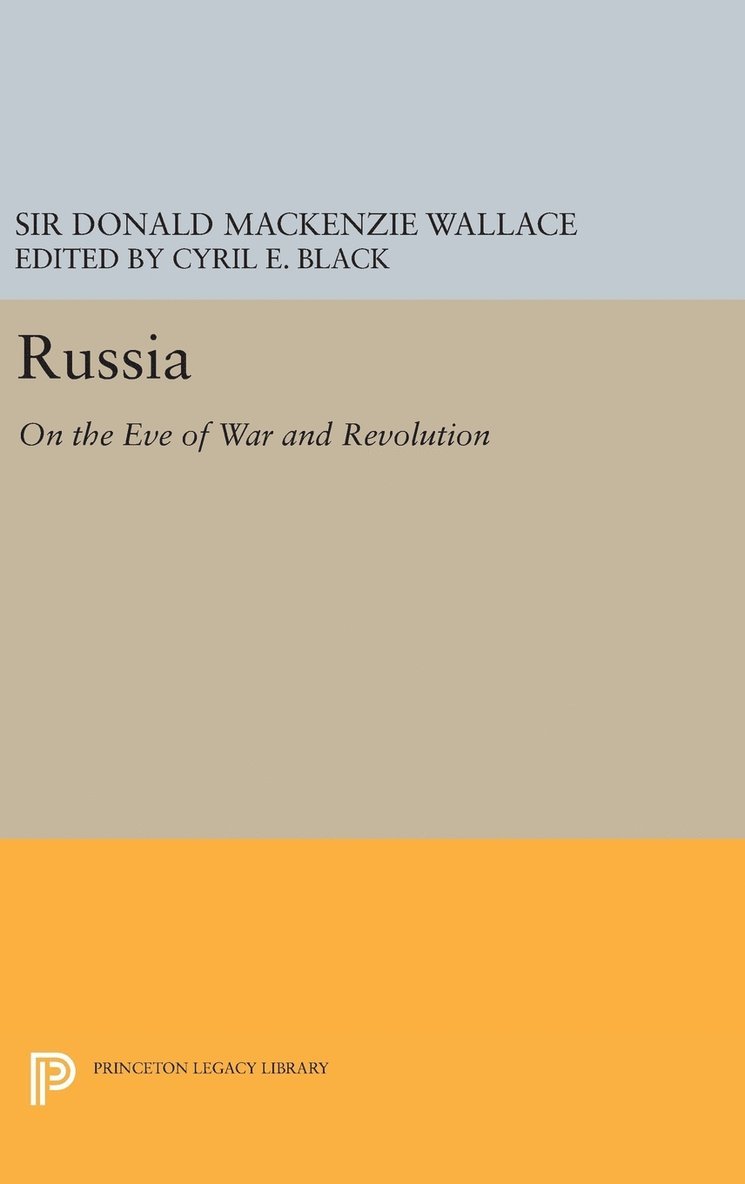
Russia
On the Eve of War and Revolution
Av Sir Donald Mackenzie Wallace, Cyril E. Black
Häftad, 2014
1598 kr
Lägg i varukorg
Future of the International Legal Order, Volume 4
The Structure of the International Environment
Av Cyril E. Black, Richard A. Falk
Häftad, 2015
1618 kr
Lägg i varukorg
The issues of conflict management treated in this volume are relatively recent consequences of the scientific and technological revolution, and are in significant respects unprecedented in man's history: food distribution, population, ocean resources, air and water pollution. Such new global …
Future of the International Legal Order, Volume 3
Conflict Management
Av Cyril E. Black, Richard A. Falk
Häftad, 2019
730 kr
Lägg i varukorg
The eleven contributors to this volume come to grips with the hard realities of controlling war in our modern, interrelated world. All of them deal directly with the role of law in the management of conflict. From Cyril E. Black's introductory chapter, "Conflict Management and World Order," to …
Future of the International Legal Order, Volume 2
Wealth and Resources
Av Cyril E. Black, Richard A. Falk
Häftad, 2015
660 kr
Lägg i varukorg
Wolfgang Friedmann, Burns H. Weston, William T. Burke, and Ivan A. Vlasic explore the new frontiers and wealth and resources that are altering the patterns of the world economy. Since rapid and dramatic technological progress poses problems that can be solved only by international or multinational …
Future of the International Legal Order, Volume 1
Trends and Patterns
Häftad, 2015
1615 kr
Lägg i varukorg
This is the first volume in a large-scale collaborative research project intended to focus the attention of international lawyers and social scientists on the near future of the international legal order. Sponsored by Princeton University with support from the Ford Foundation, the project seeks to …
Neutralization and World Politics
Av Cyril E. Black, Richard A. Falk
Häftad, 2015
698 kr
Lägg i varukorg
Neutralization is a technique for the management of power in international relations: for the restraint and, to a degree, regulation of the exercise of power in areas that become focal points of competitive struggle. In this volume four leading scholars assess the potential uses of neutralization …
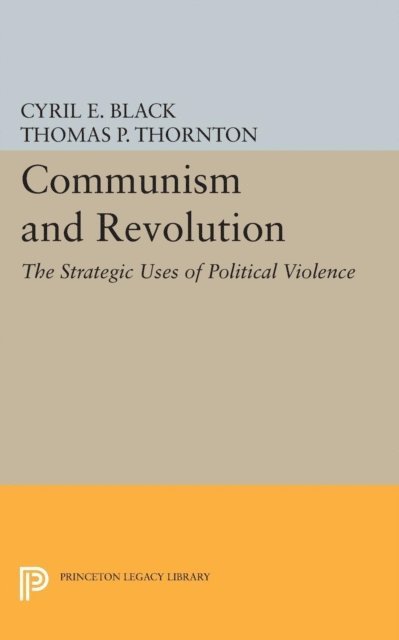
Communism and Revolution
The Strategic Uses of Political Violence
Häftad, 2015
1289 kr
Lägg i varukorg
In a period marked by growing fluidity between the West and the Communist nations, the role of revolution as an instrument of political and social change takes on an intense, possibly dangerous importance. Owing to the unacceptable risks of international war, revolutions in the less developed …
Russia
On the Eve of War and Revolution
Av Sir Donald Mackenzie Wallace, Cyril E. Black
Inbunden, 2016
3787 kr
Lägg i varukorg
Future of the International Legal Order, Volume 4
The Structure of the International Environment
Av Cyril E. Black, Richard A. Falk
Inbunden, 2016
4062 kr
Lägg i varukorg
The issues of conflict management treated in this volume are relatively recent consequences of the scientific and technological revolution, and are in significant respects unprecedented in man's history: food distribution, population, ocean resources, air and water pollution. Such new global …
Future of the International Legal Order, Volume 2
Wealth and Resources
Av Cyril E. Black, Richard A. Falk
Inbunden, 2016
2325 kr
Lägg i varukorg
Wolfgang Friedmann, Burns H. Weston, William T. Burke, and Ivan A. Vlasic explore the new frontiers and wealth and resources that are altering the patterns of the world economy. Since rapid and dramatic technological progress poses problems that can be solved only by international or multinational …
Future of the International Legal Order, Volume 1
Trends and Patterns
Inbunden, 2016
4094 kr
Lägg i varukorg
This is the first volume in a large-scale collaborative research project intended to focus the attention of international lawyers and social scientists on the near future of the international legal order. Sponsored by Princeton University with support from the Ford Foundation, the project seeks to …
Neutralization and World Politics
Av Cyril E. Black, Richard A. Falk
Inbunden, 2016
1613 kr
Lägg i varukorg
Neutralization is a technique for the management of power in international relations: for the restraint and, to a degree, regulation of the exercise of power in areas that become focal points of competitive struggle. In this volume four leading scholars assess the potential uses of neutralization …
Communism and Revolution
The Strategic Uses of Political Violence
Inbunden, 2016
3372 kr
Lägg i varukorg
In a period marked by growing fluidity between the West and the Communist nations, the role of revolution as an instrument of political and social change takes on an intense, possibly dangerous importance. Owing to the unacceptable risks of international war, revolutions in the less developed …
Future of the International Legal Order, Volume 3
Conflict Management
Av Cyril E. Black, Richard A. Falk
Inbunden, 2019
3035 kr
Lägg i varukorg
The eleven contributors to this volume come to grips with the hard realities of controlling war in our modern, interrelated world. All of them deal directly with the role of law in the management of conflict. From Cyril E. Black's introductory chapter, "Conflict Management and World Order," to …
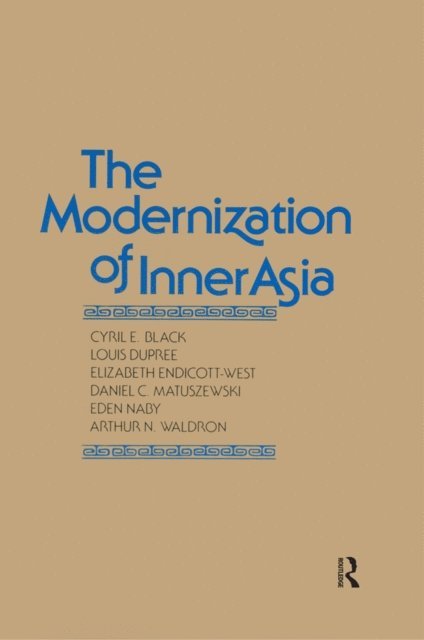
Modernization of Inner Asia
Av Cyril E. Black, Louis Dupree m. fl.
Inbunden, 1991
3055 kr
Lägg i varukorg
Inner Asia - in premodern times the little-known land of nomads and semi-nomads - has moved to the world's front page in the 20th century as the complex struggles for the future of Afghanistan, Soviet Central Asia, Tibet and other territories make clear. But because Inner Asia as a whole is divided …
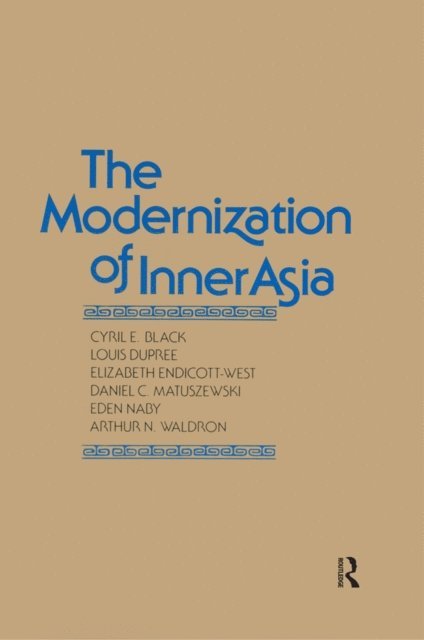
Modernization of Inner Asia
Av Cyril E. Black, Louis Dupree m. fl.
Häftad, 1994
747 kr
Lägg i varukorg
Inner Asia - in premodern times the little-known land of nomads and semi-nomads - has moved to the world's front page in the 20th century as the complex struggles for the future of Afghanistan, Soviet Central Asia, Tibet and other territories make clear. But because Inner Asia as a whole is divided …
Understanding Soviet Politics
The Perspective Of Russian History
E-bok, 2020
768 kr
Lägg i varukorg
To what extent did the Russian revolution of 1917 bring about the changes wanted by the Bolsheviks? Why did many of these changes fail to materialize? How has the Russian heritage adapted to the challenges facing all modernizing societies? What does Russia''s past tell us about the present role of …
Understanding Soviet Politics
The Perspective Of Russian History
E-bok, 2020
785 kr
Lägg i varukorg
To what extent did the Russian revolution of 1917 bring about the changes wanted by the Bolsheviks? Why did many of these changes fail to materialize? How has the Russian heritage adapted to the challenges facing all modernizing societies? What does Russia''s past tell us about the present role of …
Modernization of Inner Asia
Av Arthur N. Waldron, Eden Naby m. fl.
E-bok, 2016
910 kr
Lägg i varukorg
Inner Asia - in premodern times the little-known land of nomads and semi-nomads - has moved to the world''s front page in the 20th century as the complex struggles for the future of Afghanistan, Soviet Central Asia, Tibet and other territories make clear. But because Inner Asia as a whole is …
Modernization of Inner Asia
Av Arthur N. Waldron, Eden Naby m. fl.
E-bok, 2016
883 kr
Lägg i varukorg
Inner Asia - in premodern times the little-known land of nomads and semi-nomads - has moved to the world''s front page in the 20th century as the complex struggles for the future of Afghanistan, Soviet Central Asia, Tibet and other territories make clear. But because Inner Asia as a whole is …
Russia
On the Eve of War and Revolution
Av Sir Donald Mackenzie Wallace, Cyril E. Black
E-bok, 2014
1207 kr
Lägg i varukorg
The result of six years of study and travel in pre-Soviet Russia, this work by a major British journalist provides a vivid description of daily life under the last three Tsars, in the turbulent age following the emancipation of the serfs in 1861.Originally published in 1984.The Princeton Legacy …
Future of the International Legal Order, Volume 2
Wealth and Resources
Av Richard A. Falk, Cyril E. Black
E-bok, 2015
722 kr
Lägg i varukorg
Wolfgang Friedmann, Burns H. Weston, William T. Burke, and Ivan A. Vlasic explore the new frontiers and wealth and resources that are altering the patterns of the world economy.Since rapid and dramatic technological progress poses problems that can be solved only by international or multinational …
Future of the International Legal Order, Volume 4
The Structure of the International Environment
Av Richard A. Falk, Cyril E. Black
E-bok, 2015
1312 kr
Lägg i varukorg
The issues of conflict management treated in this volume are relatively recent consequences of the scientific and technological revolution, and are in significant respects unprecedented in man's history: food distribution, population, ocean resources, air and water pollution. Such new global …
Future of the International Legal Order, Volume 1
Trends and Patterns
E-bok, 2015
1247 kr
Lägg i varukorg
This is the first volume in a large-scale collaborative research project intended to focus the attention of international lawyers and social scientists on the near future of the international legal order. Sponsored by Princeton University with support from the Ford Foundation, the project seeks to …
Neutralization and World Politics
Av Richard A. Falk, Cyril E. Black
E-bok, 2015
503 kr
Lägg i varukorg
Neutralization is a technique for the management of power in international relations: for the restraint and, to a degree, regulation of the exercise of power in areas that become focal points of competitive struggle. In this volume four leading scholars assess the potential uses of neutralization …
Communism and Revolution
The Strategic Uses of Political Violence
E-bok, 2015
999 kr
Lägg i varukorg
In a period marked by growing fluidity between the West and the Communist nations, the role of revolution as an instrument of political and social change takes on an intense, possibly dangerous importance. Owing to the unacceptable risks of international war, revolutions in the less developed …