D Betteridge – författare
Visar alla böcker från författaren D Betteridge. Handla med fri frakt och snabb leverans.
3 produkter
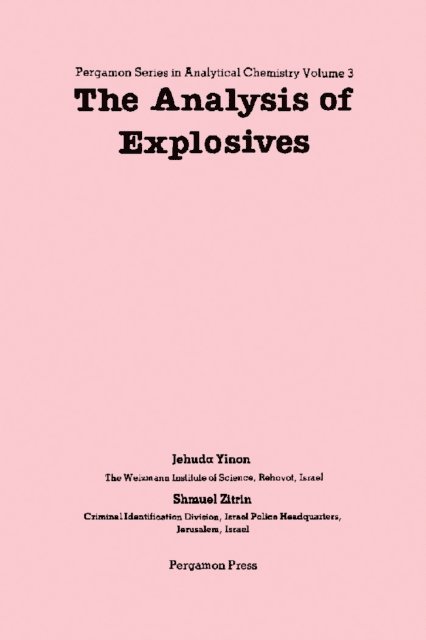
Analysis of Explosives
Pergamon Series in Analytical Chemistry
Av Shmuel Zitrin, Jehuda Yinon m. fl.
E-bok, 2013
789 kr
Lägg i varukorg
The Analysis of Explosives surveys the principles of the various analytical methods, describes how these methods are used for the analysis of explosives, and reviews the major analytical work carried out in this field. Organized into 15 chapters, this book begins with the classification of …
Photoelectron Spectroscopy
Chemical and Analytical Aspects
Av D. Betteridge, A. D. Baker m. fl.
E-bok, 2013
367 kr
Lägg i varukorg
Photoelectron Spectroscopy provides an introduction to the principles of photoelectron spectroscopy, including its applications in structural and analytical chemistry. It deals with both X-ray and UV-photoelectron spectroscopy. This book begins with the basic principles of electron spectroscopy and …
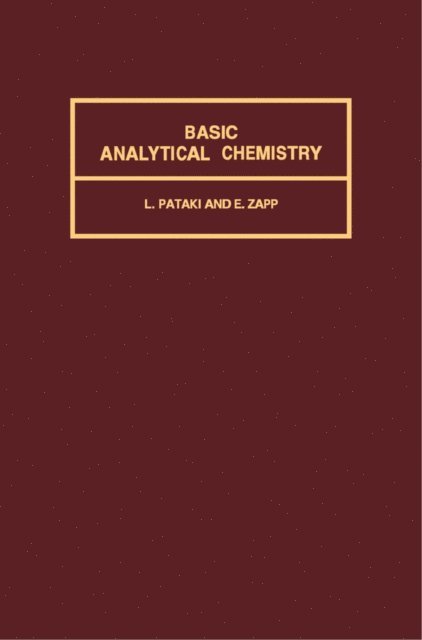
Basic Analytical Chemistry
E-bok, 2013
807 kr
Lägg i varukorg
Pergamon Series in Analytical Chemistry, Volume 2: Basic Analytical Chemistry brings together numerous studies of the vast expansion in the use of classical and instrumental methods of analysis. This book is composed of six chapters. After providing a theoretical background of analytical chemistry, …