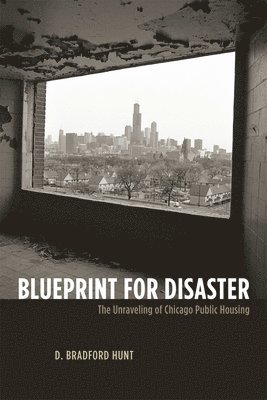
D. Bradford Hunt – författare
280 kr
Skickas inom 5-8 vardagar
522 kr
Läs direkt efter köp
Now considered a dysfunctional mess, Chicago’s public housing projects once had long waiting lists of would-be residents hoping to leave the slums behind. So what went wrong? To answer this complicated question, D. Bradford Hunt traces public housing’s history in Chicago from its New Deal roots through current mayor Richard M. Daley’s Plan for Transformation. In the process, he chronicles the Chicago Housing Authority’s own transformation from the city’s most progressive government agency to its largest slumlord.
Challenging explanations that attribute the projects’ decline primarily to racial discrimination and real estate interests, Hunt argues that well-intentioned but misguided policy decisions—ranging from design choices to maintenance contracts—also paved the road to failure. Moreover, administrators who fully understood the potential drawbacks did not try to halt such deeply flawed projects as Cabrini-Green and the Robert Taylor Homes. These massive high-rise complexes housed unprecedented numbers of children but relatively few adults, engendering disorder that pushed out the working class and, consequently, the rents needed to maintain the buildings. The resulting combination of fiscal crisis, managerial incompetence, and social unrest plunged the CHA into a quagmire from which it is still struggling to emerge.
Blueprint for Disaster, then,is an urgent reminder of the havoc poorly conceived policy can wreak on our most vulnerable citizens.
682 kr
Läs direkt efter köp
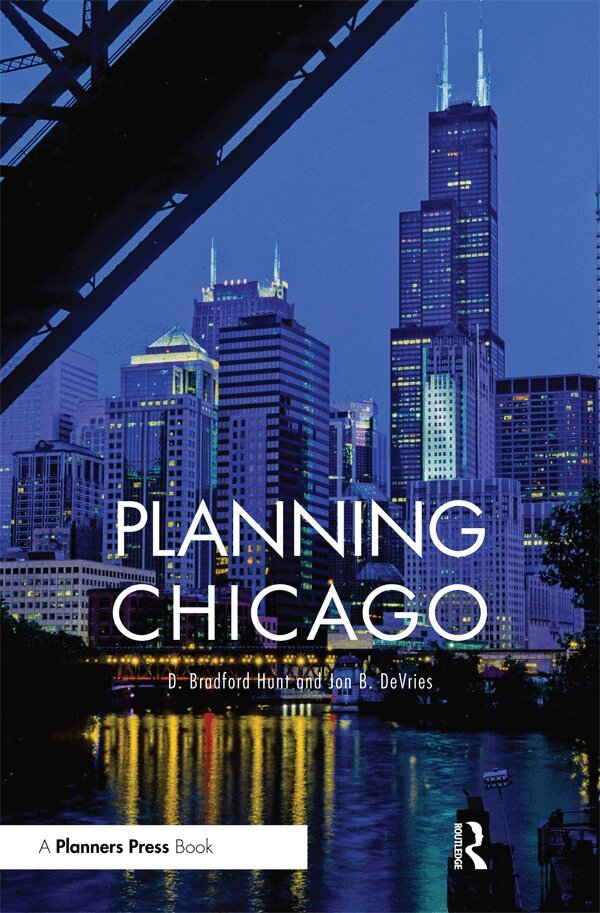
In this volume the authors tell the real stories of the planners, politicians, and everyday people who shaped contemporary Chicago, starting in 1958, early in the Richard J. Daley era. Over the ensuing decades, planning did much to develop the Loop, protect Chicago’s famous lakefront, and encourage industrial growth and neighborhood development in the face of national trends that savaged other cities. But planning also failed some of Chicago’s communities and did too little for others. The Second City is no longer defined by its past and its myths but by the nature of its emerging postindustrial future.
This volume looks beyond Burnham’s giant shadow to see the sprawl and scramble of a city always on the make. This isn’t the way other history books tell the story. But it’s the Chicago way.
727 kr
Läs direkt efter köp
In this volume the authors tell the real stories of the planners, politicians, and everyday people who shaped contemporary Chicago, starting in 1958, early in the Richard J. Daley era. Over the ensuing decades, planning did much to develop the Loop, protect Chicago’s famous lakefront, and encourage industrial growth and neighborhood development in the face of national trends that savaged other cities. But planning also failed some of Chicago’s communities and did too little for others. The Second City is no longer defined by its past and its myths but by the nature of its emerging postindustrial future.
This volume looks beyond Burnham’s giant shadow to see the sprawl and scramble of a city always on the make. This isn’t the way other history books tell the story. But it’s the Chicago way.
2 465 kr
Skickas inom 10-15 vardagar
614 kr
Skickas inom 5-8 vardagar