D. Braha – författare
Visar alla böcker från författaren D. Braha. Handla med fri frakt och snabb leverans.
6 produkter
6 produkter
Del 17 - Applied Optimization
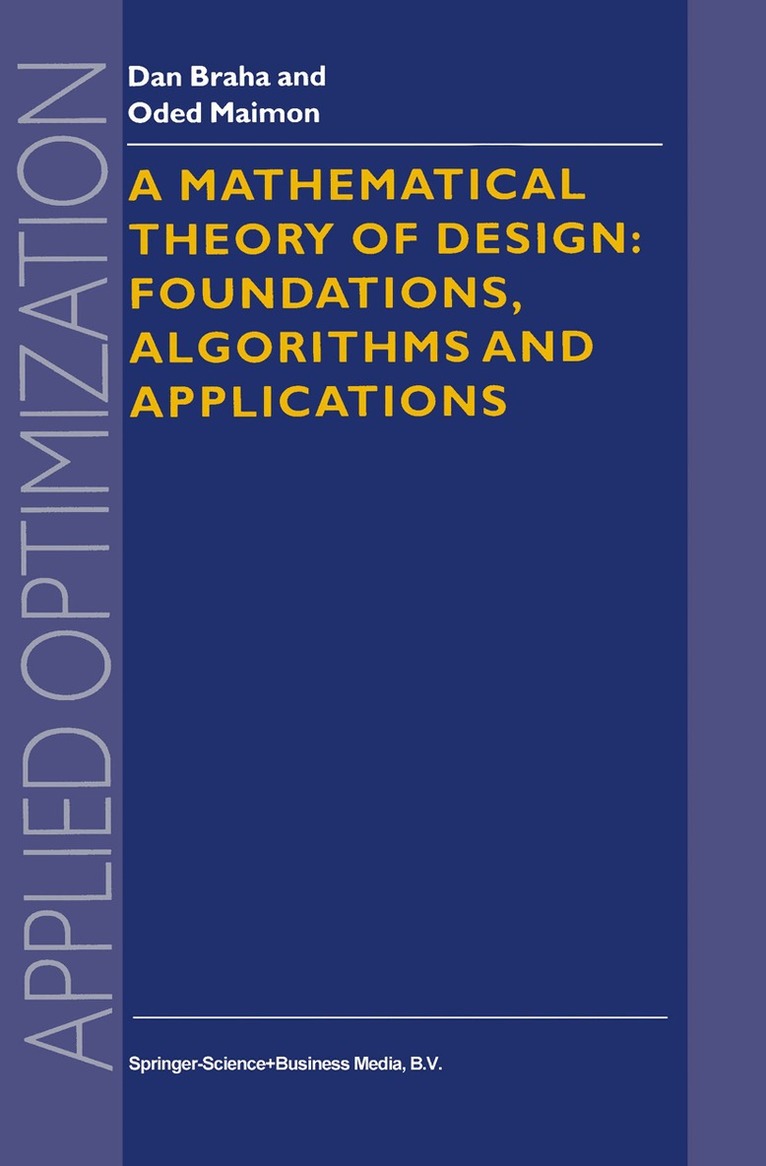
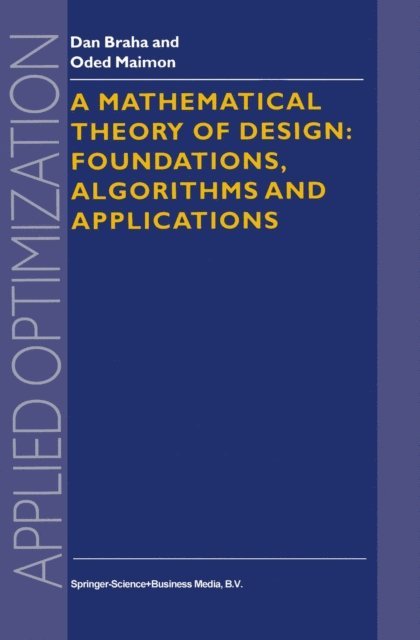
Mathematical Theory of Design: Foundations, Algorithms and Applications
Inbunden, Engelska, 1998
2 152 kr
Skickas inom 10-15 vardagar
This text presents a unified framework for theory and practice, which is proven theoretically and by many cases from various engineering fields. There are four major aspects to the book. Firstly, it develops a formal systems approach to design (including theorems, analysis of principles of design and information theory). Secondly, methods for efficient design are rigorously derived from the theory, based on AI and optimization. Thirdly, the text covers many engineering disciplines under a unified framework, including mechanical, electrical, civil, industrial, manufacturing systems, and apparel industry. It also provides the methodology for developing the next generation computer software for advanced intelligent CAD (Computer Aided Design). Audience: The book is especially appropriate for courses in engineering (mechanical, industrial, electrical, and civil). It should be useful reference for practicing engineers interested in design and optimization, and for applied mathematicians and computer software developers engaged in smart CAD applications.
Del 3 - Massive Computing
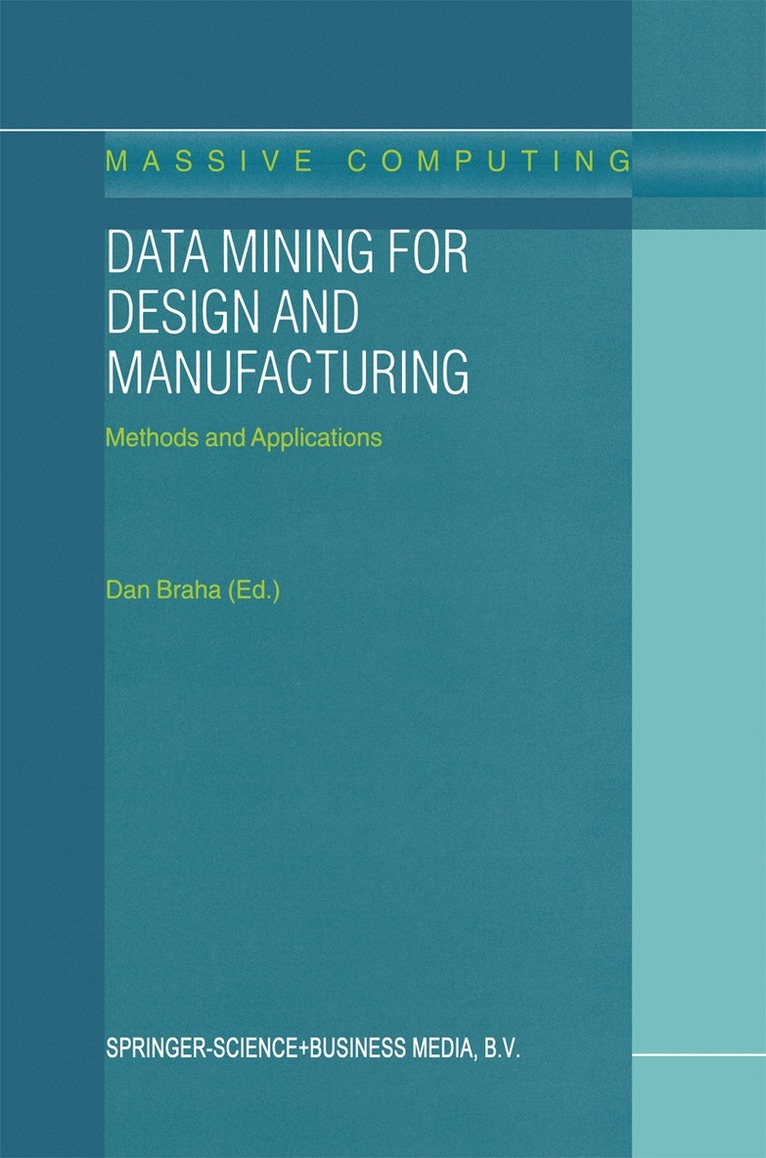
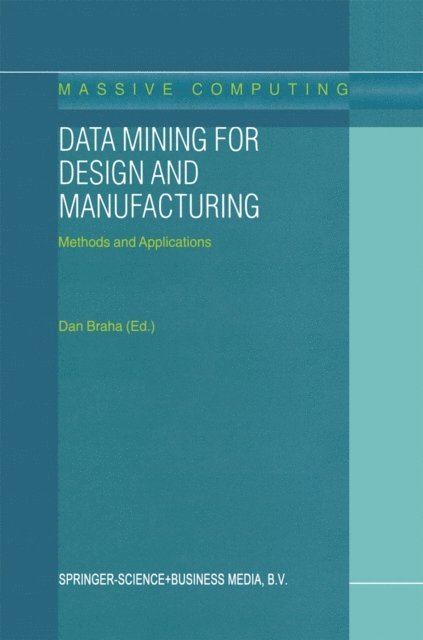
Data Mining for Design and Manufacturing
Methods and Applications
Inbunden, Engelska, 2001
1 664 kr
Skickas inom 10-15 vardagar
Data Mining for Design and Manufacturing: Methods and Applications is the first book that brings together research and applications for data mining within design and manufacturing. The aim of the book is 1) to clarify the integration of data mining in engineering design and manufacturing, 2) to present a wide range of domains to which data mining can be applied, 3) to demonstrate the essential need for symbiotic collaboration of expertise in design and manufacturing, data mining, and information technology, and 4) to illustrate how to overcome central problems in design and manufacturing environments. The book also presents formal tools required to extract valuable information from design and manufacturing data, and facilitates interdisciplinary problem solving for enhanced decision making. Audience: The book is aimed at both academic and practising audiences. It can serve as a reference or textbook for senior or graduate level students in Engineering, Computer, and Management Sciences who are interested in data mining technologies. The book will be useful for practitioners interested in utilizing data mining techniques in design and manufacturing as well as for computer software developers engaged in developing data mining tools.
Del 17 - Applied Optimization
Mathematical Theory of Design: Foundations, Algorithms and Applications
Häftad, Engelska, 2010
2 152 kr
Skickas inom 10-15 vardagar
Formal Design Theory (PDT) is a mathematical theory of design. The main goal of PDT is to develop a domain independent core model of the design process. The book focuses the reader's attention on the process by which ideas originate and are developed into workable products. In developing PDT, we have been striving toward what has been expressed by the distinguished scholar Simon (1969): that "the science of design is possible and some day we will be able to talk in terms of well-established theories and practices. " The book is divided into five interrelated parts. The conceptual approach is presented first (Part I); followed by the theoretical foundations of PDT (Part II), and from which the algorithmic and pragmatic implications are deduced (Part III). Finally, detailed case-studies illustrate the theory and the methods of the design process (Part IV), and additional practical considerations are evaluated (Part V). The generic nature of the concepts, theory and methods are validated by examples from a variety of disciplines. FDT explores issues such as: algebraic representation of design artifacts, idealized design process cycle, and computational analysis and measurement of design process complexity and quality. FDT's axioms convey the assumptions of the theory about the nature of artifacts, and potential modifications of the artifacts in achieving desired goals or functionality. By being able to state these axioms explicitly, it is possible to derive theorems and corollaries, as well as to develop specific analytical and constructive methodologies.
Del 3 - Massive Computing
Data Mining for Design and Manufacturing
Methods and Applications
Häftad, Engelska, 2010
1 664 kr
Skickas inom 10-15 vardagar
Data Mining for Design and Manufacturing: Methods and Applications is the first book that brings together research and applications for data mining within design and manufacturing. The aim of the book is 1) to clarify the integration of data mining in engineering design and manufacturing, 2) to present a wide range of domains to which data mining can be applied, 3) to demonstrate the essential need for symbiotic collaboration of expertise in design and manufacturing, data mining, and information technology, and 4) to illustrate how to overcome central problems in design and manufacturing environments. The book also presents formal tools required to extract valuable information from design and manufacturing data, and facilitates interdisciplinary problem solving for enhanced decision making. Audience: The book is aimed at both academic and practising audiences. It can serve as a reference or textbook for senior or graduate level students in Engineering, Computer, and Management Sciences who are interested in data mining technologies. The book will be useful for practitioners interested in utilizing data mining techniques in design and manufacturing as well as for computer software developers engaged in developing data mining tools.
E-bok
PDF, Engelska, 20132 840 kr
Läs direkt efter köp
Formal Design Theory (PDT) is a mathematical theory of design. The main goal of PDT is to develop a domain independent core model of the design process. The book focuses the reader''s attention on the process by which ideas originate and are developed into workable products. In developing PDT, we have been striving toward what has been expressed by the distinguished scholar Simon (1969): that "the science of design is possible and some day we will be able to talk in terms of well-established theories and practices. " The book is divided into five interrelated parts. The conceptual approach is presented first (Part I); followed by the theoretical foundations of PDT (Part II), and from which the algorithmic and pragmatic implications are deduced (Part III). Finally, detailed case-studies illustrate the theory and the methods of the design process (Part IV), and additional practical considerations are evaluated (Part V). The generic nature of the concepts, theory and methods are validated by examples from a variety of disciplines. FDT explores issues such as: algebraic representation of design artifacts, idealized design process cycle, and computational analysis and measurement of design process complexity and quality. FDT''s axioms convey the assumptions of the theory about the nature of artifacts, and potential modifications of the artifacts in achieving desired goals or functionality. By being able to state these axioms explicitly, it is possible to derive theorems and corollaries, as well as to develop specific analytical and constructive methodologies.
E-bok
PDF, Engelska, 20131 977 kr
Läs direkt efter köp
Data Mining for Design and Manufacturing: Methods and Applications is the first book that brings together research and applications for data mining within design and manufacturing. The aim of the book is 1) to clarify the integration of data mining in engineering design and manufacturing, 2) to present a wide range of domains to which data mining can be applied, 3) to demonstrate the essential need for symbiotic collaboration of expertise in design and manufacturing, data mining, and information technology, and 4) to illustrate how to overcome central problems in design and manufacturing environments. The book also presents formal tools required to extract valuable information from design and manufacturing data, and facilitates interdisciplinary problem solving for enhanced decision making. Audience: The book is aimed at both academic and practising audiences. It can serve as a reference or textbook for senior or graduate level students in Engineering, Computer, and Management Sciences who are interested in data mining technologies. The book will be useful for practitioners interested in utilizing data mining techniques in design and manufacturing as well as for computer software developers engaged in developing data mining tools.