D. Brian. Lewis – författare
Visar alla böcker från författaren D. Brian. Lewis. Handla med fri frakt och snabb leverans.
2 produkter
2 produkter
Häftad, Engelska, 1979
548 kr
Skickas inom 10-15 vardagar
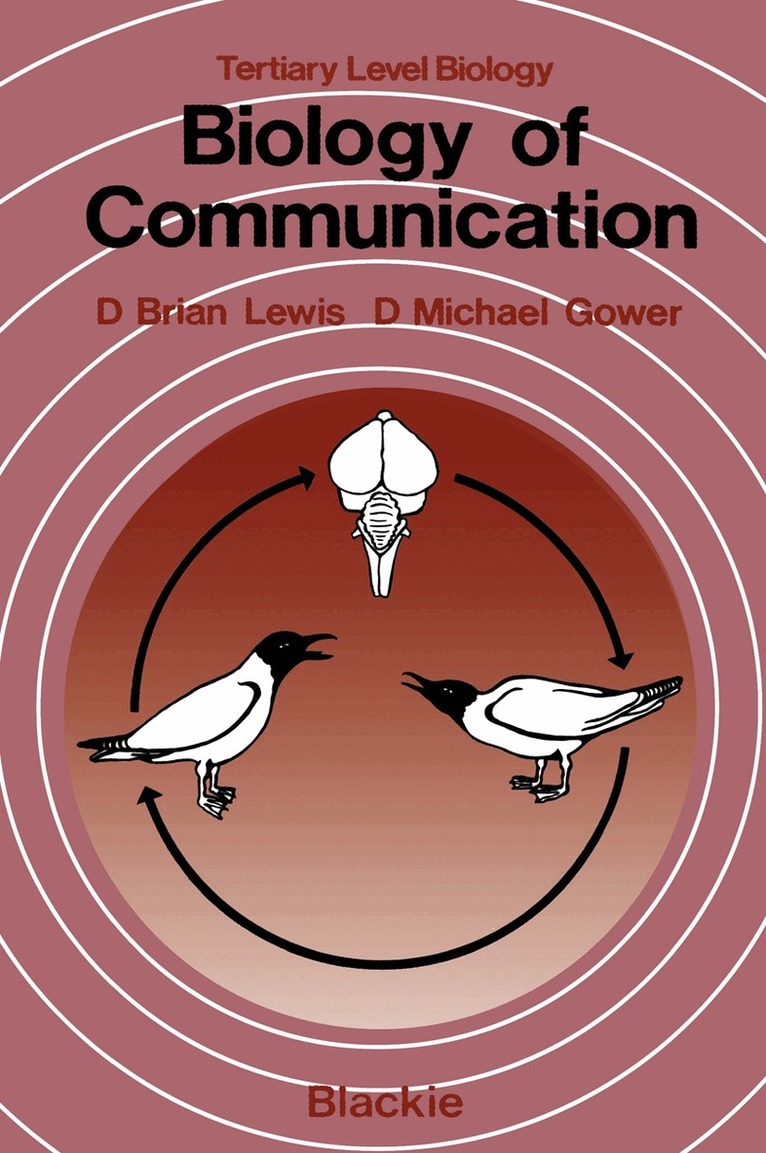
THE STUDY OF ANIMAL COMMUNICATION HAS TRADITIONALLY FORMED AN important part of the study of animal behaviour. In recent years it has tended to become a sub-field in its own right, attracting workers of varied interests; it is also receiving increasing attention at the undergraduate level. Another recent development is an area which has come to be known as neuroethology. The problem for the neuroethologist is that much of behaviour is not reliable or "reflex-like" in its expression. Communicative behaviour, on the other hand, often is, and here neurophysiology can make a significant contribution to our understanding of the underlying mechanisms. Some excellent texts on animal communication are available, as are collected essays on the neural substrates of specific behaviour patterns, but none of these provides a broad synthesis of concepts in neuro physiology and behaviour. The aim of this book is to draw attention to those areas where neurophysiology is relevant to the behaviourist. The book is not an introduction to animal behaviour or neurophysiology; some prior knowledge of these fields is assumed. It is the integration of these fields that we have attempted.
E-bok
PDF, Engelska, 2013677 kr
Läs direkt efter köp
THE STUDY OF ANIMAL COMMUNICATION HAS TRADITIONALLY FORMED AN important part of the study of animal behaviour. In recent years it has tended to become a sub-field in its own right, attracting workers of varied interests; it is also receiving increasing attention at the undergraduate level. Another recent development is an area which has come to be known as neuroethology. The problem for the neuroethologist is that much of behaviour is not reliable or "reflex-like" in its expression. Communicative behaviour, on the other hand, often is, and here neurophysiology can make a significant contribution to our understanding of the underlying mechanisms. Some excellent texts on animal communication are available, as are collected essays on the neural substrates of specific behaviour patterns, but none of these provides a broad synthesis of concepts in neuro physiology and behaviour. The aim of this book is to draw attention to those areas where neurophysiology is relevant to the behaviourist. The book is not an introduction to animal behaviour or neurophysiology; some prior knowledge of these fields is assumed. It is the integration of these fields that we have attempted.