D. Bruce Johnstone - Böcker
Visar alla böcker från författaren D. Bruce Johnstone. Handla med fri frakt och snabb leverans.
11 produkter
11 produkter
680 kr
Tillfälligt slut
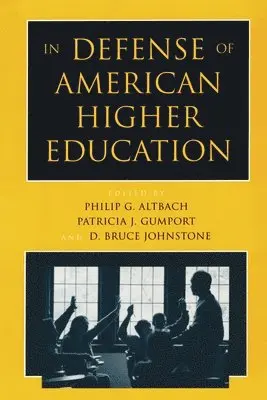
The current era in higher education is characterized by increased need for accountability and fiscal constraint coupled with demands for increased productivity. Higher education is expected to meet the demand of changing student demographics, as well as requests for research and service from government and industry. To preserve the academy's ability to meet these demands, the editors and contributors to this volume argue that, while change is inevitable and desirable, any radical alterations to the practices that have established and upheld the excellence of higher education in the United States must be carefully considered.The editors and contributors cherish the best ideals of higher education: academic freedom, commitment to both inquiry and teaching, and preservation of an independence of mind and spirit in the face of external pressures. At the same time, the authors of these essays also reflect upon the failings of higher education, including problematic historical legacies such as racism, sexism, and anti-semitism. In Defense of American Higher Education is a careful analysis of what we have inherited, undertaken with a critical eye for constructive reform.It will be of interest to anyone concerned about the future of American higher education.
365 kr
Skickas inom 7-10 vardagar
The current era in higher education is characterized by increased need for accountability and fiscal constraint coupled with demands for increased productivity. Higher education is expected to meet the demand of changing student demographics, as well as requests for research and service from government and industry. To preserve the academy's ability to meet these demands, the editors and contributors to this volume argue that, while change is inevitable and desirable, any radical alterations to the practices that have established and upheld the excellence of higher education in the United States must be carefully considered.The editors and contributors cherish the best ideals of higher education: academic freedom, commitment to both inquiry and teaching, and preservation of an independence of mind and spirit in the face of external pressures. At the same time, the authors of these essays also reflect upon the failings of higher education, including problematic historical legacies such as racism, sexism, and anti-semitism. In Defense of American Higher Education is a careful analysis of what we have inherited, undertaken with a critical eye for constructive reform.It will be of interest to anyone concerned about the future of American higher education.
705 kr
Skickas inom 11-20 vardagar
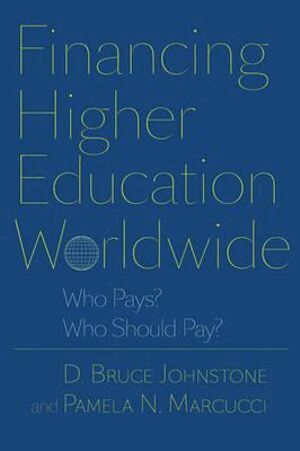
No issue in higher education is as salient, or as controversial, as finance. As demand for higher education around the world grows, so do the costs associated with it, especially as governments shoulder less of the burden. Tuition fees rise and student loan debt grows. Who pays for these surging costs? Who should pay? D. Bruce Johnstone and Pamela N. Marcucci examine the universal phenomenon of cost-sharing in higher education-where financial responsibility shifts from governments and taxpayers to students and families. They find that growing costs for education far outpace public revenue streams that once supported it. Even with financial aid and scholarships defraying some of these costs, students are responsible for a greater share of the cost of higher education. Featuring comprehensive economic and policy data, the authors' international comparative approach shows how economically diverse countries all face similar cost-sharing challenges. So, who should pay for higher education?While cost-sharing is both politically and ideologically debated, Johnstone and Marcucci contend that, for almost all countries, it is imperative for the financial health of colleges and universities, bringing better efficiency, equity, and responsiveness. Financing Higher Education Worldwide combines sophisticated economic explanations with sensitive political and cultural analyses of the financial pressures facing higher education throughout the world.
375 kr
Skickas inom 7-10 vardagar
No issue in higher education is as salient, or as controversial, as finance. As demand for higher education around the world grows, so do the costs associated with it, especially as governments shoulder less of the burden. Tuition fees rise and student loan debt grows. Who pays for these surging costs? Who should pay? D. Bruce Johnstone and Pamela N. Marcucci examine the universal phenomenon of cost-sharing in higher education-where financial responsibility shifts from governments and taxpayers to students and families. They find that growing costs for education far outpace public revenue streams that once supported it. Even with financial aid and scholarships defraying some of these costs, students are responsible for a greater share of the cost of higher education. Featuring comprehensive economic and policy data, the authors' international comparative approach shows how economically diverse countries all face similar cost-sharing challenges. So, who should pay for higher education?While cost-sharing is both politically and ideologically debated, Johnstone and Marcucci contend that, for almost all countries, it is imperative for the financial health of colleges and universities, bringing better efficiency, equity, and responsiveness. Financing Higher Education Worldwide combines sophisticated economic explanations with sensitive political and cultural analyses of the financial pressures facing higher education throughout the world.
1 034 kr
Skickas inom 10-15 vardagar
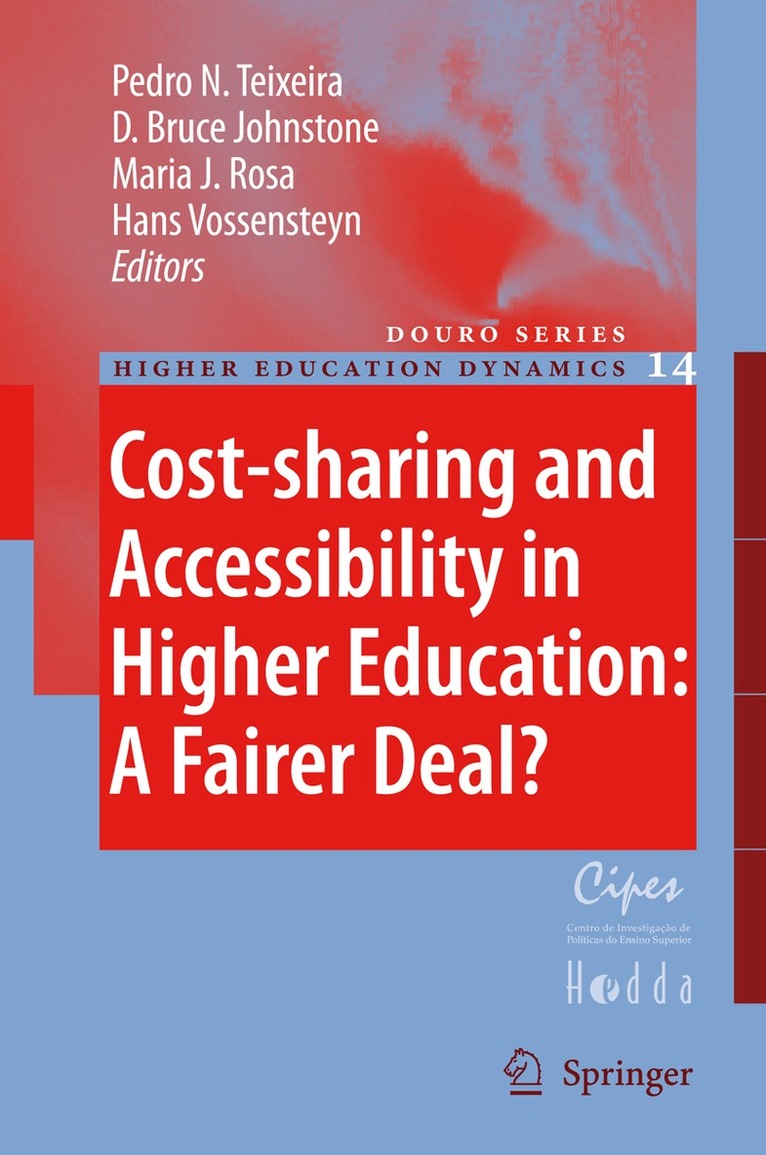
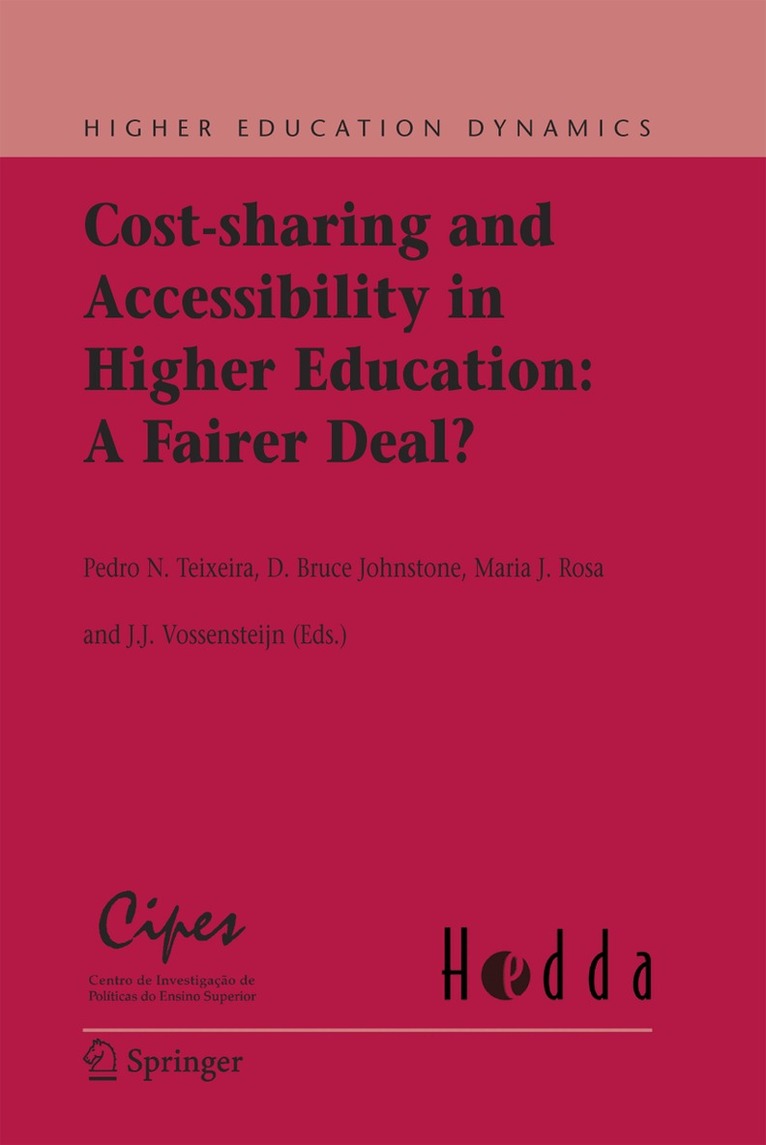
Higher education finances lie at the crossroads in many Western countries. Hence, worldwide, the most common approach to the need for increasing revenue was to use some form or forms of cost sharing, or the shift of some of the higher educational per-student costs from governments and taxpayers to parents and students. This raises several important challenges to higher education systems. First, there is the political and social controversy associated with most forms of cost-sharing, particularly with tuition fees. Secondly, there are important issues in terms of the broad context of social policy, such as the role of families and students and the relationship that the state establishes with each of them. Third, there is the comparison of alternative instruments of cost-sharing and the direct and indirect effects of each of them, notably in terms of educational equality. Overall, underlying cost-sharing debates are fundamental questions about social choice, individual opportunities, and the role of government in society.
1 034 kr
Skickas inom 10-15 vardagar
Higher education finances lie at the crossroads in many Western countries. Hence, worldwide, the most common approach to the need for increasing revenue was to use some form or forms of cost sharing, or the shift of some of the higher educational per-student costs from governments and taxpayers to parents and students. This raises several important challenges to higher education systems. First, there is the political and social controversy associated with most forms of cost-sharing, particularly with tuition fees. Secondly, there are important issues in terms of the broad context of social policy, such as the role of families and students and the relationship that the state establishes with each of them. Third, there is the comparison of alternative instruments of cost-sharing and the direct and indirect effects of each of them, notably in terms of educational equality. Overall, underlying cost-sharing debates are fundamental questions about social choice, individual opportunities, and the role of government in society.
Universities and Colleges as Economic Drivers
Measuring Higher Education's Role in Economic Development
Häftad, Engelska, 2012
391 kr
Tillfälligt slut
A comprehensive examination of the relationship between higher education, state government, and economic development.Local, state, and national economies are facing unprecedented levels of international competition. The current fiscal crisis has hampered the ability of many governments in the developed world to directly facilitate economic growth. At the same time, many governments in the developing world are investing significant new resources into local infrastructure and industry development initiatives. At the heart of the current economic transformation lie our colleges and universities. Through their roles in education, innovation, knowledge transfer, and community engagement, these institutions are working toward spurring economic growth and prosperity.This book brings together leading scholars from a variety of disciplines to assess how universities and colleges exert impact on economic growth. The contributors consider various methodologies, metrics, and data sources that may be used to gauge the performance of diverse higher education institutions in improving economic outcomes in the United States and around the world. Also presented are new typologies of economic development activities and related state policies that are designed to improve understanding of such initiatives and generate new energy and focus for an international community of scholars and practitioners working to formulate new models for how public universities and colleges may lead economic development in their states and communities while still performing their traditional educational functions.Universities and Colleges as Economic Drivers is meant to cultivate greater understanding among elected officials, business representatives, policymakers, and other concerned parties about the central roles universities and colleges play in national, state, and local economies.
Universities and Colleges as Economic Drivers
Measuring Higher Education's Role in Economic Development
Inbunden, Engelska, 2012
1 027 kr
Tillfälligt slut
A comprehensive examination of the relationship between higher education, state government, and economic development.Local, state, and national economies are facing unprecedented levels of international competition. The current fiscal crisis has hampered the ability of many governments in the developed world to directly facilitate economic growth. At the same time, many governments in the developing world are investing significant new resources into local infrastructure and industry development initiatives. At the heart of the current economic transformation lie our colleges and universities. Through their roles in education, innovation, knowledge transfer, and community engagement, these institutions are working toward spurring economic growth and prosperity.This book brings together leading scholars from a variety of disciplines to assess how universities and colleges exert impact on economic growth. The contributors consider various methodologies, metrics, and data sources that may be used to gauge the performance of diverse higher education institutions in improving economic outcomes in the United States and around the world. Also presented are new typologies of economic development activities and related state policies that are designed to improve understanding of such initiatives and generate new energy and focus for an international community of scholars and practitioners working to formulate new models for how public universities and colleges may lead economic development in their states and communities while still performing their traditional educational functions.Universities and Colleges as Economic Drivers is meant to cultivate greater understanding among elected officials, business representatives, policymakers, and other concerned parties about the central roles universities and colleges play in national, state, and local economies.
1 027 kr
Tillfälligt slut
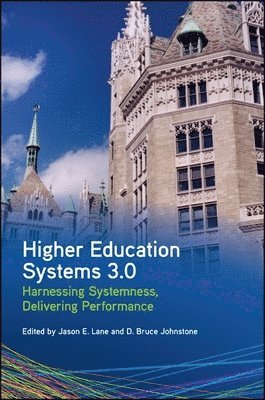
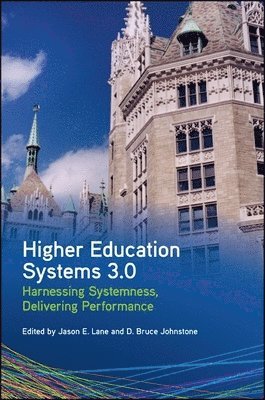
An exploration of multi-campus higher education systems and their role in improving communities and their economies.This thought-provoking volume brings together scholars and system leaders to analyze some of the most pressing and complex issues now facing higher education systems and society. Higher Education Systems 3.0 focuses on the remaking of higher education coordination in an era of increased accountability, greater calls for productivity, and intensifying fiscal austerity. System heads have been identifying ways to harness the collective contributions of their various institutions to benefit the students, communities, and other stakeholders that they serve. The contributors explore the recent dynamics of higher education systems, focusing particularly on how systems are now working to improve their effectiveness in educating students and improving our communities, while also identifying new means for operating more efficiently. This enhanced collaboration, or systemness, is the key aspect of version 3.0.
391 kr
Tillfälligt slut
An exploration of multi-campus higher education systems and their role in improving communities and their economies.This thought-provoking volume brings together scholars and system leaders to analyze some of the most pressing and complex issues now facing higher education systems and society. Higher Education Systems 3.0 focuses on the remaking of higher education coordination in an era of increased accountability, greater calls for productivity, and intensifying fiscal austerity. System heads have been identifying ways to harness the collective contributions of their various institutions to benefit the students, communities, and other stakeholders that they serve. The contributors explore the recent dynamics of higher education systems, focusing particularly on how systems are now working to improve their effectiveness in educating students and improving our communities, while also identifying new means for operating more efficiently. This enhanced collaboration, or systemness, is the key aspect of version 3.0.
1 744 kr
Skickas inom 7-10 vardagar
Higher education functions in a global environment of consumers, employees, competitors, and partners. It has been a force for globalization and a model for adaptation, but nonetheless faces challenges. This volume of essays examines emerging issues and opportunities for advancing education across borders.The demands upon and need for higher education have never been greater at both the individual and societal levels, and the avenues for pursuing the mission of higher education have greatly expanded due to globalization. This volume examines how strategically minded institutions can better fulfill their mission in a global environment while promoting international collaboration and strengthening the world economy. Chapter authors include prominent senior administrators from higher education and leading researchers on higher education and globalization. They provide new and actionable information to enhance decision making and inform strategic planning as well as a contemporary examination of the business of higher education and areas of potential new research.This book is an excellent resource for academic administrators, as well as for researchers and students in business, management, economics, education, and public sector economics.