D. K. Fieldhouse – författare
Visar alla böcker från författaren D. K. Fieldhouse. Handla med fri frakt och snabb leverans.
8 produkter
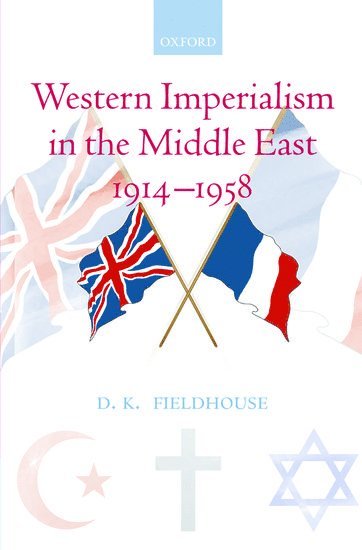
Western Imperialism in the Middle East 1914-1958
E-bok, 2006
789 kr
Lägg i varukorg
The term ''Fertile Crescent'' is commonly used as shorthand for the group of territories extending around the Rivers Tigris and Euphrates. Here it is assumed to consist of Syria, Lebanon, Jordan, Iraq and Palestine. Much has been written on the history of these countries which were taken from the …
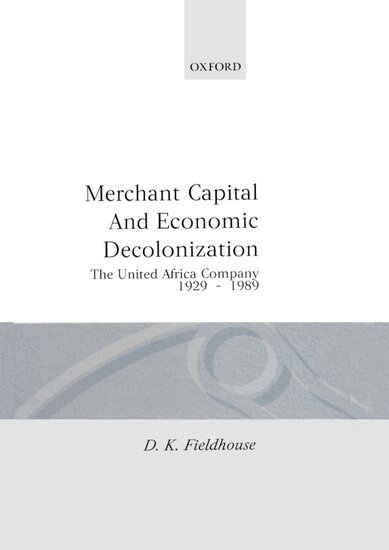
Merchant Capital and Economic Decolonization
The United Africa Company 1929-1987
Inbunden, 1994
3838 kr
Lägg i varukorg
The United Africa Company (UAC), formed in 1929 by the fusion of the Niger Company and the African and Eastern Corporation, was by far the largest single commercial organization in West and Equatorial Africa, and thus central to modern African economic history. This is the first detailed account to …
Western Imperialism in the Middle East 1914-1958
Inbunden, 2006
1696 kr
Lägg i varukorg
The term 'Fertile Crescent' is commonly used as shorthand for the group of territories extending around the Rivers Tigris and Euphrates. Here it is assumed to consist of Syria, Lebanon, Jordan, Iraq and Palestine. Much has been written on the history of these countries which were taken from the …
Western Imperialism in the Middle East 1914-1958
Häftad, 2008
1412 kr
Lägg i varukorg
The term 'Fertile Crescent' is commonly used as shorthand for the group of territories extending around the Rivers Tigris and Euphrates. Here it is assumed to consist of Syria, Lebanon, Jordan, Iraq and Palestine. Much has been written on the history of these countries which were taken from the …
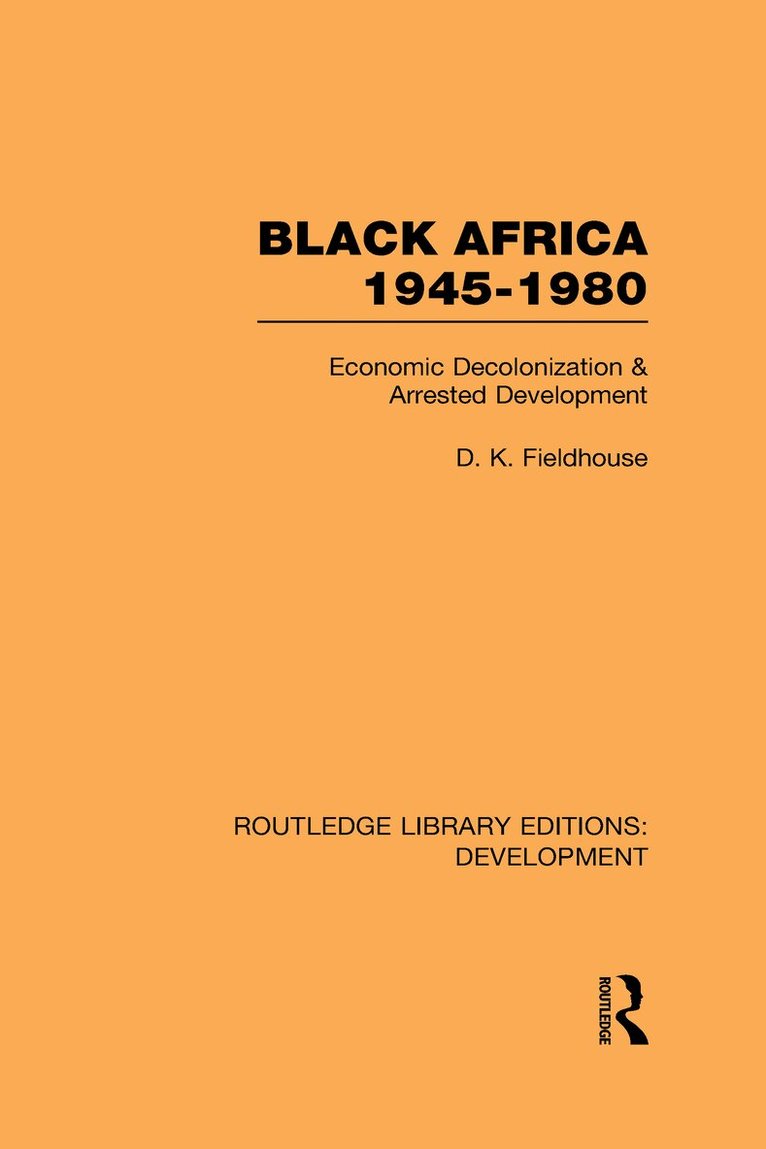
Black Africa 1945-1980
Economic Decolonization and Arrested Development
Inbunden, 2010
2585 kr
Lägg i varukorg
In what ways did economic considerations affect the decision by Britain and France to make their Black African colonies independent? Why were early expectations that independence would lead to rapid and sustained economic development in Africa for the most part disappointed? This title, originally …
Black Africa 1945-1980
Economic Decolonization and Arrested Development
Häftad, 2013
772 kr
Lägg i varukorg
In what ways did economic considerations affect the decision by Britain and France to make their Black African colonies independent? Why were early expectations that independence would lead to rapid and sustained economic development in Africa for the most part disappointed? This title, originally …
Black Africa 1945-1980
Economic Decolonization and Arrested Development
E-bok, 2012
910 kr
Lägg i varukorg
In what ways did economic considerations affect the decision by Britain and France to make their Black African colonies independent? Why were early expectations that independence would lead to rapid and sustained economic development in Africa for the most part disappointed? This title, originally …
Black Africa 1945-1980
Economic Decolonization and Arrested Development
E-bok, 2012
910 kr
Lägg i varukorg
In what ways did economic considerations affect the decision by Britain and France to make their Black African colonies independent? Why were early expectations that independence would lead to rapid and sustained economic development in Africa for the most part disappointed? This title, originally …