D-L Stewart - Böcker
Visar alla böcker från författaren D-L Stewart. Handla med fri frakt och snabb leverans.
5 produkter
5 produkter
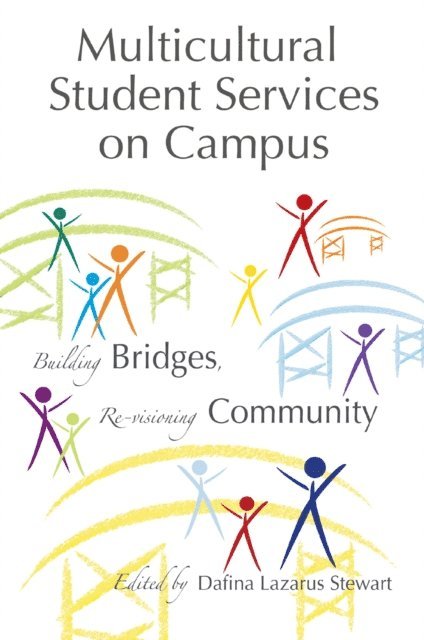
Multicultural Student Services on Campus
Building Bridges, Re-visioning Community
Inbunden, Engelska, 2011
2 151 kr
Skickas inom 10-15 vardagar
Co-published with For new professionals in multicultural student services (MSS), this book constitutes a thorough introduction to the structure, organization, and scope of the services and educational mission of these units. For senior practitioners it offers insights for re-evaluating their strategies, and inspiration to explore new possibilities.The book discusses the history and philosophy of MSS units; describes their operation; asserts the need for integration and coherence across the multiple facets of their work and how their role is influenced by the character and type of their institutions; and considers the challenges and opportunities ahead. The theme Building Bridges, Re-Visioning Community reflects the dual role of MSS. They “build bridges” between underrepresented student populations and the broader institutional environment, between different groups of student populations, and across differences in cultural values and traditions. At a time of increasing diversity on campus, their role is also to champion the “re-visioning” or redefinition of what constitutes community in higher education – in other words to reach beyond serving their traditional constituencies to educate for multicultural competence, and advocate for social justice across the campus commons.This book is organized in four sections moving the reader from the past to the present to the future, and from a service mission to an educational one. Part One reviews the purposes for which MSS were created, and the evolution of their vision, concluding an overview of how units perceive their needs and challenges today.Part Two addresses a range of issues – such as race/ethnicity, sexual orientation / gender identity, and religion/faith diversity – commonly addressed by MSS, and, in recognizing the tensions inherent in serving such disparate constituencies, advances ideas for bringing greater integration and coherence to their work.Part Three considers how institutional context influences the structure and organization of MSS, and addresses such questions as: Who are they serving? What kind of support services and educational programming can they provide? How broadly or narrowly should they define their role, and can they extend their influence through alliances with other campus units?The book concludes by looking at how MSS can re-vision community to ensure their continued relevance to the college or university community.An ACPA Publication
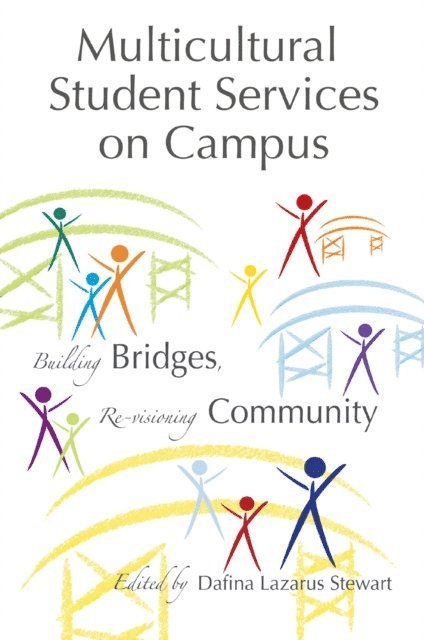
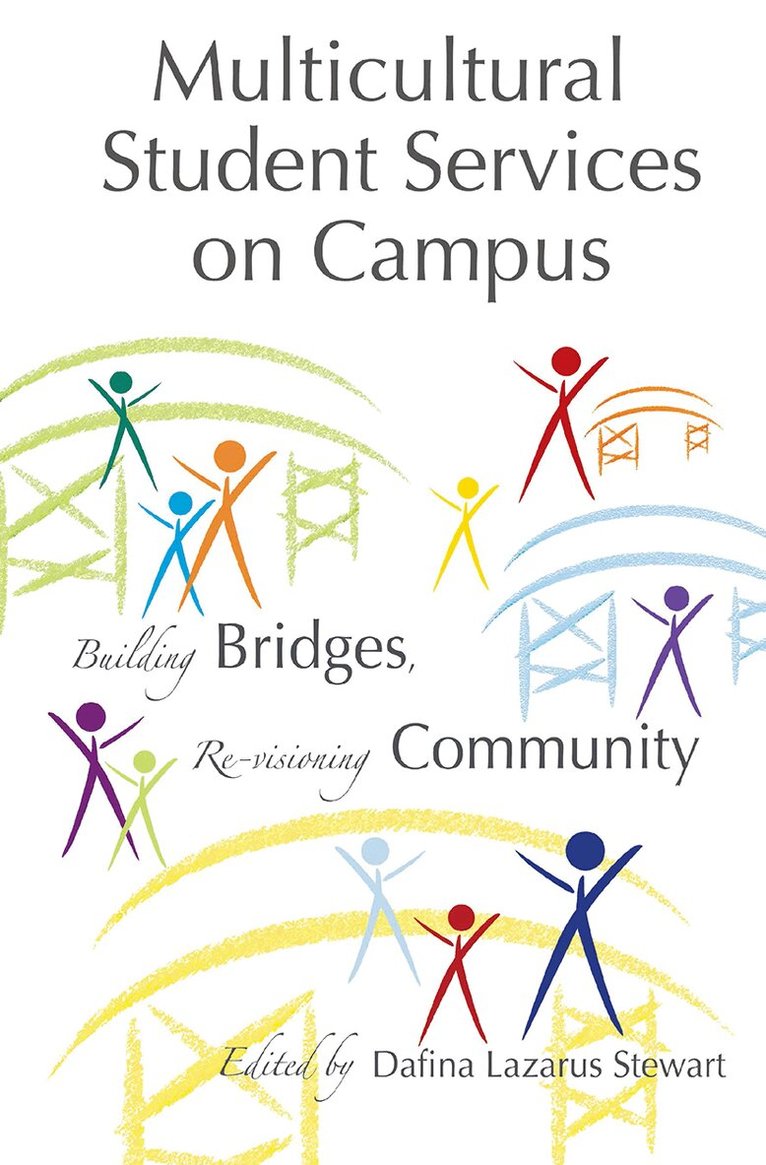
Multicultural Student Services on Campus
Building Bridges, Re-visioning Community
Häftad, Engelska, 2011
521 kr
Skickas inom 10-15 vardagar
Co-published with For new professionals in multicultural student services (MSS), this book constitutes a thorough introduction to the structure, organization, and scope of the services and educational mission of these units. For senior practitioners it offers insights for re-evaluating their strategies, and inspiration to explore new possibilities.The book discusses the history and philosophy of MSS units; describes their operation; asserts the need for integration and coherence across the multiple facets of their work and how their role is influenced by the character and type of their institutions; and considers the challenges and opportunities ahead. The theme Building Bridges, Re-Visioning Community reflects the dual role of MSS. They “build bridges” between underrepresented student populations and the broader institutional environment, between different groups of student populations, and across differences in cultural values and traditions. At a time of increasing diversity on campus, their role is also to champion the “re-visioning” or redefinition of what constitutes community in higher education – in other words to reach beyond serving their traditional constituencies to educate for multicultural competence, and advocate for social justice across the campus commons.This book is organized in four sections moving the reader from the past to the present to the future, and from a service mission to an educational one. Part One reviews the purposes for which MSS were created, and the evolution of their vision, concluding an overview of how units perceive their needs and challenges today.Part Two addresses a range of issues – such as race/ethnicity, sexual orientation / gender identity, and religion/faith diversity – commonly addressed by MSS, and, in recognizing the tensions inherent in serving such disparate constituencies, advances ideas for bringing greater integration and coherence to their work.Part Three considers how institutional context influences the structure and organization of MSS, and addresses such questions as: Who are they serving? What kind of support services and educational programming can they provide? How broadly or narrowly should they define their role, and can they extend their influence through alliances with other campus units?The book concludes by looking at how MSS can re-vision community to ensure their continued relevance to the college or university community.An ACPA Publication
2 030 kr
Skickas inom 10-15 vardagar
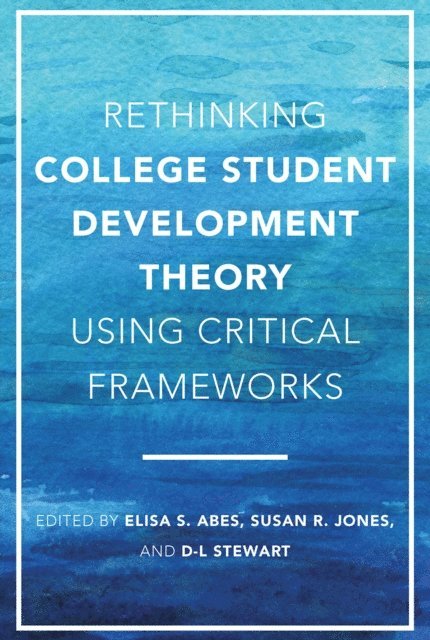
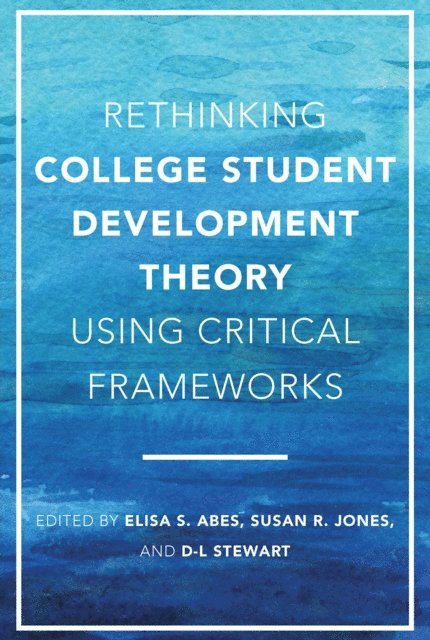
A major new contribution to college student development theory, this book brings "third wave" theories to bear on this vitally important topic.The first section includes a chapter that provides an overview of the evolution of student development theories as well as chapters describing the critical and poststructural theories most relevant to the next iteration of student development theory. These theories include critical race theory, queer theory, feminist theories, intersectionality, decolonizing/indigenous theories, and crip theories. These chapters also include a discussion of how each theory is relevant to the central questions of student development theory.The second section provides critical interpretations of the primary constructs associated with student development theory. These constructs and their related ideas include resilience, dissonance, socially constructed identities, authenticity, agency, context, development (consistency/coherence/stability), and knowledge (sources of truth and belief systems). Each chapter begins with brief personal narratives on a particular construct; the chapter authors then re-envision the narrative’s highlighted construct using one or more critical theories.The third section will focus on implications for practice. Specifically, these chapters will consider possibilities for how student development constructs re-envisioned through critical perspectives can be utilized in practice.The primary audience for the book is faculty members who teach in graduate programs in higher education and student affairs and their students. The book will also be useful to practitioners seeking guidance in working effectively with students across the convergence of multiple aspects of identity and development.
481 kr
Skickas inom 10-15 vardagar
A major new contribution to college student development theory, this book brings "third wave" theories to bear on this vitally important topic.The first section includes a chapter that provides an overview of the evolution of student development theories as well as chapters describing the critical and poststructural theories most relevant to the next iteration of student development theory. These theories include critical race theory, queer theory, feminist theories, intersectionality, decolonizing/indigenous theories, and crip theories. These chapters also include a discussion of how each theory is relevant to the central questions of student development theory.The second section provides critical interpretations of the primary constructs associated with student development theory. These constructs and their related ideas include resilience, dissonance, socially constructed identities, authenticity, agency, context, development (consistency/coherence/stability), and knowledge (sources of truth and belief systems). Each chapter begins with brief personal narratives on a particular construct; the chapter authors then re-envision the narrative’s highlighted construct using one or more critical theories.The third section will focus on implications for practice. Specifically, these chapters will consider possibilities for how student development constructs re-envisioned through critical perspectives can be utilized in practice.The primary audience for the book is faculty members who teach in graduate programs in higher education and student affairs and their students. The book will also be useful to practitioners seeking guidance in working effectively with students across the convergence of multiple aspects of identity and development.
194 kr
Skickas inom 5-8 vardagar