D. Michael McFarland – författare
Visar alla böcker från författaren D. Michael McFarland. Handla med fri frakt och snabb leverans.
4 produkter
4 produkter
Häftad, Engelska, 2000
643 kr
Skickas inom 7-10 vardagar
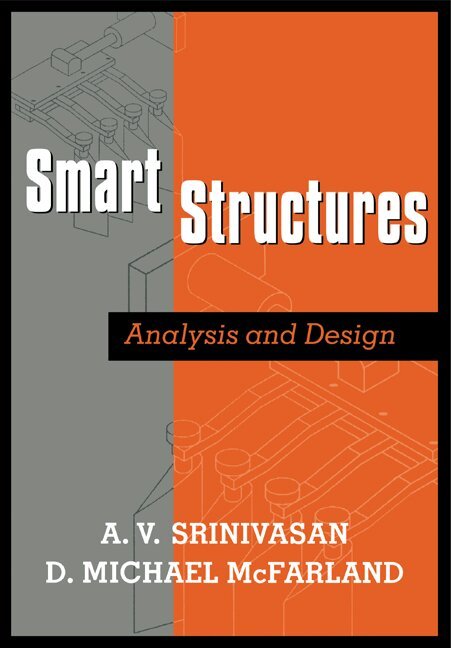
Smart structures and structural components have unusual abilities: they can sense a change in temperature, pressure, or strain; diagnose a problem; and initiate an appropriate action in order to preserve structural integrity and continue to perform their intended functions. Smart structures can also store processes in memory and learn to repeat the actions taken. Among the many applications are aircraft sensors that warn of impending cracks and medical devices that monitor blood sugar and deliver insulin. This text provides the basic information needed to analyze and design smart devices and structures. Among topics covered are piezoelectric crystals, shape memory alloys, electrorheological fluids, vibration absorbers, fiber optics, and mistuning. A final chapter offers an intriguing view of biomimetics and design strategies that can be incorporated at the microstructural level deriving inspiration from biological structures. The design of smart structures is at the cutting edge of engineering research and development, and there is a great need for an introductory book on the subject. This book will be welcomed by both students and practising engineers.
Inbunden, Engelska, 2008
3 258 kr
Skickas inom 10-15 vardagar
This monograph evolved over a period of nine years from a series of papers and presentations addressing the subject of passive vibration control of mechanical s- tems subjected to broadband, transient inputs. The unifying theme is Targeted - ergy Transfer – TET, which represents a new and unique approach to the passive control problem, in which a strongly nonlinear, fully passive, local attachment, the Nonlinear Energy Sink – NES, is employed to drastically alter the dynamics of the primary system to which it is attached. The intrinsic capacity of the properly - signed NES to promote rapid localization of externally applied (narrowband) - bration or (broadband) shock energy to itself, where it can be captured and dis- pated, provides a powerful strategy for vibration control and the opens the pos- bility for a wide range of applications of TET, such as, vibration and shock i- lation, passive energy harvesting, aeroelastic instability (?utter) suppression, se- mic mitigation, vortex shedding control, enhanced reliability designs (for ex- ple in power grids) and others. The monograph is intended to provide a thorough explanation of the analytical, computational and experimental methods needed to formulate and study TET in mechanical and structural systems. Several prac- cal engineering applications are examined in detail, and experimental veri?cation and validation of the theoretical predictions are provided as well. The authors also suggest a number of possible future applications where application of TET seems promising. The authors are indebted to a number of sponsoring agencies.
E-bok
PDF, Engelska, 20083 948 kr
Läs direkt efter köp
This monograph evolved over a period of nine years from a series of papers and presentations addressing the subject of passive vibration control of mechanical s- tems subjected to broadband, transient inputs. The unifying theme is Targeted - ergy Transfer – TET, which represents a new and unique approach to the passive control problem, in which a strongly nonlinear, fully passive, local attachment, the Nonlinear Energy Sink – NES, is employed to drastically alter the dynamics of the primary system to which it is attached. The intrinsic capacity of the properly - signed NES to promote rapid localization of externally applied (narrowband) - bration or (broadband) shock energy to itself, where it can be captured and dis- pated, provides a powerful strategy for vibration control and the opens the pos- bility for a wide range of applications of TET, such as, vibration and shock i- lation, passive energy harvesting, aeroelastic instability (?utter) suppression, se- mic mitigation, vortex shedding control, enhanced reliability designs (for ex- ple in power grids) and others. The monograph is intended to provide a thorough explanation of the analytical, computational and experimental methods needed to formulate and study TET in mechanical and structural systems. Several prac- cal engineering applications are examined in detail, and experimental veri?cation and validation of the theoretical predictions are provided as well. The authors also suggest a number of possible future applications where application of TET seems promising. The authors are indebted to a number of sponsoring agencies.
Häftad, Engelska, 2016
3 258 kr
Skickas inom 10-15 vardagar
This monograph evolved over a period of nine years from a series of papers and presentations addressing the subject of passive vibration control of mechanical s- tems subjected to broadband, transient inputs. The unifying theme is Targeted - ergy Transfer – TET, which represents a new and unique approach to the passive control problem, in which a strongly nonlinear, fully passive, local attachment, the Nonlinear Energy Sink – NES, is employed to drastically alter the dynamics of the primary system to which it is attached. The intrinsic capacity of the properly - signed NES to promote rapid localization of externally applied (narrowband) - bration or (broadband) shock energy to itself, where it can be captured and dis- pated, provides a powerful strategy for vibration control and the opens the pos- bility for a wide range of applications of TET, such as, vibration and shock i- lation, passive energy harvesting, aeroelastic instability (?utter) suppression, se- mic mitigation, vortex shedding control, enhanced reliability designs (for ex- ple in power grids) and others. The monograph is intended to provide a thorough explanation of the analytical, computational and experimental methods needed to formulate and study TET in mechanical and structural systems. Several prac- cal engineering applications are examined in detail, and experimental veri?cation and validation of the theoretical predictions are provided as well. The authors also suggest a number of possible future applications where application of TET seems promising. The authors are indebted to a number of sponsoring agencies.