D. O. Hall – författare
Visar alla böcker från författaren . Handla med fri frakt och snabb leverans.
3 produkter
3 produkter
Inbunden, Engelska, 1995
1 928 kr
Skickas inom 5-8 vardagar
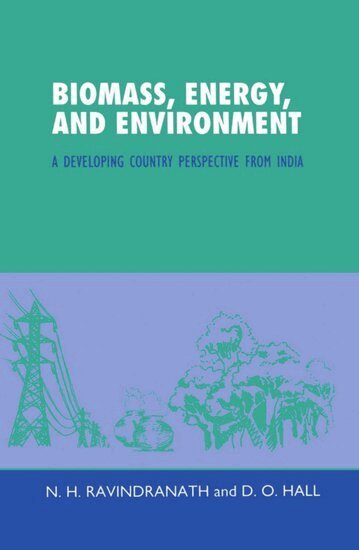
Developing countries are searching for alternative energy options to promote sustainable and equitable development. Bioenergy, especially as a modernized fuel, is known to be an environmentally-sound energy option, but its potential and impacts need to be assessed for each developing country.The current sources, uses, and socio-economic and environmental impacts of biomass energy are analysed for India. The energy needs for development are assessed. Conventional energy planning has not led to equitable and sustainable development. Bioenergy options are shown to have potential to meet the energy needs of rural areas of a populous country like India. Case studies of successful bioenergy projects and economic analysis of bioenergy options are presented. Land is not a constraint to producing woody biomass for energy even in a densely populated country like India. Bioenergy options provide significant socio-economic benefits along with large potential for carbon-emission reduction and promotion of biodiversity in degraded lands.The potential for bioenergy is high for developing-countries of South-east Asia, Sub-Saharan Africa, and South America. There is global interest in bioenergy as a sustainable energy and green house gas emission reduction option. The Indian case study could be a model for other developing countries.
E-bok
Engelska, 2013783 kr
Läs direkt efter köp
Biomass for Energy in the Developing Countries: Current Role, Potential, Problems, Prospects focuses on biomass energy and its importance to developing countries. This book outlines the reality that supply can no longer meet the demand of this form of energy. This fact is particularly observed in the rising price of oil, which is a prime source of energy for developing countries. Relative to this, a need to look for indigenous energy sources is urgent to sustain development in these countries. This book emphasizes that biomass energy utilization differs among developing countries, which shows the variance in energy needs. This text also notes that the pattern of biomass energy use in such countries is related to agriculture and also has cultural, economic, and social linkages. Biomass energy is also considered an important aspect in rural development and as a replacement for petroleum products. With the impending shortage of biomass energy, schemes are now being developed to sustain the use of this energy in household and industry settings, which is emphasized in the development of equipment considered energy efficient. People who are concerned with the development and implementation of programs aimed at conserving biomass energy and in the search of alternative energy can use this book as a reference.
E-bok
Engelska, 2014783 kr
Läs direkt efter köp
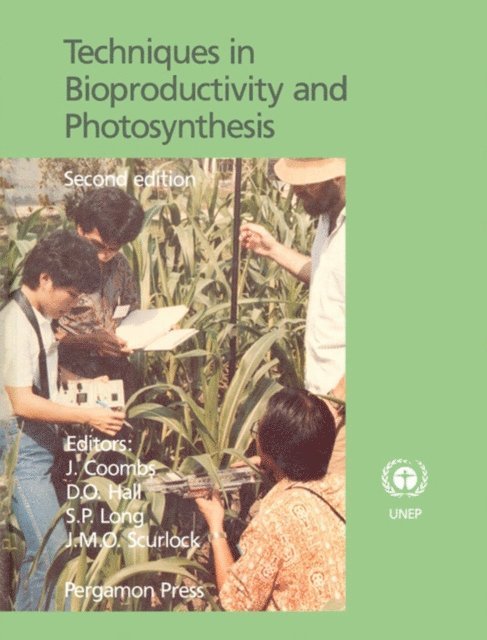
Techniques in Bioproductivity and Photosynthesis, Second Edition is a manual that provides information on the field and laboratory techniques associated with the measurement of plant productivity. The title discusses the most reliable and relevant techniques that can be applied to a wide variety of problems. The coverage of the text includes various quantitative methods, such as measurement of plant biomass and net primary production; measurement of CO2 assimilation by plants in the field and the laboratory; and measurement of oxygen and chlorophyll fluorescence. The selection also deals with photosynthetic energy conversion; assimilatory nitrate reduction; and ammonia assimilation and amino acid biosynthesis. The book will be of great interest to botanists, horticulturists, and agriculturists.