D. Parthasarathy - Böcker
Visar alla böcker från författaren D. Parthasarathy. Handla med fri frakt och snabb leverans.
4 produkter
4 produkter
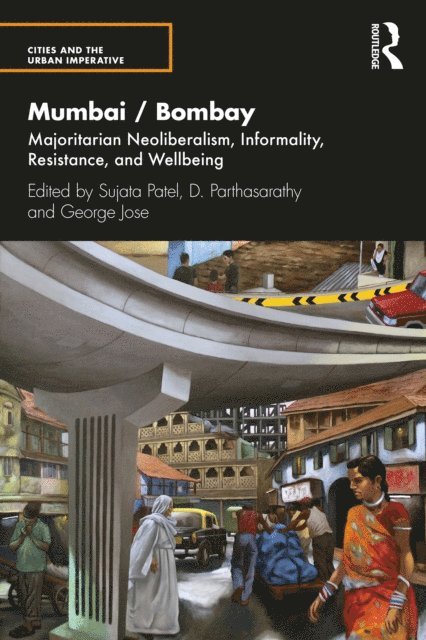
Mumbai / Bombay
Majoritarian Neoliberalism, Informality, Resistance, and Wellbeing
Inbunden, Engelska, 2022
2 088 kr
Skickas inom 10-15 vardagar
Mumbai / Bombay is a quintessential urban expression which represents the questions and puzzles related to Indian urbanity. This book traces the various ways through which majoritarianism and neoliberal capitalist accumulation has reorganised Bombay or Mumbai in India.The book assesses Mumbai’s present trajectories and processes as being embedded in its recent past. It looks at these changes by exploring work and labour; health and education; spatial planning and infrastructural development; politics and identity; and shows how financialisation, land speculation, deregulation, and informality have impacted the city’s culture and everyday living. The contributors to this volume analyse the consequences of these changes for women and men across ages, as they live their material and cultural lives; evaluate the role of the changing nature of work, urban infrastructure, and planning; determine its outcome for public health and education; and take a measure of its manifestation in the field of arts and culture. The volume explores the processes that reorient these changes, the socio-spatial and political implications of these on the inhabitants of the city, and the resistance and response to marginalisation.This interdisciplinary volume will interest students and researchers of economics, sociology, anthropology, political science, public policy, development studies, and urban studies. It will also be useful to urban practitioners, planners, bureaucrats, activists, and general readers.
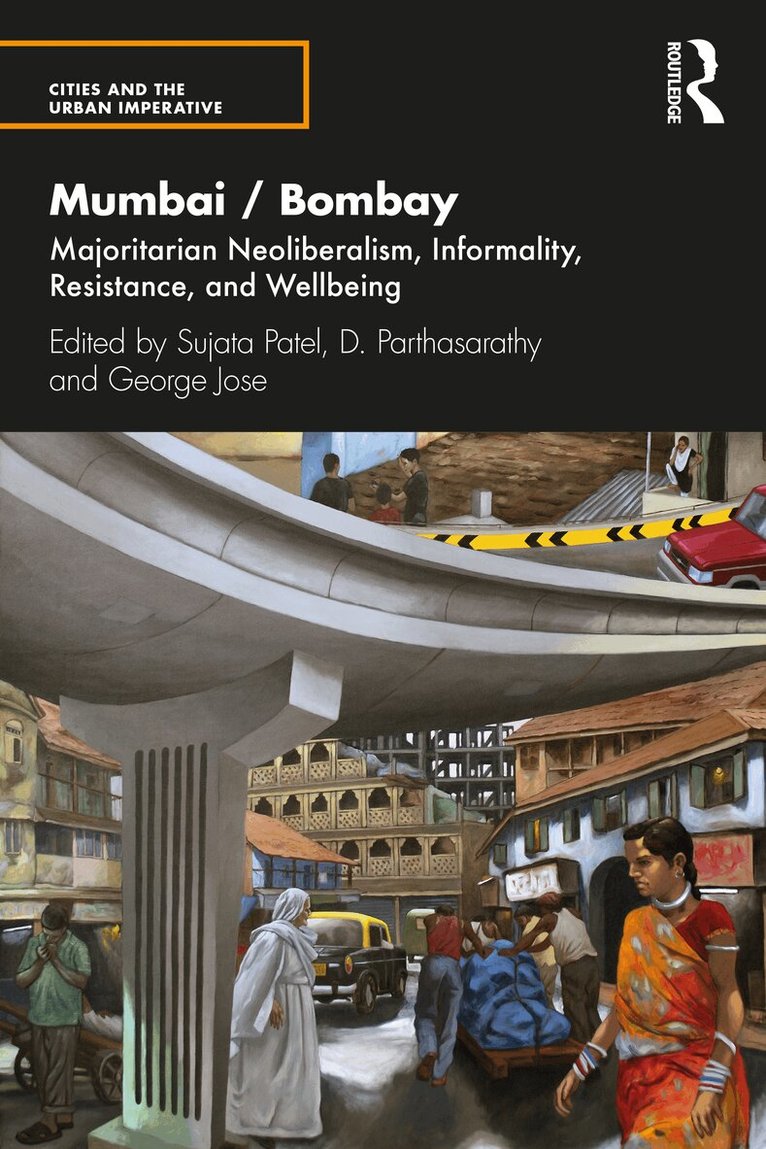
Mumbai / Bombay
Majoritarian Neoliberalism, Informality, Resistance, and Wellbeing
Häftad, Engelska, 2022
563 kr
Skickas inom 10-15 vardagar
Mumbai / Bombay is a quintessential urban expression which represents the questions and puzzles related to Indian urbanity. This book traces the various ways through which majoritarianism and neoliberal capitalist accumulation has reorganised Bombay or Mumbai in India.The book assesses Mumbai’s present trajectories and processes as being embedded in its recent past. It looks at these changes by exploring work and labour; health and education; spatial planning and infrastructural development; politics and identity; and shows how financialisation, land speculation, deregulation, and informality have impacted the city’s culture and everyday living. The contributors to this volume analyse the consequences of these changes for women and men across ages, as they live their material and cultural lives; evaluate the role of the changing nature of work, urban infrastructure, and planning; determine its outcome for public health and education; and take a measure of its manifestation in the field of arts and culture. The volume explores the processes that reorient these changes, the socio-spatial and political implications of these on the inhabitants of the city, and the resistance and response to marginalisation.This interdisciplinary volume will interest students and researchers of economics, sociology, anthropology, political science, public policy, development studies, and urban studies. It will also be useful to urban practitioners, planners, bureaucrats, activists, and general readers.
Del 3 - ARI - Springer Asia Series
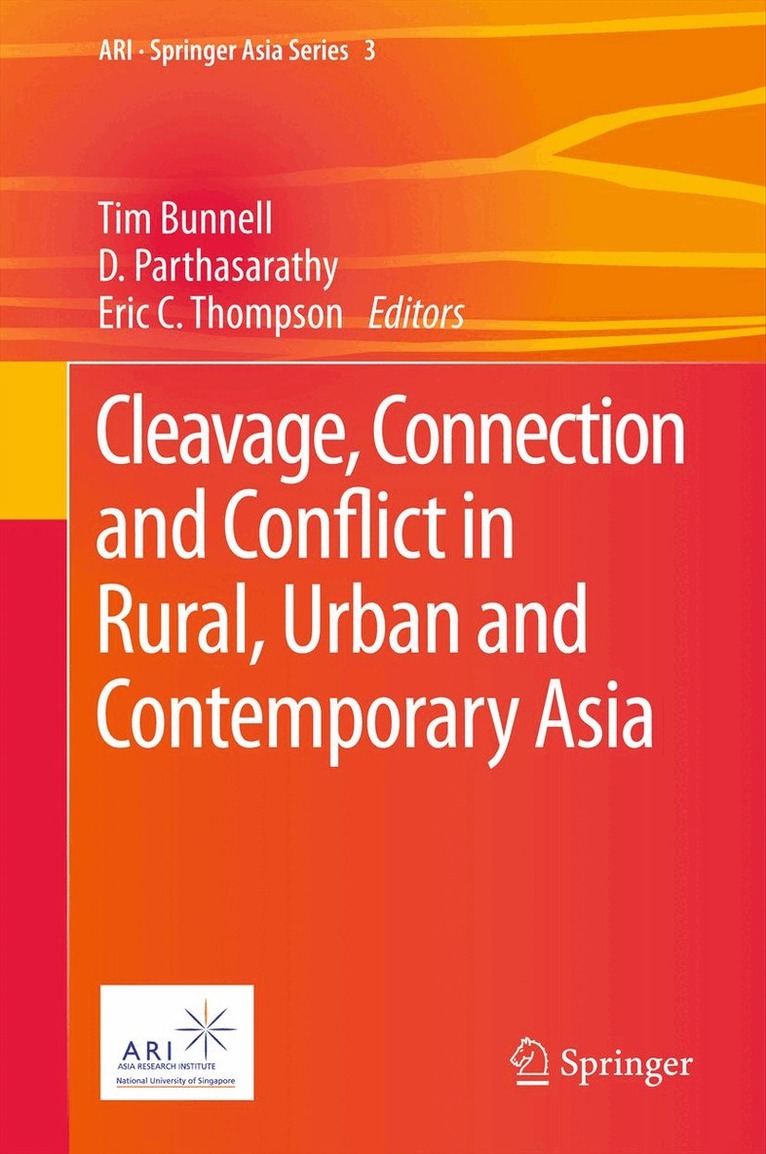
Cleavage, Connection and Conflict in Rural, Urban and Contemporary Asia
Inbunden, Engelska, 2012
1 064 kr
Skickas inom 10-15 vardagar
Asia, the location of the world’s fastest-growing economies, is also home to some of the fastest rates of urbanization humanity has ever seen, a process whose speed renders long-term outcomes highly unpredictable. This volume contrasts with much published work on the rural/urban divide, which has tended to focus on single case studies. It provides empirical perspectives from four Asian countries: India, Indonesia, Malaysia, and Thailand, and includes a wealth of insights that both critique and expand popular notions of the rural-urban divide. The volume is relevant not just to Asian contexts but to social scientific research on population dynamics more generally. Rather than deploying a single study to chart national trends, three chapters on each country make possible much more complex perspectives. As a result, this volume does more than extend our understanding of the interplay between cities and hinterlands within Asia. It enhances our notions of rural/urban cleavages, connections and conflicts more generally, with data and analysis ready for application to other contexts. Of interest to diverse scholars across the social sciences and Asian studies, this work includes accounts ranging from rural youth real estate entrepreneurs in Hyderabad, India, to social development in Aceh province in Indonesia, devastated by the 2004 tsunami, to the relationship between urban space and commonly held notions of the supernatural in Thailand’s northern city of Chiang Mai.
Del 3 - ARI - Springer Asia Series
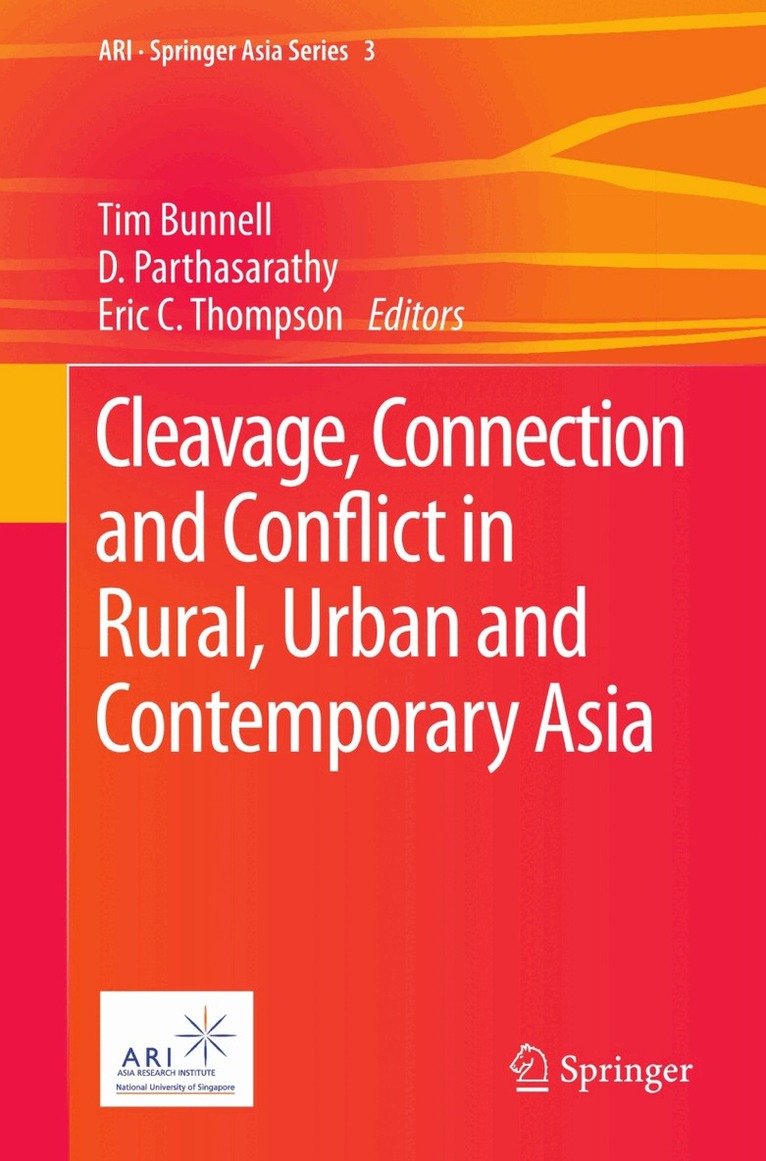
Cleavage, Connection and Conflict in Rural, Urban and Contemporary Asia
Häftad, Engelska, 2015
1 064 kr
Skickas inom 10-15 vardagar
Asia, the location of the world’s fastest-growing economies, is also home to some of the fastest rates of urbanization humanity has ever seen, a process whose speed renders long-term outcomes highly unpredictable. This volume contrasts with much published work on the rural/urban divide, which has tended to focus on single case studies. It provides empirical perspectives from four Asian countries: India, Indonesia, Malaysia, and Thailand, and includes a wealth of insights that both critique and expand popular notions of the rural-urban divide. The volume is relevant not just to Asian contexts but to social scientific research on population dynamics more generally. Rather than deploying a single study to chart national trends, three chapters on each country make possible much more complex perspectives. As a result, this volume does more than extend our understanding of the interplay between cities and hinterlands within Asia. It enhances our notions of rural/urban cleavages, connections and conflicts more generally, with data and analysis ready for application to other contexts. Of interest to diverse scholars across the social sciences and Asian studies, this work includes accounts ranging from rural youth real estate entrepreneurs in Hyderabad, India, to social development in Aceh province in Indonesia, devastated by the 2004 tsunami, to the relationship between urban space and commonly held notions of the supernatural in Thailand’s northern city of Chiang Mai.