D. Robert Worley - Böcker
Visar alla böcker från författaren D. Robert Worley. Handla med fri frakt och snabb leverans.
6 produkter
6 produkter
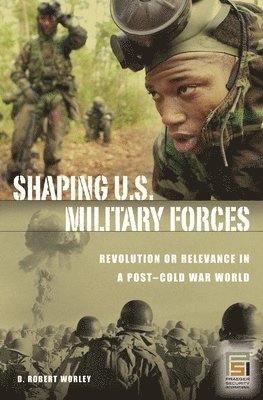
Shaping U.S. Military Forces
Revolution or Relevance in a Post-Cold War World
Inbunden, Engelska, 2006
675 kr
Skickas inom 10-15 vardagar
In Shaping U.S. Military Forces, D. Robert Worley assesses military force changes that have been made since the Cold War, explains the many changes that have not been made, and recommends changes that must be made—as well as exploring the ways in which political and military forces line up to resist them.For over forty years there was consensus about maintaining large U.S. military forces. Today, as evidenced by the steady decline in defense spending since 1985, that consensus has evaporated, and a new equilibrium is being sought. Yet evidence of transformation is modest. By outward appearances, today's military is principally a smaller version of our Cold War forces, despite the fact that threat, missions, and strategies have changed.There has been no lack of reform effort at the highest levels of the defense bureaucracy. Under the leadership of General Colin Powell, the Joint Chiefs of Staff reexamined the roles and missions of the services. Recommendations followed. But, according to observers, change occurred only at the margins. Worley argues that the highly institutionalized cultures of the uniformed services offer the best explanation for why the American military is not a different force well over a decade after the fall of the Berlin Wall.Significant historical events, primarily from World War II forward, are used to explain belief systems within the individual services and sometimes within specific branches within a single service. Force planners commonly measure military end strength in terms of divisions, wings, and battle groups. Therefore, Worley examines the most important organizational structures—armored and infantry divisions, fighter and bomber wings, and carrier battle groups—and does so in the context of conflicts, including Vietnam, the Gulf War, Panama, Kosovo, and Somalia, and of course the unfinished conflicts in Afghanistan and Iraq. He highlights problems associated with the clash of service conceptions of war and the requirements of real conflict to examine the shape U.S. military forces have—and the shape they should assume.
352 kr
Skickas inom 5-8 vardagar
615 kr
Skickas inom 5-8 vardagar
138 kr
Skickas inom 5-8 vardagar
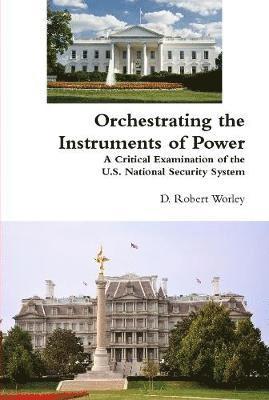
Orchestrating the Instruments of Power
A Critical Examination of the U.S. National Security System
Häftad, Engelska, 2015
309 kr
Skickas inom 10-15 vardagar
National security, a topic routinely discussed behind closed doors by Washington's political scientists and policy makers, is believed to be an insider's game. All too often this highly specialized knowledge is assumed to place issues beyond the grasp—and interest—of the American public. Author D. Robert Worley disagrees. The U.S. national security system, designed after World War II and institutionalized through a decades-long power conflict with the Soviet Union, is inadequate for the needs of the twenty-first century, and while a general consensus has emerged that the system must be transformed, a clear and direct route for a new national security strategy proves elusive.Furnishing the tools to assist in future national security reforms, Orchestrating the Instruments of Power articulates and synthesizes the concepts of America's economic, political, and military instruments of power.
602 kr
Skickas inom 7-10 vardagar
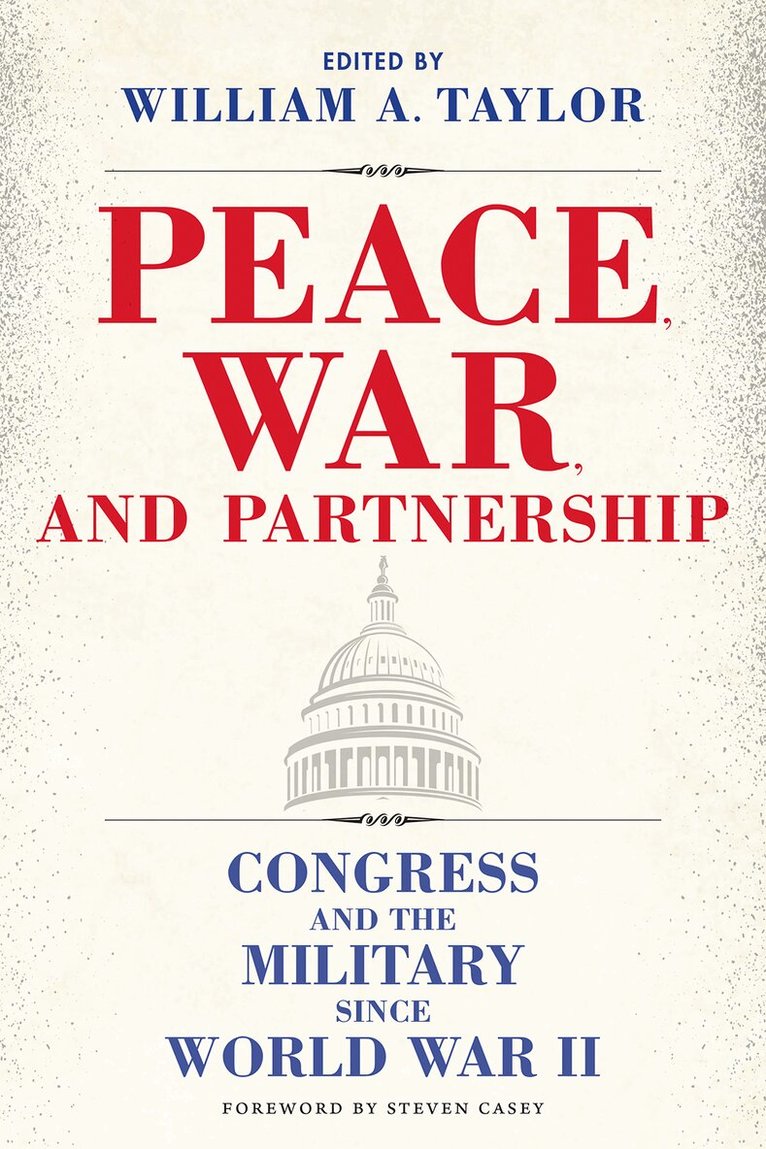
Covering the period from World War II through the Trump presidency, Peace, War, and Partnership: Congress and the Military Since World War II unpacks the vital and dynamic relationship between Congress and the military, two entities that have worked together, at times with different purposes, to solve myriad important issues impacting the United States in both peace and war. Congress and the military have had their periods of cooperation. However, they have also had alternating periods of resistance to each other, based on distinct conceptions of national interests and divergent strategies. Their partnership has been a symbiotic relationship in which one entity or the other has ebbed and flowed in power depending on the circumstances. They have altered each other in far-reaching ways and transformed American society as a result of their liaisons.Peace, War, and Partnership analyzes the significant, powerful, and central relationship between Congress and the military. It investigates intersections of policy, politics, and society to theorize the impact of this relationship on the United States in the modern era. This work also offers a better understanding of earlier attempts by policy makers in Congress and the military to provide national security, contextualizing highly relevant current issues such as military service, proliferation, foreign intervention, national security, joint operations, diplomacy, alliances, mobilization, post-conflict resolution, citizenship, and military innovation. It illuminates crucial questions involving military policies in American democracy, and their sway on America historically and today, sparking and informing public debate about its implications now and for the future.