
D Shapiro-llan – författare
Visar alla böcker från författaren . Handla med fri frakt och snabb leverans.
4 produkter
4 produkter
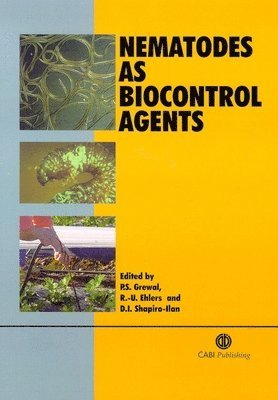
Inbunden, Engelska, 2005
2 184 kr
Skickas inom 5-8 vardagar
This book documents and illustrates major developments in the use of nematodes for the biological control of insects and slugs. It covers the use of three main types of nematodes: entomopathogenic nematodes, entomophilic nematodes and slug-parasitic nematodes. The biology, commercial production, formulation and quality control, application technology, strategy and safety of each of these three nematode groups is discussed. The book also examines the application of nematodes in different cropping systems, and the efficacy of nematodes against specific pests. The potential of predatory nematodes to control plant-parasitic nematodes and mycophagous nematodes to control fungal pathogens is also reviewed.
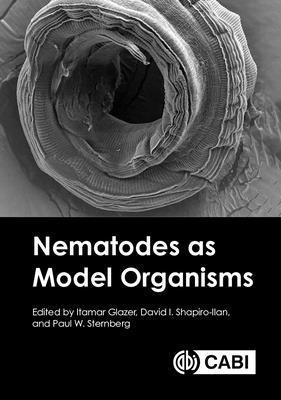
Inbunden, Engelska, 2022
1 532 kr
Skickas inom 5-8 vardagar
Nematodes are small multicellular organisms that have been used as biological models since the 1960s. For example, Caenorhabditis elegans is a free-living nematode worm, about 1mm in length, that lives in temperate soil environments. It is made up of about 1000 cells, and has a short life cycle of only two weeks. It was the first multicellular organism to have its whole genome sequenced. The book summarizes the importance of nematodes as model organisms in the fields of genetics, developmental biology, neurobiology, pharmacology, nutrition, ecology and parasitology. Of interest to a broad audience across a wide spectrum of disciplines, this book is useful for biologists working on comparative studies to investigate biological processes across organisms; medical scientists and pharmacologists for exploration of drugs and medicine (including the use of genome editing to eliminate diseases); ecologists considering nematodes as indicators for environment changes; and parasitologists for host-parasite interactions. Many other researchers can use this book as a benchmark for the broad implications of nematology research on other aspects of science.
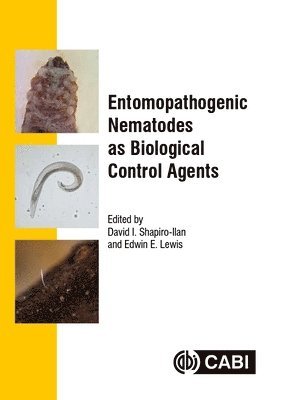
Inbunden, Engelska, 2024
2 423 kr
Skickas
Entomopathogenic nematodes (EPNs) are biocontrol agents that are used to control a wide variety of insect pests within agriculture and forestry. In addition to their use as bio-pesticides, EPNs have a fascinating biology and are thus considered model organisms in ecology, symbiosis and pathogenesis. This book presents basic knowledge and diverse applications to illustrate how EPNs play an important role as potent biocontrol solutions. It describes: Fundamental concepts such as biology, taxonomy, symbiosis genomics and behavioural ecology. Aspects of commercialization, including mass production, formulation, safety and regulation, and marketing. Diverse cropping systems e.g. maize, wheat and grains, citrus, orchard systems, berries, vine crops, vegetables and turf. Other applications including urban, nursery, forestry, greenhouse, veterinary and medical. Ecological considerations and applications in conservation biocontrol. This book is a must have for all pest management professionals including those practicing integrated pest management strategies.
Häftad, Engelska, 2008
735 kr
Skickas inom 5-8 vardagar
This book documents and illustrates major developments in the use of nematodes for the biological control of insects and slugs. It covers the use of three main types of nematodes: entomopathogenic nematodes, entomophilic nematodes and slug-parasitic nematodes. The biology, commercial production, formulation and quality control, application technology, strategy and safety of each of these three nematode groups is discussed. The book also examines the application of nematodes in different cropping systems, and the efficacy of nematodes against specific pests. The potential of predatory nematodes to control plant-parasitic nematodes and mycophagous nematodes to control fungal pathogens is also reviewed.