D. Venkat Rao – författare
Visar alla böcker från författaren D. Venkat Rao. Handla med fri frakt och snabb leverans.
9 produkter
9 produkter
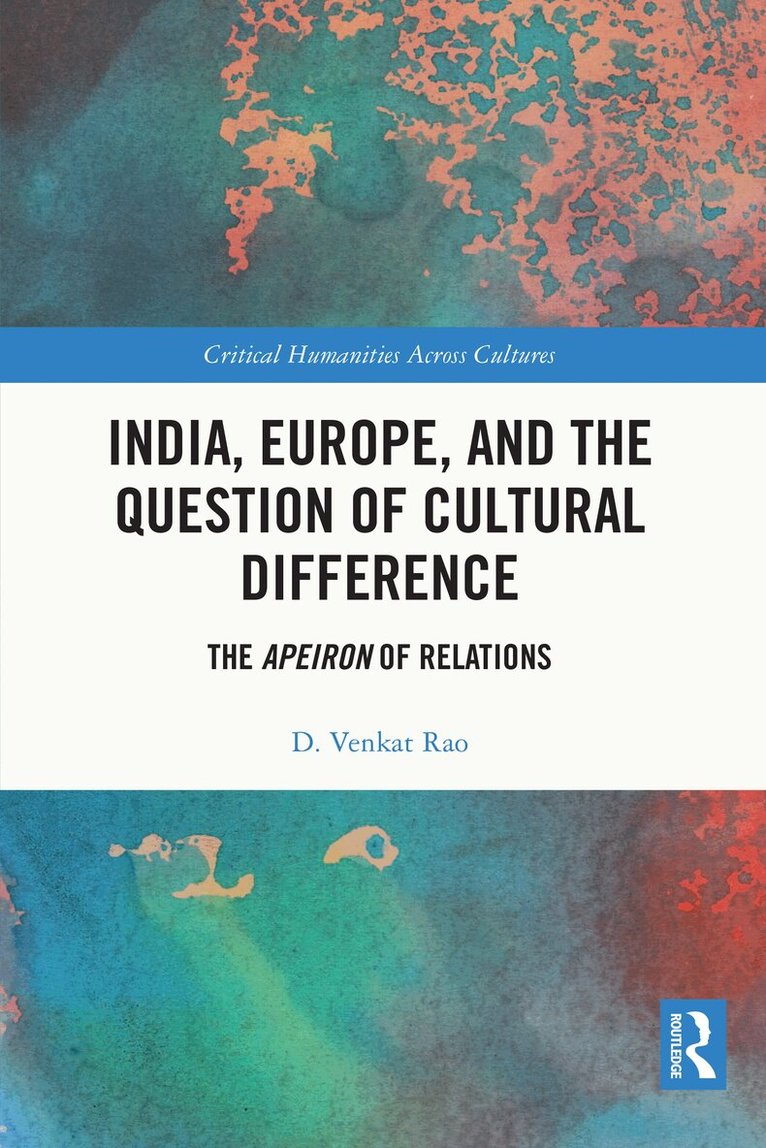
India, Europe and the Question of Cultural Difference
The Apeiron of Relations
Inbunden, Engelska, 2021
2 430 kr
Skickas inom 10-15 vardagar
This volume critically engages with the question of cultural difference and the idea of living with diversity in the context of India and Europe. It looks at certain essential European categories of learning such as art, nature, the human, literature, relation, philosophy, and the humanities and analyses texts from Sanskrit language (through Telugu resources) to argue that categories like prakriti, loka, jati, dharma, karma, sahitya, kala,etc. cannot be conflated with conceptual formations such as nature, world, caste, religion, (sanctioned) action, literature and art respectively. The book questions and unravels the efficacy of European concepts, theories and interpretive frames in understanding Indian reflective traditions and cultural forms. It also lays the groundwork for reorienting teaching and research in universities in the humanities on the basis of key cultural differences. By focusing on major themes in the humanities discourse and their limitations, the work engages with the writings of Heidegger, Derrida and Agamben, among others, from radically new vantage points of Sanskrit-Indian reflective traditions, and challenges prevailing ideas about Indian art, literature and culture.Part of the Critical Humanities Across Cultures series, this book will be an essential read for scholars and researchers of Indian languages and literature, comparative literature, art and aesthetics, postcolonial studies, cultural and heritage studies, philosophy, political philosophy, comparative philosophy, Sanskrit studies, India studies, South Asian studies, Global South studies, and for those working on education in the humanities/human sciences.
711 kr
Skickas inom 10-15 vardagar
This volume critically engages with the question of cultural difference and the idea of living with diversity in the context of India and Europe. It looks at certain essential European categories of learning such as art, nature, the human, literature, relation, philosophy, and the humanities and analyses texts from Sanskrit language (through Telugu resources) to argue that categories like prakriti, loka, jati, dharma, karma, sahitya, kala,etc. cannot be conflated with conceptual formations such as nature, world, caste, religion, (sanctioned) action, literature and art respectively. The book questions and unravels the efficacy of European concepts, theories and interpretive frames in understanding Indian reflective traditions and cultural forms. It also lays the groundwork for reorienting teaching and research in universities in the humanities on the basis of key cultural differences. By focusing on major themes in the humanities discourse and their limitations, the work engages with the writings of Heidegger, Derrida and Agamben, among others, from radically new vantage points of Sanskrit-Indian reflective traditions, and challenges prevailing ideas about Indian art, literature and culture.Part of the Critical Humanities Across Cultures series, this book will be an essential read for scholars and researchers of Indian languages and literature, comparative literature, art and aesthetics, postcolonial studies, cultural and heritage studies, philosophy, political philosophy, comparative philosophy, Sanskrit studies, India studies, South Asian studies, Global South studies, and for those working on education in the humanities/human sciences.
618 kr
Skickas inom 10-15 vardagar
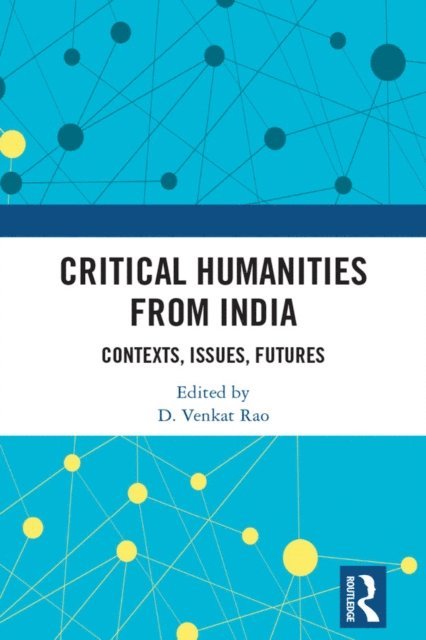
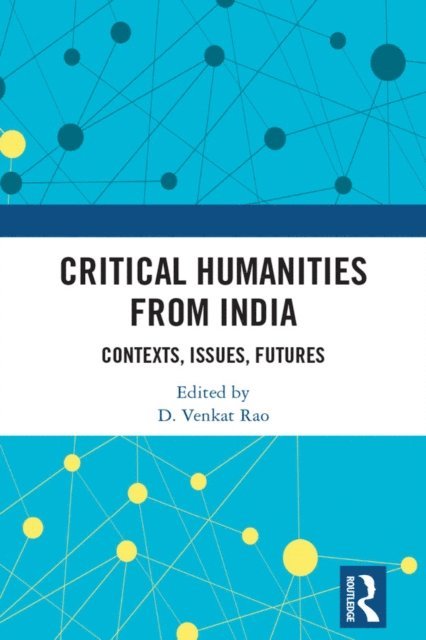
The field of humanities generates a discourse that traditionally addressed the questions of what is proper to man, rights of man, crimes against humanity, human creativity and action, human reflection and performance, human utterance and artefact. The university as a philosophical-political institution transmits this humanist account. This European humanistic legacy, which is little more than Christian anthropology, barely received any questioning from cultures that faced colonialism. In such a context, this volume attempts to unravel the ‘barely secularized heritage’ of Europe (Derrida’s phrase) and its fatal consequences in other cultures. The task of Critical Humanities is to explore the ways in which the question of being human (along with non-human others) today from heterogeneous cultural ‘backgrounds’ can be undertaken. The future of the humanities teaching and research is contingent upon the risky task of configuring cultural difference from non-European locations. Such a task is inescapable and urgently needed when tectonic cultural upheavals have begun to show devastating effect on planetary coexistence today. It is precisely in such a context that this collection of essays on critical humanities affirms, ‘without alibi’, the urgency of collective reflection and innovative research across the traditional disciplinary and institutional borders and communication systems on the one hand and Asian, African and European cultural formations on the other. Critical Humanities are at one level little more than communities on the verge (critical) but whose centuries long survival and resilient creations of cultural (and /as natural) habitats are of deeply enduring significance to affirm the biocultural diversities of living that compose the planet.Topical and timely, this book will be useful to scholars, researchers and teachers of cultural theory, literary studies, philosophy, cultural geography, legal studies, sociology, history, performance studies, environmental studies, caste and communalism studies, postcolonial theory, India studies, and education.
2 113 kr
Skickas inom 10-15 vardagar
The field of humanities generates a discourse that traditionally addressed the questions of what is proper to man, rights of man, crimes against humanity, human creativity and action, human reflection and performance, human utterance and artefact. The university as a philosophical-political institution transmits this humanist account. This European humanistic legacy, which is little more than Christian anthropology, barely received any questioning from cultures that faced colonialism. In such a context, this volume attempts to unravel the ‘barely secularized heritage’ of Europe (Derrida’s phrase) and its fatal consequences in other cultures. The task of Critical Humanities is to explore the ways in which the question of being human (along with non-human others) today from heterogeneous cultural ‘backgrounds’ can be undertaken. The future of the humanities teaching and research is contingent upon the risky task of configuring cultural difference from non-European locations. Such a task is inescapable and urgently needed when tectonic cultural upheavals have begun to show devastating effect on planetary coexistence today. It is precisely in such a context that this collection of essays on critical humanities affirms, ‘without alibi’, the urgency of collective reflection and innovative research across the traditional disciplinary and institutional borders and communication systems on the one hand and Asian, African and European cultural formations on the other. Critical Humanities are at one level little more than communities on the verge (critical) but whose centuries long survival and resilient creations of cultural (and /as natural) habitats are of deeply enduring significance to affirm the biocultural diversities of living that compose the planet.Topical and timely, this book will be useful to scholars, researchers and teachers of cultural theory, literary studies, philosophy, cultural geography, legal studies, sociology, history, performance studies, environmental studies, caste and communalism studies, postcolonial theory, India studies, and education.
Del 6 - Sophia Studies in Cross-cultural Philosophy of Traditions and Cultures
Cultures of Memory in South Asia
Orality, Literacy and the Problem of Inheritance
Inbunden, Engelska, 2014
1 167 kr
Skickas inom 10-15 vardagar
Culture of Memory in South Asia reconfigures European representations of India as a paradigmatic extension of a classical reading, which posits the relation between text and context in a determined way. It explores the South Asian cultural response to European “textual” inheritances. The main argument of this work is that the reflective and generative nodes of Indian cultural formations are located in the configurations of memory, the body and idiom (verbal and visual), where the body or the body complex becomes the performative effect and medium of articulated memories. This work advances its arguments by engaging with mnemocultures-cultures of memory that survive and proliferate in speech and gesture. Drawing on Sanskrit and Telugu reflective sources, this work emphasizes the need to engage with cultural memory and the compositional modes of Indian reflective traditions. This important and original work focuses on the ruptured and stigmatised resources of heterogeneous Indiantraditions and calls for critical humanities that move beyond the colonially configured received traditions. Cultures of Memory suggests the possibilities of transcultural critical humanities research and teaching initiatives from the Indian context in today’s academy.
Del 6 - Sophia Studies in Cross-cultural Philosophy of Traditions and Cultures
Cultures of Memory in South Asia
Orality, Literacy and the Problem of Inheritance
Häftad, Engelska, 2016
1 167 kr
Skickas inom 10-15 vardagar
Culture of Memory in South Asia reconfigures European representations of India as a paradigmatic extension of a classical reading, which posits the relation between text and context in a determined way. It explores the South Asian cultural response to European “textual” inheritances. The main argument of this work is that the reflective and generative nodes of Indian cultural formations are located in the configurations of memory, the body and idiom (verbal and visual), where the body or the body complex becomes the performative effect and medium of articulated memories. This work advances its arguments by engaging with mnemocultures-cultures of memory that survive and proliferate in speech and gesture. Drawing on Sanskrit and Telugu reflective sources, this work emphasizes the need to engage with cultural memory and the compositional modes of Indian reflective traditions. This important and original work focuses on the ruptured and stigmatised resources of heterogeneous Indiantraditions and calls for critical humanities that move beyond the colonially configured received traditions. Cultures of Memory suggests the possibilities of transcultural critical humanities research and teaching initiatives from the Indian context in today’s academy.
Envisioning Voice and the Aphasic Ears
Of Sanskrit Reflective Traditions Today
Inbunden, Engelska, 2025
1 235 kr
Skickas inom 7-10 vardagar
1 278 kr
Skickas inom 10-15 vardagar
This book focuses on the cohering elements across various texts and traditions of India. It addresses questions such as: what enabled cultural communication across very divergent geographical, temporal, locational contexts and among different cultural formations of India over millennia?
1 034 kr
Skickas inom 5-8 vardagar
This book focuses on the cohering elements across various texts and traditions of India. It addresses questions such as: what enabled cultural communication across very divergent geographical, temporal, locational contexts and among different cultural formations of India over millennia?