Professor Daniel A. Binchy's Corpus Iuris Hibernici, published in 1979, set the seal on a lifetime's work which had made him the acknowledged leader in Celtic law studies. At an earlier stage in his career, he had edited (in Studies in Early Irish Law, published by the Royal Irish Academy in 1936) the proceedings of a seminar on the Irish law of women; this volume was the spur to the seminar which began to work under the aegis of the Board of Celtic Studies in 1970, and took as its first field of study the Welsh law of women. The present collection of papers, based on the work of the seminar, differs in scope from the Irish volume but like it provides a detailed and documented account of one of the most illuminating tractates in the Welsh lawbooks; the volume was originally presented to Professor Binchy in grateful recognition of the inspiration given to all students of Celtic law by his devoted work. This volume comprises six studies dealing with various aspects of the Welsh material, texts of three versions of the tractate (one in Latin and two, both based on manuscripts not previously printed, in Welsh) with English translations, a Glossary, and Indexes.This new edition includes a preface by Morfydd E. Owen, who edited the original volume with Dafydd Jenkins, surveying work in the field since the first edition in 1980.
Professor Daniel A. Binchy’s Corpus Iuris Hibernici, published in 1979, set the seal on a lifetime’s work which had made him the acknowledged leader in Celtic law studies. At an earlier stage in his career, he had edited (in Studies in Early Irish Law, published by the Royal Irish Academy in 1936) the proceedings of a seminar on the Irish law of women; this volume was the spur to the seminar which began to work under the aegis of the Board of Celtic Studies in 1970, and took as its first field of study the Welsh law of women. The present collection of papers, based on the work of the seminar, differs in scope from the Irish volume but like it provides a detailed and documented account of one of the most illuminating tractates in the Welsh lawbooks; the volume was originally presented to Professor Binchy in grateful recognition of the inspiration given to all students of Celtic law by his devoted work.This volume comprises six studies dealing with various aspects of the Welsh material, texts of three versions of the tractate (one in Latin and two, both based on manuscripts not previously printed, in Welsh) with English translations, a Glossary, and Indexes. This new edition includes a preface by Morfydd E. Owen, who edited the original volume with Dafydd Jenkins, surveying work in the field since the first edition in 1980.
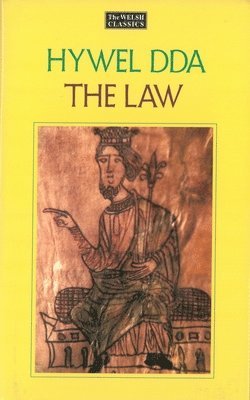
Hywel Dda ruled most of Wales in the tenth century, and is known for bringing together and codifying a system of laws which was in daily use until the Tudor Union of Wales with England in 1536. Prof. Jenkins' clear translation is supported by an introduction and notes that will fascinate readers.
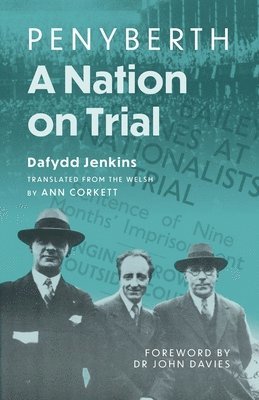
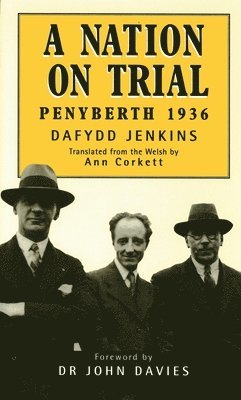
On 8 September 1936 – in what is recognised as one of the defining moments in modern Welsh history – a Baptist minister, a university lecturer and a schoolteacher set fire to the partly built RAF aerodrome at Penrhos on the Llŷn Peninsular, then calmly reported their actions to the police at nearby Pwllheli. The 'Fire' represented the final act in a high profile, passionate, yet ultimately unsuccessful eighteen-month campaign to prevent the destruction of Penyberth, the renowned farmhouse which had iconic cultural and religious significance in Wales, in order to construct a military training facility, a bombing school for the RAF.Pleas from eminent literary and religious figures, backed by over half a million people, were dismissed by British Prime Minister Stanley Baldwin – who had earlier agreed to divert the bombing school away from sites in Northumberland and Dorset due to local protests – incensed Welsh public opinion resulting in a resurgence in nationalist sentiment and increased support for the recently established Welsh Nationalist Party, Plaid Genedlaethol Cymru.In a sensational outcome to the court case held in Caernarfon, the jury was unable to reach a verdict. The case was then controversially transferred to the Old Bailey in London where Lewis Valentine, Saunders Lewis and D. J. Williams were convicted, merely seconds after the prosecution concluded, and imprisoned for nine months at Wormwood Scrubs: their place in Welsh political folklore assured.Penyberth - A Nation on Trial, Ann Corkett’s meticulous and engaging translation of Prof. Dafydd Jenkins’ study, Tân yn Llŷn, was first published in 1998 with an updated Introduction by the author sixty years after his original edition and is now republished in paperback and ebook editions.