Daley Birkett - Böcker
Visar alla böcker från författaren Daley Birkett. Handla med fri frakt och snabb leverans.
2 produkter
2 produkter
4 226 kr
Skickas inom 7-10 vardagar
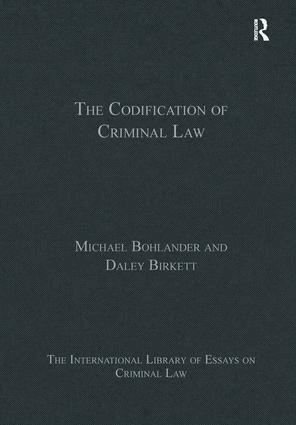
This volume contributes to the codification debate by bringing together research articles which compare and contrast the experience of countries which have a criminal code with those operating a case law system. The articles consider the criticisms that are often made of criminal code systems such as: the implicit restrictions on judicial discretion; the tendency towards inflexibility; the discrepancy that can develop between the theory and the development of the law in practice; and the potential difficulty of a criminal code fitting into a country’s domestic socio-legal culture. The advantages of the case law system are also considered such as reliance on the judiciary for the development of the nation’s criminal law as well as the ability to legislate on the problems of the day by enacting topical laws for distinct subjects. Whereas wholesale codification is a much more accepted phenomenon in the continental law traditions, simplistic transplants from one legal tradition can result in systemic frictions and other anomalies which may offend domestic culture. This collection is an invaluable reference tool which supports the discussion over codification and promotes better understanding across the common law/civil law divide.
Del 4 - Nottingham Studies on Human Rights
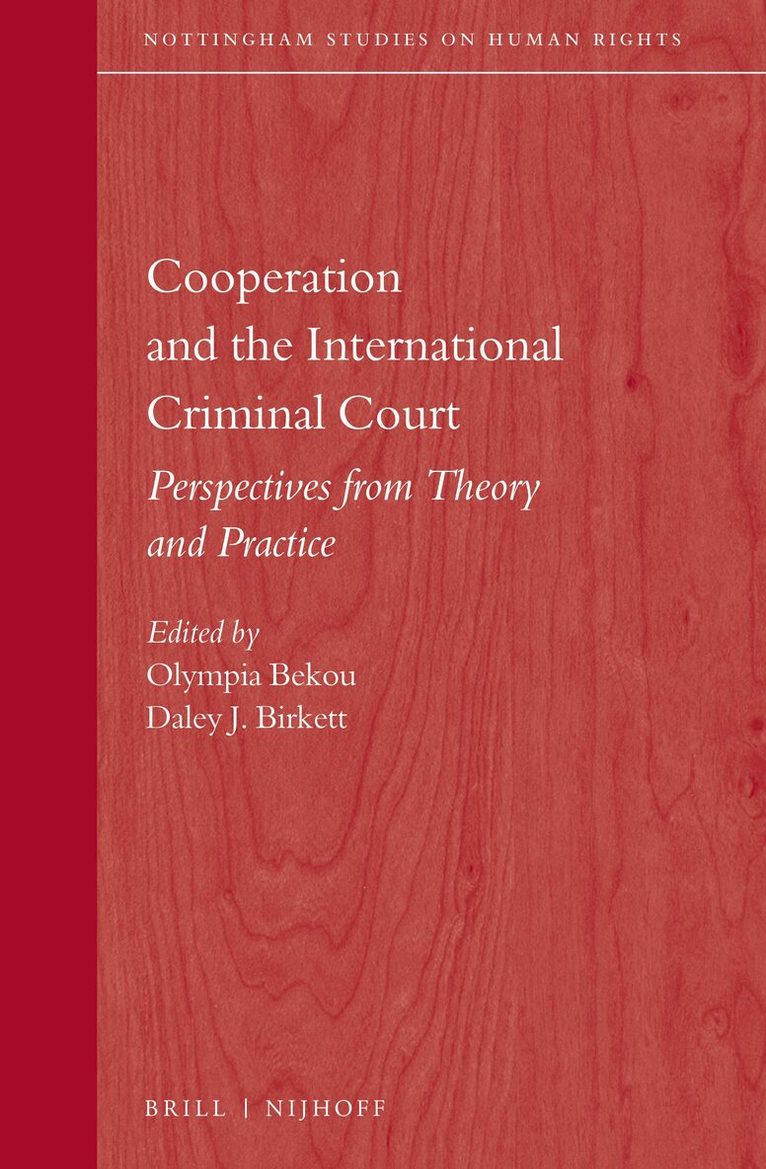
Cooperation and the International Criminal Court
Perspectives from Theory and Practice
Inbunden, Engelska, 2016
3 206 kr
Skickas inom 5-8 vardagar
The ability of the International Criminal Court (ICC) to function effectively is heavily dependent on cooperation because it does not possess its own enforcement mechanism. In Cooperation and the International Criminal Court: Perspectives from Theory and Practice, edited by Olympia Bekou and Daley J. Birkett, scholars and practitioners in international criminal law provide a detailed analysis of the ICC cooperation regime.Chapters focus on the law and practice of State cooperation, the role of civil society and regional organisations, asset recovery for the purpose of reparations, policy issues and how technology-driven tools can strengthen the ICC cooperation regime in practice. This collection provides a unique insight into the current status of cooperation as well as future challenges for the ICC.