Dan Kovalik – författare
Visar alla böcker från författaren Dan Kovalik. Handla med fri frakt och snabb leverans.
7 produkter
7 produkter
E-bok
Engelska, 2017120 kr
Läs direkt efter köp
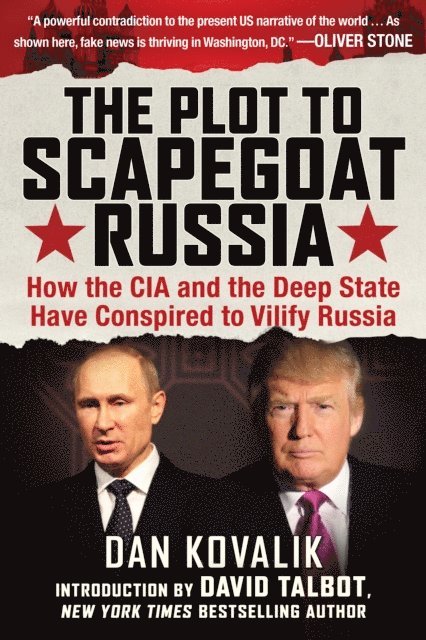
An in-depth look at the decades-long effort to escalate hostilities with Russia and what it portends for the future. Since 1945, the US has justified numerous wars, interventions, and military build-ups based on the pretext of the Russian Red Menace, even after the Soviet Union collapsed at the end of 1991 and Russia stopped being Red. In fact, the two biggest post-war American conflicts, the Korean and Vietnam wars, were not, as has been frequently claimed, about stopping Soviet aggression or even influence, but about maintaining old colonial relationships. Similarly, many lesser interventions and conflicts, such as those in Latin America, were also based upon an alleged Soviet threat, which was greatly overblown or nonexistent. And now the specter of a Russian Menace has been raised again in the wake of Donald Trump’s election. The Plot to Scapegoat Russia examines the recent proliferation of stories, usually sourced from American state actors, blaming and manipulating the threat of Russia, and the long history of which this episode is but the latest chapter. It will show readers two key things: (1) the ways in which the United States has needlessly provoked Russia, especially after the collapse of the USSR, thereby squandering hopes for peace and cooperation; and (2) how Americans have lost out from this missed opportunity, and from decades of conflicts based upon false premises. These revelations, amongst other, make The Plot to Scapegoat Russia one of the timeliest reads of 2017.
120 kr
Läs direkt efter köp
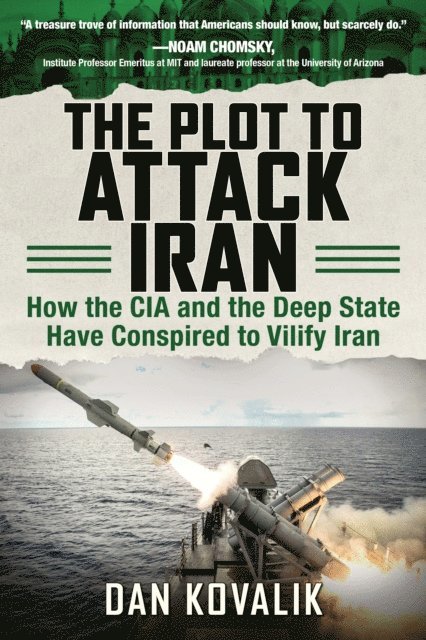
* “Spectacular!” * –Oliver StoneThe world has a lot of questions about the current state of affairs between the United States and Iran… How has the US undermined democracy in Iran? Is Iran really trying to develop nuclear weapons? How has US waged a terror campaign against Iran for years? How is it that the US and Israel, rather than Iran, are destabilizing the Middle East? How has Iran helped the US in the war on terror?In The Plot to Attack Iran, critically acclaimed author Dan Kovalik exposes what Americans have known about the Islamic Republic is largely based on propaganda. The 1953 coup that deposed the democratically-elected prime minister for a US-selected shah? Sold to average American citizens as a necessity to protect democracy and guard against communism. In truth, it was America’s lust for Iranian oil and power that installed the tyrannical shah. The Iranian hostage crisis that miraculously ended with Ronald Reagan’s inauguration as president? Evidence shows that Reagan negotiated with the hostage-takers to hold the hostages until his inauguration.Iran, once known as Persia, is one of the oldest nations on earth. It has a rich history and a unique culture, and is bordered by seven countries, the Caspian Sea, and the Persian Gulf. It is literally the intersection of many countries and many worlds. It has a population of eighty million people and occupies a space nearly the size of Alaska, the largest US state; it is the seventeenth largest country in the world. Over the past century, Iran’s greatest resource, and at the same time its greatest curse, has been its oil. For it is oil that has caused the United States and other world powers to systematically attempt to destroy Iran. After a greedy Iranian monarch sold all of Iran’s oil and natural gas reserves to a British financier in 1901, the West started just one of its many invasions and exploitations of the country.Using recently declassified documents and memos, as well as first-hand experience of the country, critically-acclaimed author Dan Kovalik will change the way you think about Iran, and especially what you think of US interference there. Learn how the United States vilifies its enemies, and accuses them of unspeakable horror to mask its own terrible crimes. Not only does the illuminating and important The Plot to Attack Iran delve into the current incendiary situation, but it also predicts what could happen next, and what needs to be done before it is too late.
E-bok
Engelska, 2019687 kr
Läs direkt efter köp
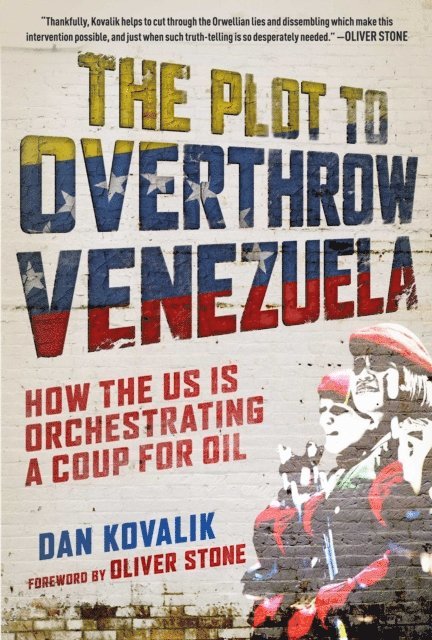
An in-depth look at the US threat to "save" Venezuela Since 1999 when Hugo Chavez became the elected president of Venezuela, the US has been conniving to overthrow his government and to roll back the Bolivarian Revolution which he ushered in to Venezuela. With the untimely death of Hugo Chavez in 2013, and the election of Nicolas Maduro that followed, the US redoubled its efforts to overturn this revolution. The US is now threatening to intervene militarily to bring about the regime change it has wanted for twenty years. While we have been told that the US’s efforts to overthrow Chavez and Maduro are motivated by altruistic goals of advancing the interests of democracy and human rights in Venezuela, is this true? The Plot to Overthrow Venezuela answers this question with a resounding “no,” demonstrating that: The US’s interests in Venezuela have always centered upon one and only one thing: Venezuela’s vast oil reserves;The US has happily supported one repressive regime after another in Venezuela to protect its oil interests;Chavez and Maduro are not the “tyrants” we have been led to believe they are, but in fact have done much to advance the interests of democracy and economic equality in Venezuela;What the US and the Venezuelan opposition resent most is the fact that Chavez and Maduro have governed in the interest of Venezuela’s vast numbers of poor and oppressed racial groups;While the US claims that it is has the humanitarian interests of the Venezuelan people at heart, the fact is that the US has been waging a one-sided economic war against Venezuela which has greatly undermined the health and living conditions of Venezuelans;The opposition forces the US is attempting to put into power represent Venezuela’s oligarchy who want to place Venezuela’s oil revenues back in the hands of Venezuela’s economic elite as well as US oil companies. The battle for Venezuela which is now being waged will determine the fate of all of Latin America for many years to come. The Plot to Overthrow Venezuela lets readers know what is at stake in this struggle and urges readers to reconsider which side they are on.
E-bok
Engelska, 2020901 kr
Läs direkt efter köp
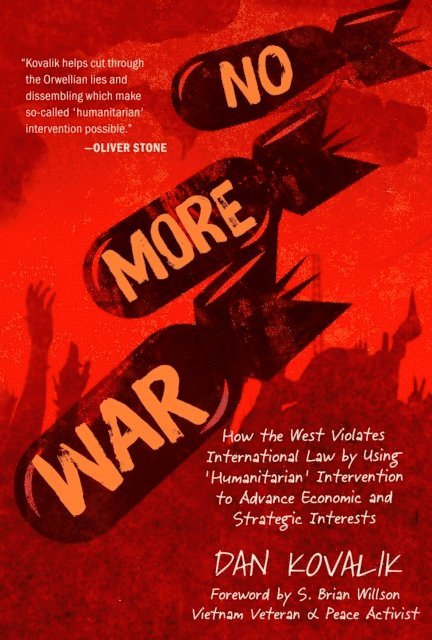
"Kovalik helps cut through the Orwellian lies and dissembling which make so-called 'humanitarian' intervention possible." —Oliver Stone War is the fount of all the worst human rights violations―including genocide―and not its cure. This undeniable truth, which the framers of the UN Charter understood so well, is lost in today’s obsession with the oxymoron known as “humanitarian" intervention.No More War: How the West Violates International Law by Using 'Humanitarian' Intervention to Advance Economic and Strategic Interests sets out to reclaim the original intent of the Charter founders to end the scourge of war on the heels of the devastation wrought by WWII. The book begins with a short history of the West’s development as built upon the mass plunder of the Global South, genocide and slavery, and challenges the prevailing notion that the West is uniquely poised to enforce human rights through force. This book also goes through recent “humanitarian" interventions carried out by the Western powers against poorer nations (e.g., in the DRC, Congo, and Iraq) and shows how these have only created greater human rights problems – including genocide – than they purported to stop or prevent.No More War reminds the reader of the key lessons of Nuremberg – that war is the primary scourge of the world, the root of all the evils which international law seeks to prevent and eradicate, and which must be prevented. The reader is then taken through the UN Charter and other human rights instruments and their emphasis on the prevention of aggressive war.
Inbunden, Engelska, 2021
195 kr
Skickas
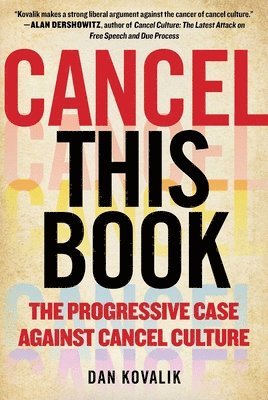
Examining a phenomenon that is sweeping the country, Cancel This Book shines the spotlight on the suppression of open and candid debate. The public shaming of individuals for actual or perceived offenses, often against emerging notions of proper racial and gender norms and relations, has become commonplace. In a number of cases, the shaming is accompanied by calls for the offending individuals to lose their jobs, positions, or other status. Frequently, those targeted for “cancellation” simply do not know the latest, ever-changing norms (often related to language) that they are accused of transgressing—or they have honest questions about issues that have been deemed off-limits for debate and discussion. Cancel This Book offers a unique perspective from Dan Kovalik, a progressive author who supports the ongoing movements for racial and gender equality and justice, but who is concerned about the prevalence of “cancelling” people, and especially of people who are well-intentioned and who are themselves allied with these movements. While many progressives believe that “cancelling” others is a form of activism and holding others accountable, Cancel This Book argues that “cancellation” is oftentimes counter-productive and destructive of the very values which the “cancellers” claim to support. And indeed, we now see instances in the workplace where employers are using this spirt of “cancellation” to pit employees against each other, to exert more control over the workforce and to undermine worker and labor solidarity. Kovalik observes that many progressives are quietly opposed to this “Cancel Culture” and to many instances of “cancellation” they witness, but they are afraid to air these concerns publicly lest they themselves be “cancelled.” The result is the suppression of open debate about important issues involving racial and gender matters, and even issues related to how to best confront the current COVID-19 pandemic. While people speak in whispers about their true feelings about such issues, critical debate and discussion is avoided, resentments build, and the movement for justice and equality is ultimately disserved.
E-bok
Engelska, 2021809 kr
Läs direkt efter köp
Examining a phenomenon that is sweeping the country, Cancel This Book shines the spotlight on the suppression of open and candid debate. The public shaming of individuals for actual or perceived offenses, often against emerging notions of proper racial and gender norms and relations, has become commonplace. In a number of cases, the shaming is accompanied by calls for the offending individuals to lose their jobs, positions, or other status. Frequently, those targeted for “cancellation” simply do not know the latest, ever-changing norms (often related to language) that they are accused of transgressing—or they have honest questions about issues that have been deemed off-limits for debate and discussion. Cancel This Book offers a unique perspective from Dan Kovalik, a progressive author who supports the ongoing movements for racial and gender equality and justice, but who is concerned about the prevalence of “cancelling” people, and especially of people who are well-intentioned and who are themselves allied with these movements. While many progressives believe that “cancelling” others is a form of activism and holding others accountable, Cancel This Book argues that “cancellation” is oftentimes counter-productive and destructive of the very values which the “cancellers” claim to support. And indeed, we now see instances in the workplace where employers are using this spirt of “cancellation” to pit employees against each other, to exert more control over the workforce and to undermine worker and labor solidarity. Kovalik observes that many progressives are quietly opposed to this “Cancel Culture” and to many instances of “cancellation” they witness, but they are afraid to air these concerns publicly lest they themselves be “cancelled.” The result is the suppression of open debate about important issues involving racial and gender matters, and even issues related to how to best confront the current COVID-19 pandemic. While people speak in whispers about their true feelings about such issues, critical debate and discussion is avoided, resentments build, and the movement for justice and equality is ultimately disserved.
E-bok
Engelska, 2024894 kr
Läs direkt efter köp
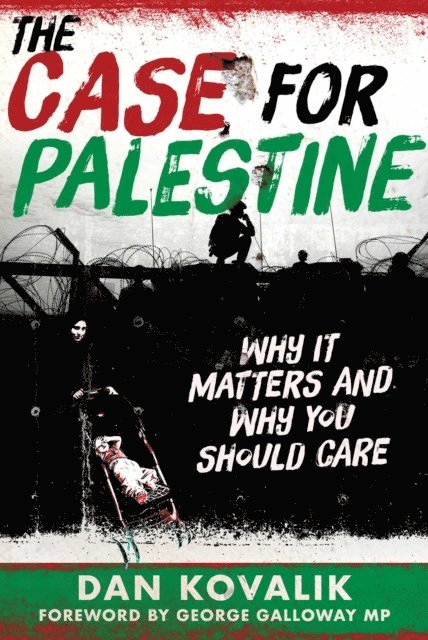
In 1948, the State of Israel was founded. While the philosophy of Zionism that advocated for a Jewish homeland in what was then known as Palestine dates back to 1897, the creation of Israel in 1948 was justified by the terrible crime of the Holocaust committed by Nazi Germany during WWII. Many defenders of Israel would like us to believe that the creation of Israel was a peaceful process on a barely populated land, however, this is far from true. Rather, the creation of Israel was accompanied by what is known by the Palestinians as the Nakba(catastrophe)—an operation in which 700,000 Palestinians were violently expelled from their land and their homes. Since that time, Israel has continued to usurp more and more land from the Palestinians who they falsely portray as a people without a history and without a culture. Israel has been particularly cruel to the people of Gaza—70 percent of whom are refugees from the 1948 Nakba. Gaza has been converted by Israel into what some call a giant open-air prison surrounded by barbed wire. It is in this context that we are currently witnessing the tragic violence between Israel and the people of Gaza—violence on a scale not seen in this land since the Nakba of 1948. Indeed, many Palestinians are calling this a second Nakba, with around 1.5 million Palestinians already displaced and thousands killed. All of this is being accomplished by Israel with critical military and diplomatic support from the United States. This second Nakba is also being facilitated by the mainstream press that both downplays and justifies what many believe to be genocidal violence against the Palestinian people. The Case for Palestine is written as a counternarrative, with the hope that, if the truth is told, this violence and displacement can be stopped before it is too late; before Gaza is no more.