Dan Woods – författare
196 kr
Läs direkt efter köp
193 kr
Skickas inom 5-8 vardagar
380 kr
Skickas inom 5-8 vardagar
436 kr
Läs direkt efter köp
Information Technology professionals can use this book to move beyond the excitement of web services and service oriented architecture (SOA) and begin the process of finding actionable ideas to innovate and create business value. In Enterprise SOA: Designing IT for Business Innovation, SAP''s blueprint for putting SOA to work is analyzed from top to bottom. In addition to design, development, and architecture, vital contextual issues such as governance, security, change management, and culture are also explored. This comprehensive perspective reduces risk as IT departments implement ESA, a sound, flexible architecture for adapting business processes in response to changing market conditions.
This book answers the following questions:
What forces created the need for Enterprise Services Architecture?How does ESA enable business process innovation?How is model-driven development used at all levels of design, configuration, and deployment?How do all the layers of technology that support ESA work together?How will composite applications extend business process automation?How does ESA create new models for IT governance?How can companies manage disruptive change?How can enterprise services be discovered and designed?How will the process of adapting applications be simplified?Based on extensive research with experts from the German software company SAP, this definitive book is ideal for architects, developers, and other IT professionals who want to understand the technology and business relevance of ESA in a detailed way--especially those who want to move on the technology now, rather than in the next year or two.
405 kr
Läs direkt efter köp
Information Technology professionals can use this book to move beyond the excitement of web services and service oriented architecture (SOA) and begin the process of finding actionable ideas to innovate and create business value. In Enterprise SOA: Designing IT for Business Innovation, SAP''s blueprint for putting SOA to work is analyzed from top to bottom. In addition to design, development, and architecture, vital contextual issues such as governance, security, change management, and culture are also explored. This comprehensive perspective reduces risk as IT departments implement ESA, a sound, flexible architecture for adapting business processes in response to changing market conditions.
This book answers the following questions:
What forces created the need for Enterprise Services Architecture?How does ESA enable business process innovation?How is model-driven development used at all levels of design, configuration, and deployment?How do all the layers of technology that support ESA work together?How will composite applications extend business process automation?How does ESA create new models for IT governance?How can companies manage disruptive change?How can enterprise services be discovered and designed?How will the process of adapting applications be simplified?Based on extensive research with experts from the German software company SAP, this definitive book is ideal for architects, developers, and other IT professionals who want to understand the technology and business relevance of ESA in a detailed way--especially those who want to move on the technology now, rather than in the next year or two.
379 kr
Läs direkt efter köp
Starting to transform your business with SAP NetWeaver is that daunting. NetWeaver is both an application platform and an integration platform. It integrates your current IT systems to enable portals, collaboration, data management, and development environments. To grasp the complexities and possibilities of SAP ASAP, dig in with SAP NetWeaver For Dummies and explore:
MySAP Business Suite SAP Enterprise Planning Resource (ERP), Customer Relationship Management (CRM), Supply Chain Management (SCM), Human Capital Management (HCM), Product Lifecycle Management (PLM), Supplier Relationship Management (SRM), and more Mobile Infrastructure that performs like a universal translator for mobile interfaces, including laptops, wireless phones, and PDAs Master Data Management, including using the content consolidation technique to “clean up” data, master data harmonization to distribute it, and central master data management to maintain a data repository Web Application Service and NetWeaver Developer Studio—tools that let you integrate and create your own customized applicationsWritten by Dan Woods, former CTO of The Street.com and CapitalThinking, and Jeffrey Word, the Director of Technology Strategy for SAP, this guide features real-life stories from businesses and examples of typical uses to help you cut through the complexities and get up and running. It includes a CD-ROM with:
Detailed white papers and product overviews Stores from customers using SAP NetWeaver today Demos that show SAP NetWeaver in action A directory of resources for additional informationLike that interstate system, SAP NetWeaver doesn’t have to be integrated all at once. You choose the applications that have the most potential to benefit your company’s operations and bottom line. SAP NetWeaver For Dummies even gives you recommendations for rolling it out and suggests practical ways to get started and get quick returns on your SAP investment. Then you’re going full-speed ahead on the road to success!
329 kr
Skickas inom 5-8 vardagar
319 kr
Skickas inom 5-8 vardagar
196 kr
Läs direkt efter köp
379 kr
Läs direkt efter köp
193 kr
Skickas inom 5-8 vardagar
207 kr
Läs direkt efter köp
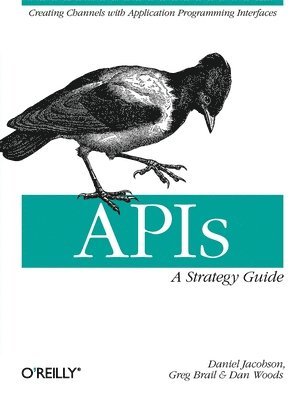
Programmers used to be the only people excited about APIs, but now a growing number of companies see them as a hot new product channel. This concise guide describes the tremendous business potential of APIs, and demonstrates how you can use them to provide valuable services to clients, partners, or the public via the Internet. You’ll learn all the steps necessary for building a cohesive API business strategy from experts in the trenches.
Facebook and Twitter APIs continue to be extremely successful, and many other companies find that API demand greatly exceeds website traffic. This book offers executives, business development teams, and other key players a complete roadmap for creating a viable API product.
Learn about the rise of APIs and why your business might need oneUnderstand the roles of asset owners, providers, and developers in the API value chainBuild strategies for designing, implementing, and marketing your productDevise an effective process for security and user managementAddress legal issues, such as rights management and terms of useManage traffic and user experience with a reliable operating modelDetermine the metrics you need to measure your API’s success222 kr
Läs direkt efter köp
Programmers used to be the only people excited about APIs, but now a growing number of companies see them as a hot new product channel. This concise guide describes the tremendous business potential of APIs, and demonstrates how you can use them to provide valuable services to clients, partners, or the public via the Internet. You’ll learn all the steps necessary for building a cohesive API business strategy from experts in the trenches.
Facebook and Twitter APIs continue to be extremely successful, and many other companies find that API demand greatly exceeds website traffic. This book offers executives, business development teams, and other key players a complete roadmap for creating a viable API product.
Learn about the rise of APIs and why your business might need oneUnderstand the roles of asset owners, providers, and developers in the API value chainBuild strategies for designing, implementing, and marketing your productDevise an effective process for security and user managementAddress legal issues, such as rights management and terms of useManage traffic and user experience with a reliable operating modelDetermine the metrics you need to measure your API’s success268 kr
Läs direkt efter köp
Open source software is changing the world of Information Technology. But making it work for your company is far more complicated than simply installing a copy of Linux. If you are serious about using open source to cut costs, accelerate development, and reduce vendor lock-in, you must institutionalize skills and create new ways of working. You must understand how open source is different from commercial software and what responsibilities and risks it brings. Open Source for the Enterprise is a sober guide to putting open source to work in the modern IT department.
Open source software is software whose code is freely available to anyone who wants to change and redistribute it. New commercial support services, smaller licensing fees, increased collaboration, and a friendlier platform to sell products and services are just a few of the reasons open source is so attractive to IT departments. Some of the open source projects that are in current, widespread use in businesses large and small include Linux, FreeBSD, Apache, MySQL, PostgreSQL, JBOSS, and Perl. These have been used to such great effect by Google, Amazon, Yahoo!, and major commercial and financial firms, that a wave of publicity has resulted in recent years, bordering on hype. Large vendors such as IBM, Novell, and Hewlett Packard have made open source a lynchpin of their offerings. Open source has entered a new area where it is being used as a marketing device, a collaborative software development methodology, and a business model.
This book provides something far more valuable than either the cheerleading or the fear-mongering one hears about open source. The authors are Dan Woods, former CTO of TheStreet.com and a consultant and author of several books about IT, and Gautam Guliani, Director of Software Architecture at Kaplan Test Prep & Admissions. Each has used open source software for some 15 years at IT departments large and small. They have collected the wisdom of a host of experts from IT departments, open source communities, and software companies.
Open Source for the Enterprise provides a top to bottom view not only of the technology, but of the skills required to manage it and the organizational issues that must be addressed. Here are the sorts of questions answered in the book:
Why is there a "productization gap" in most open source projects?How can the maturity of open source be evaluated?How can the ROI of open source be calculated?What skills are needed to use open source?What sorts of open source projects are appropriate for IT departments at the beginner, intermediate, advanced, and expert levels?What questions need to be answered by an open source strategy?What policies for governance can be instituted to control the adoption of open source?What new commercial services can help manage the risks of open source?Do differences in open source licenses matter?How will using open source transform an IT department?Praise for Open Source for the Enterprise:"Open Source has become a strategic business issue; decisions on how andwhere to choose to use Open Source now have a major impact on theoverall direction of IT abilities to support the business both withcapabilities and by controlling costs. This is a new game and onegenerally not covered in existing books on Open Source which continue toassume that the readers are ''deep dive'' technologists, Open Source for the Enterprise provides everyone from business managers to technologistswith the balanced view that has been missing. Well worth the time toread, and also worth encouraging others in your enterprise to read as well." ----Andy Mulholland - Global CTO Capgemini
"Open Source for the Enterprise is required reading for anyone workingwith or looking to adopt open source technologies in a corporateenvironment. Its practical, no-BS approach will make sure you''re armedwith the information you need to deploy applications successfully (aswell as helping you know when to say "no"). If you''re trying to sell opensource to management, this book will give you the ammunition you need.If you''re a manager trying to drive down cost using open source, thisbook will tell you what questions to ask your staff. In short, it''s aclear, concise explanation of how to successfully leverage open sourcewithout making the big mistakes that can get you fired." ----Kevin Bedell - founding editor of LinuxWorld Magazine
466 kr
Läs direkt efter köp
Build robust, highly scalable reactive web applications with Ratpack, the lightweight JVM framework. With this practical guide, you’ll discover how asynchronous applications differ from more traditional thread-per-request systems—and how you can reap the benefits of complex non-blocking through an API that makes the effort easy to understand and adopt.
Author Dan Woods—a member of the Ratpack core team—provides a progressively in-depth tour of Ratpack and its capabilities, from basic concepts to tools and strategies to help you construct fast, test-driven applications in a semantic and expressive way. Ideal for Java web developers familiar with Grails or Spring, this book is applicable to all versions of Ratpack 1.x.
Configure your applications and servers to accommodate the cloudUse Ratpack testing structures on both new and legacy applicationsAdd advanced capabilities, such as component binding, with modulesExplore Ratpack’s static content generation and serving mechanismsProvide a guaranteed execution order to asynchronous processingModel data and the data access layer to build high-performance, data-driven applicationsWork with reactive and functional programming strategiesUse distribution techniques that support continuous delivery and other deployment tactics466 kr
Läs direkt efter köp
Build robust, highly scalable reactive web applications with Ratpack, the lightweight JVM framework. With this practical guide, you’ll discover how asynchronous applications differ from more traditional thread-per-request systems—and how you can reap the benefits of complex non-blocking through an API that makes the effort easy to understand and adopt.
Author Dan Woods—a member of the Ratpack core team—provides a progressively in-depth tour of Ratpack and its capabilities, from basic concepts to tools and strategies to help you construct fast, test-driven applications in a semantic and expressive way. Ideal for Java web developers familiar with Grails or Spring, this book is applicable to all versions of Ratpack 1.x.
Configure your applications and servers to accommodate the cloudUse Ratpack testing structures on both new and legacy applicationsAdd advanced capabilities, such as component binding, with modulesExplore Ratpack’s static content generation and serving mechanismsProvide a guaranteed execution order to asynchronous processingModel data and the data access layer to build high-performance, data-driven applicationsWork with reactive and functional programming strategiesUse distribution techniques that support continuous delivery and other deployment tactics380 kr
Skickas inom 5-8 vardagar
268 kr
Läs direkt efter köp