Dana Gardner Munro – författare
Visar alla böcker från författaren Dana Gardner Munro. Handla med fri frakt och snabb leverans.
10 produkter
10 produkter
Häftad, Engelska, 2015
1 146 kr
Skickas inom 3-6 vardagar
Between 1921 and 1933, the United States moved from a policy of active intervention to a policy of noninterference in the internal political affairs of the Caribbean states. How the shift from the diplomacy of the Taft and Wilson administrations to the Good Neighbor policy of Franklin Roosevelt occurred is the subject of Dana Gardner Munro's book. The author draws on official records and on his personal experience as a member of the Latin American Division of the United States Department of State to piece together the history of the transition in diplomatic policy. Professor Munro concentrates on several important issues that changed the tone of the relations of the United States with Cuba, the Dominican Republic, Haiti, and the five Central American Republics: the failure to compel political reforms in Cuba from 1921 to 1923; the withdrawal of the occupations from the Dominican Republic and Haiti; the intervention in Nicaragua; the response to the Machado and Trujillo dictatorships; and the refusal to recognize revolutionary governments in Central America.The author's analysis sheds new light on the much-discussed Clark memorandum, on the degree to which policy furthered the interests of bankers and businessmen, and on the attitude of the American government toward dictatorial regimes. Originally published in 1974. The Princeton Legacy Library uses the latest print-on-demand technology to again make available previously out-of-print books from the distinguished backlist of Princeton University Press. These editions preserve the original texts of these important books while presenting them in durable paperback and hardcover editions. The goal of the Princeton Legacy Library is to vastly increase access to the rich scholarly heritage found in the thousands of books published by Princeton University Press since its founding in 1905.

Häftad, Engelska, 2015
1 488 kr
Skickas inom 3-6 vardagar
The commonly held view that the interests of American business dominated U.S. foreign policy in the Caribbean during the early part of this century is challenged by Dana G. Munro, prominent scholar and former State Department official. He argues that the basic purpose of U.S. policy was to create in Latin America political and economic stability so that disorder and failure to meet foreign obligations there would not imperil the security of the United States. The U.S. government increasingly intervened in the internal affairs of the Central American and West Indian republics when it felt that their stability was threatened. This policy culminated in the military occupation of Haiti and the Dominican Republic and varying degrees of control in other countries. Originally published in 1964. The Princeton Legacy Library uses the latest print-on-demand technology to again make available previously out-of-print books from the distinguished backlist of Princeton University Press. These editions preserve the original texts of these important books while presenting them in durable paperback and hardcover editions.The goal of the Princeton Legacy Library is to vastly increase access to the rich scholarly heritage found in the thousands of books published by Princeton University Press since its founding in 1905.
Inbunden, Engelska, 2016
2 695 kr
Skickas inom 3-6 vardagar
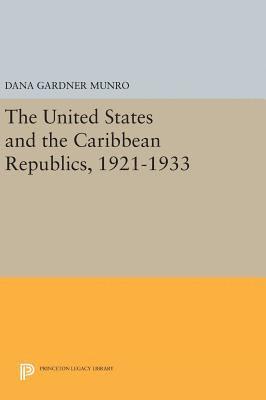
Between 1921 and 1933, the United States moved from a policy of active intervention to a policy of noninterference in the internal political affairs of the Caribbean states. How the shift from the diplomacy of the Taft and Wilson administrations to the Good Neighbor policy of Franklin Roosevelt occurred is the subject of Dana Gardner Munro's book. The author draws on official records and on his personal experience as a member of the Latin American Division of the United States Department of State to piece together the history of the transition in diplomatic policy. Professor Munro concentrates on several important issues that changed the tone of the relations of the United States with Cuba, the Dominican Republic, Haiti, and the five Central American Republics: the failure to compel political reforms in Cuba from 1921 to 1923; the withdrawal of the occupations from the Dominican Republic and Haiti; the intervention in Nicaragua; the response to the Machado and Trujillo dictatorships; and the refusal to recognize revolutionary governments in Central America.The author's analysis sheds new light on the much-discussed Clark memorandum, on the degree to which policy furthered the interests of bankers and businessmen, and on the attitude of the American government toward dictatorial regimes. Originally published in 1974. The Princeton Legacy Library uses the latest print-on-demand technology to again make available previously out-of-print books from the distinguished backlist of Princeton University Press. These editions preserve the original texts of these important books while presenting them in durable paperback and hardcover editions. The goal of the Princeton Legacy Library is to vastly increase access to the rich scholarly heritage found in the thousands of books published by Princeton University Press since its founding in 1905.

Inbunden, Engelska, 2016
3 771 kr
Skickas inom 3-6 vardagar
The commonly held view that the interests of American business dominated U.S. foreign policy in the Caribbean during the early part of this century is challenged by Dana G. Munro, prominent scholar and former State Department official. He argues that the basic purpose of U.S. policy was to create in Latin America political and economic stability so that disorder and failure to meet foreign obligations there would not imperil the security of the United States. The U.S. government increasingly intervened in the internal affairs of the Central American and West Indian republics when it felt that their stability was threatened. This policy culminated in the military occupation of Haiti and the Dominican Republic and varying degrees of control in other countries. Originally published in 1964. The Princeton Legacy Library uses the latest print-on-demand technology to again make available previously out-of-print books from the distinguished backlist of Princeton University Press. These editions preserve the original texts of these important books while presenting them in durable paperback and hardcover editions.The goal of the Princeton Legacy Library is to vastly increase access to the rich scholarly heritage found in the thousands of books published by Princeton University Press since its founding in 1905.
Inbunden, Engelska, 2022
414 kr
Skickas inom 5-8 vardagar
Häftad, Engelska, 2022
300 kr
Skickas inom 5-8 vardagar
Häftad, Engelska, 2025
314 kr
Skickas inom 5-8 vardagar
Inbunden, Engelska, 2025
427 kr
Skickas inom 5-8 vardagar
E-bok
PDF, Engelska, 2015859 kr
Läs direkt efter köp
Between 1921 and 1933, the United States moved from a policy of active intervention to a policy of noninterference in the internal political affairs of the Caribbean states. How the shift from the diplomacy of the Taft and Wilson administrations to the Good Neighbor policy of Franklin Roosevelt occurred is the subject of Dana Gardner Munro's book. The author draws on official records and on his personal experience as a member of the Latin American Division of the United States Department of State to piece together the history of the transition in diplomatic policy.Professor Munro concentrates on several important issues that changed the tone of the relations of the United States with Cuba, the Dominican Republic, Haiti, and the five Central American Republics: the failure to compel political reforms in Cuba from 1921 to 1923; the withdrawal of the occupations from the Dominican Republic and Haiti; the intervention in Nicaragua; the response to the Machado and Trujillo dictatorships; and the refusal to recognize revolutionary governments in Central America. The author's analysis sheds new light on the much-discussed Clark memorandum, on the degree to which policy furthered the interests of bankers and businessmen, and on the attitude of the American government toward dictatorial regimes.Originally published in 1974.The Princeton Legacy Library uses the latest print-on-demand technology to again make available previously out-of-print books from the distinguished backlist of Princeton University Press. These editions preserve the original texts of these important books while presenting them in durable paperback and hardcover editions. The goal of the Princeton Legacy Library is to vastly increase access to the rich scholarly heritage found in the thousands of books published by Princeton University Press since its founding in 1905.
E-bok
PDF, Engelska, 20151 141 kr
Läs direkt efter köp
The commonly held view that the interests of American business dominated U.S. foreign policy in the Caribbean during the early part of this century is challenged by Dana G. Munro, prominent scholar and former State Department official. He argues that the basic purpose of U.S. policy was to create in Latin America political and economic stability so that disorder and failure to meet foreign obligations there would not imperil the security of the United States. The U.S. government increasingly intervened in the internal affairs of the Central American and West Indian republics when it felt that their stability was threatened. This policy culminated in the military occupation of Haiti and the Dominican Republic and varying degrees of control in other countries.Originally published in 1964.The Princeton Legacy Library uses the latest print-on-demand technology to again make available previously out-of-print books from the distinguished backlist of Princeton University Press. These editions preserve the original texts of these important books while presenting them in durable paperback and hardcover editions. The goal of the Princeton Legacy Library is to vastly increase access to the rich scholarly heritage found in the thousands of books published by Princeton University Press since its founding in 1905.