Dane R. Gordon – författare
Visar alla böcker från författaren Dane R. Gordon. Handla med fri frakt och snabb leverans.
4 produkter
4 produkter
Häftad, Engelska, 2003
417 kr
Skickas inom 3-6 vardagar
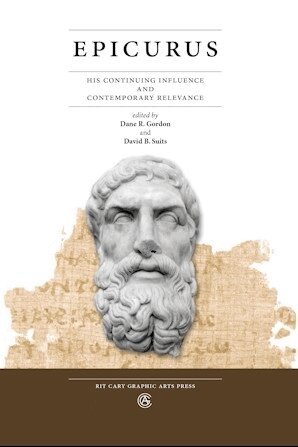
The philosophy of Epicurus (c. 341-271 B. C. E.), has been a quietly pervasive influence for more than two millennia. At present, when many long revered ideologies are proven empty, Epicureanism is powerfully and refreshingly relevant, offering a straightforward way of dealing with the issues of life and death. The chapters in this book provide a kaleidoscope of contemporary opinions about Epicurus' teachings. They tell us also about the archeological discoveries that promise to augment the scant remains we have of Epicurus's own writing. the breadth of this new work will be welcomed by those who value Epicurean philosophy as a scholarly and personal resource for contemporary life. "Epicurus: His Continuing Influence and Contemporary Relevance," is the title of a 2002 conference on Epicurus held at Rochester Institute of Technology, when many of the ideas here were first presented.
Häftad, Engelska, 2013
401 kr
Skickas inom 3-6 vardagar
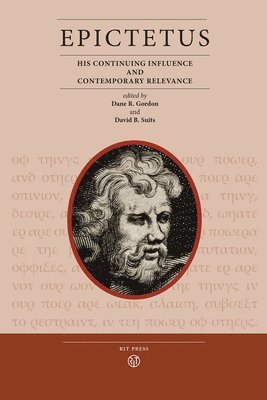
Epictetus (c. 50-c. 120 CE) was born a slave. His master, Epaphroditus, allowed him to attend the lectures of the Stoic philosopher Musonius Rufus and later gave him his freedom. From numerous references in his Discourses it is clear that Epictetus valued freedom as a precious possession. He would have been on the side of the many people living now who, while not actually enslaved, are denied true freedom by the harsh circumstances of their lives. Epictetus's teachings about freedom and human dignity have echoed through the millennia-in the writings of Spinoza, Thomas Paine and Martin Luther King, Jr., to name a few. He was much concerned with human behavior. His advice to not worry about what is not in our control is pointedly relevant to our busy modern society-which is often fraught with anxiety. Some people might argue that what Epictetus taught is not serious philosophy, more like self-help. But the range of topics addressed by the essays in this book clearly indicates that the teachings of Epictetus provide strong incentive to present day philosophical thinking. Epictetus: His Continuing Influence and Contemporary Relevance is the title of a conference on Epictetus held at Rochester Institute of Technology in April 2012, when many of the ideas in these essays were first presented. This book is part of the RIT Press Philosophy Series.
E-bok
PDF, Engelska, 20211 991 kr
Läs direkt efter köp
Philosophy and Vision argues that clear thinking and imaginative understanding are necessary qualities as we try to deal with the problems that confront us in our daily life. The book discusses history, the environment, religion, personal and corporate morality, freedom, the concept of person, poetry, and post-modernism attempts to show that as a philosophic vision is brought to bear on all of these, we will grasp them more completely and more constructively. The issues which challenge most of us seldom have straightforward answers, but they require some answers, some response other than failing out of our emotions. Attempting to see these philosophically, to adopt a philosophic vision, is no panacea, but it may make the difference between being overwhelmed and being able to cope. The book has a crisp enjoyable style, and while it is a philosophical work it draws upon movies, fiction, poetry, and life's experiences in developing its arguments.
Del 151 - Post-Communist European Thought
Civil Society in Southeast Europe
Häftad, Engelska, 2004
927 kr
Skickas inom 5-8 vardagar
Since the fall of communism in 1989 Southeast Europe has been a site of far-reaching societal transformation, much of it marked by political crisis, economic upheaval, ethnic tension, and bitter war. The book comprises articles investigating the history and development of civil society in post-communist Southeast Europe. How is civil society to be grasped, what are the historical factors shaping the civil societies of the region?, what is the function of civil society in the transition to democracy and a market-economy?, and what are the prospects for the future development of the civil societies of the region in an age of globalization?, –these are just a few of the major questions addressed in this collection of articles. Many of the authors are social scientists, philosophers, and activists from the region, offering first-hand critical analysis of the state of civil society in Southeast Europe and suggesting theoretical and practical strategies for the future course of its development. The aim is to provide the reader with insight into the complex challenges that face the civil societies of the region.