Daniel A. Vallero - Böcker
1 012 kr
Skickas inom 7-10 vardagar
849 kr
Skickas inom 7-10 vardagar
Unraveling Environmental Disasters provides scientific explanations of the most threatening current and future environmental disasters, including an analysis of ways that the disaster could have been prevented and how the risk of similar disasters can be minimized in the future.
Named a 2014 Outstanding Academic Title by the American Library Association's Choice publication Treats disasters as complex systems Provides predictions based upon sound science, such as what the buildup of certain radiant gases in the troposphere will do, or what will happen if current transoceanic crude oil transport continues Considers the impact of human systems on environmental disasters1 093 kr
Skickas inom 7-10 vardagar
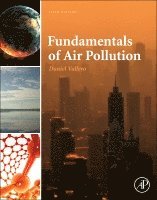
Fundamentals of Air Pollution is an important and widely used textbook in the environmental science and engineering community. This thoroughly revised fifth edition of Fundamentals of Air Pollution has been updated throughout and remains the most complete text available, offering a stronger systems perspective and more coverage of international issues relating to air pollution. Sections on pollution control have been reorganized and updated to demonstrate the move from regulation and control approaches to green and sustainable engineering approaches.
The fifth edition maintains a strong interdisciplinary approach to the study of air pollution, covering such topics as chemistry, physics, meteorology, engineering, toxicology, policy, and regulation. New material includes near-road air pollution, new risk assessment approaches, indoor air quality, the impact of biofuels and fuel additives, mercury emissions, forecasting techniques, and the most recent results from the National Air Toxics Assessment.
Stronger systems approach, emphasizing the impact of air pollution on ecosystems and human health Risks, measures, models, and control of air pollution are discussed at scale - starting at the individual/niche level and expanding to planetary/global scale Increased emphasis on international issues, including coverage of European initiatives and discussions of the impact of emerging economies like India and China Updated references, standards, and methods throughout the book make this the most current air pollution text/reference on the market All new end-of-chapter problems enhance its usefulness as a course text1 349 kr
Skickas inom 7-10 vardagar
Environmental Biotechnology: A Biosystems Approach, Second Edition presents valuable information on how biotechnology has acted as a vital buffer among people, pollution, and the environment. It answers the most important questions on the topic, including how, and why, a knowledge and understanding of the physical, chemical, and biological principles of the environment must be achieved in order to develop biotechnology applications.
Most texts address either the applications or the implications of biotechnology. This book addresses both. The applications include biological treatment and other environmental engineering processes. The risks posed by biotechnologies are evaluated from both evidence-based and precautionary perspectives. Using a systems biology approach, the book provides a context for researchers and practitioners in environmental science that complements guidebooks on the necessary specifications and criteria for a wide range of environmental designs and applications. Users will find crucial information on the topics scientific researchers must evaluate in order to develop further technologies.
Provides a systems approach to biotechnologies which includes the physical, biological, and chemical processes in context Presents relevant case studies on cutting-edge technologies, such as nanobiotechnologies and green engineering Addresses both the applications and implications of biotechnologies by following the lifecycle of a variety of established and developing biotechnologies Includes crucial information on the topics scientific researchers must evaluate in order to develop further technologiesTranslating Diverse Environmental Data into Reliable Information
How to Coordinate Evidence from Different Sources
1 214 kr
Skickas inom 7-10 vardagar
Translating Diverse Environmental Data into Reliable Information: How to Coordinate Evidence from Different Sources is a resource for building environmental knowledge, particularly in the era of Big Data. Environmental scientists, engineers, educators and students will find it essential to determine data needs, assess their quality, and efficiently manage their findings. Decision makers can explore new open access databases and tools, especially portals and dashboards. The book demonstrates how environmental knowledgebases are and can be built to meet the needs of modern students and professionals. Topics covered include concepts and principles that underpin air, water, and other public health and ecological topics. Integrated and systems perspectives are woven throughout, with clues on how to build and apply interdisciplinary data, which can increasingly be obtained from sources ranging from peer-reviewed research appearing in scientific journals to information gathered by citizen scientists. This opens the door to using vast amounts of open data and the necessary quality assurance and metadata considerations for their countless applications.
Provides tools to manage data of varying sizes and quality Identifies both opportunities and cautions in using "other people's data� Updates physical, chemical and biological factors that must be considered in risk evaluations and life cycle assessments Applies to data collected by academic, governmental, businesses, and citizen scientists across environmental systems Improves readers' ability to organize and visualize their work in the age of Big DataAir Pollution Calculations
Quantifying Pollutant Formation, Transport, Transformation, Fate and Risks
1 238 kr
Skickas inom 7-10 vardagar
Air Pollution Calculations introduces the equations and formulae that are most important to air pollution, but goes a step further. Most texts lack examples of how these equations and formulae apply to the quantification of real-world scenarios and conditions. The ample example calculations apply to current air quality problems, including emission inventories, risk estimations, biogeochemical cycling assessments, and efficiencies in air pollution control technologies. In addition, the book explains thermodynamics and fluid dynamics in step-by-step and understandable calculations using air quality and multimedia modeling, reliability engineering and engineering economics using practical examples likely to be encountered by scientists, engineers, managers and decision makers. The book touches on the environmental variables, constraints and drivers that can influence pollutant mass, volume and concentrations, which in turn determine toxicity and adverse outcomes caused by air pollution. How the pollutants form, move, partition, transform and find their fate are explained using the entire range of atmospheric phenomena. The control, prevention and mitigation of air pollution are explained based on physical, chemical and biological principles which is crucial to science-based policy and decision-making.
Users will find this to be a comprehensive, single resource that will help them understand air pollution, quantify existing data, and help those whose work is impacted by air pollution.
Explains air pollution in a comprehensive manner, enabling readers to understand how to measure and assess risks to human populations and ecosystems actually or potentially exposed to air pollutants Covers air pollution from a multivariate, systems approach, bringing in atmospheric processes, health impacts, environmental impacts, controls and prevention Facilitates an understanding of broad factors, like climate and transport, that influence patterns and change in pollutant concentrations, both spatially and over time1 446 kr
Skickas inom 7-10 vardagar
Waste: A Handbook for Management, Second Edition, provides information on a wide range of hot topics and developing areas, such as hydraulic fracturing, microplastics, waste management in developing countries, and waste-exposure-outcome pathways. Beginning with an overview of the current waste landscape, including green engineering, processing principles and regulations, the book then outlines waste streams and treatment methods for over 25 different types of waste and reviews best practices and management, challenges for developing countries, risk assessment, contaminant pathways and risk tradeoffs.
With an overall focus on waste recovery, reuse, prevention and lifecycle analysis, the book draws on the experience of an international team of expert contributors to provide reliable guidance on how best to manage wastes for scientists, managers, engineers and policymakers in both the private and public sectors.
Covers the assessment and treatment of different waste streams in a single bookProvides a hands-on report on each type of waste problem as written by an expert in the fieldHighlights new findings and evolving problems in waste management via discussion boxes1 446 kr
Skickas inom 7-10 vardagar
Environmental Systems Science: Theory and Practical Applications looks at pollution and environmental quality from a systems perspective. Credible human and ecological risk estimation and prediction methods are described, including life cycle assessment, feasibility studies, pollution control decision tools, and approaches to determine adverse outcome pathways, fate and transport, sampling and analysis, and cost-effectiveness. The book brings translational science to environmental quality, applying groundbreaking methodologies like informatics, data mining, and applications of secondary data systems. Multiple human and ecological variables are introduced and integrated to support calculations that aid environmental and public health decision making.
The book bridges the perspectives of scientists, engineers, and other professionals working in numerous environmental and public health fields addressing problems like toxic substances, deforestation, climate change, and loss of biological diversity, recommending sustainable solutions to these and other seemingly intractable environmental problems. The causal agents discussed include physical, chemical, and biological agents, such as per- and polyfluoroalkyl substances (PFAS), SARS-CoV-2 (the COVID-19 virus), and other emerging contaminants.
Provides an optimistic and interdisciplinary approach, underpinned by scientific first principles and theory to evaluate pollutant sources and sinks, applying biochemodynamic methods, measurements and models Deconstructs prior initiatives in environmental assessment and management using an interdisciplinary approach to evaluate what has worked and why Lays out a holistic understanding of the real impact of human activities on the current state of pollution, linking the physical sciences and engineering with socioeconomic, cultural perspectives, and environmental justice Takes a life cycle view of human and ecological systems, from the molecular to the planetary scale, integrating theories and tools from various disciplines to assess the current and projected states of environmental quality Explains the elements of risk, reliability and resilience of built and natural systems, including discussions of toxicology, sustainability, and human-pollutant interactions based on spatial, biological, and human activity information, i.e. the exposomeHazardous Waste Management
An Overview of Advanced and Cost-Effective Solutions
2 142 kr
Skickas inom 7-10 vardagar
Hazardous Waste Management: An Overview of Advanced and Cost-Effective Solutions includes the latest practical knowledge and theoretical concepts for the treatment of hazardous wastes. The book covers five major themes, namely, ecological impact, waste management hierarchy, hazardous waste characteristics and regulations, hazardous wastes management, and future scope of hazardous waste management. It serves as a comprehensive and advanced reference for undergraduate students, researchers and practitioners in the field of hazardous wastes and focuses on the latest emerging research in the management of hazardous waste, the direction in which this branch is developing as well as future prospects.
The book deals with all these components in-depth, however, particular attention is given to management techniques and cost-effective, economically feasible solutions for hazardous wastes released from various sources.
Comprehensively explores the impact of hazardous wastes on human health and ecosystems Discusses toxicity across solid waste, aquatic food chain and airborne diseases Categorically elaborates waste treatment and management procedures with current challenges Discusses future challenges and the importance of renewing technologiesAir Pollution Calculations
Quantifying Pollutant Formation, Transport, Transformation, Fate and Risks
1 410 kr
Skickas inom 7-10 vardagar
Air Pollution Calculations: Quantifying Pollutant Formation, Transport, Transformation, Fate and Risks, Second Edition enhances the systems science aspects of air pollution, including transformation reactions in soil, water, sediment and biota that contribute to air pollution. This second edition will be an update based on research and actions taken since 2019 that affect air pollution calculations, including new control technologies, emissions measurement, and air quality modeling. Recent court cases, regulatory decisions, and advances in technology are discussed and, where necessary, calculations have been revised to reflect these updates. Sections discuss pollutant characterization, pollutant transformation, and environmental partitioning.
Air partitioning, physical transport of air pollutants, air pollution biogeochemistry, and thermal reactions are also thoroughly explored. The author then carefully examines air pollution risk calculations, control technologies and dispersion models. The text wraps with discussions of economics and project management, reliability and failure, and air pollution decision-making.
Provides real-life current cases as examples of quantitation of emerging air pollution problems Includes straightforward derivation of equations, giving practitioners and instructors a direct link between first principles of science and applications of technologies Presents example calculations that make scientific theory real for the student and practitioner1 226 kr
Skickas inom 7-10 vardagar
Fundamentals of Water Pollution
Quantifying Pollutant Formation, Transport, Transformation, Fate and Risks
1 495 kr
Skickas inom 7-10 vardagar
1 495 kr
Skickas inom 7-10 vardagar
1 934 kr
Kommande
Technical and Ethical Optimization: Challenges and Opportunities for the Modern Engineer and Scientist
1 739 kr
Kommande
Biomedical Ethics for Engineers
Ethics and Decision Making in Biomedical and Biosystem Engineering
556 kr
Skickas inom 7-10 vardagar