Daniel Allen Butler – författare
Visar alla böcker från författaren Daniel Allen Butler. Handla med fri frakt och snabb leverans.
6 produkter
6 produkter
248 kr
Tillfälligt slut
Shadow of the Sultan's Realm
The Destruction of the Ottoman Empire and the Creation of the Modern Middle East
Inbunden, Engelska, 2011
422 kr
Skickas inom 3-6 vardagar
The history of the Ottoman Empire spanned more than seven centuries. At the height of its power, it stretched over three continents and produced marvels of architecture, literature, science, and warfare. When it fell, its collapse redrew the map of the world and changed the course of history. Shadow of the Sultan's Realm is the story of the empire's dissolution during a tumultuous period that climaxed in the First World War. In its telling are battles and campaigns that have become the stuff of legend—Gallipoli, Kut, Beersheeba—waged by men who have become larger than life: Enver Bey, the would-be patriot who was driven more by ambition than by wisdom; T. E. Lawrence ("Lawrence of Arabia"), the enigmatic leader of an irregular war against the Turks; Aaron Aaronsohn, the Jewish botanist-turned-spy who deceived his Turkish and British allies with equal facility; David Lloyd George, the prime minister for whom power meant everything, integrity nothing; Mehmet Talaat, who gave the orders that began the Armenian massacres; Winston Churchill, who created a detailed plan for the Gallipoli campaign, which should have been the masterstroke of the Great War; Mustafa Kemal, a gifted soldier who would become a revolutionary politician and earn the name Atatürk; Arthur Balfour, the British foreign secretary who would promise anything to anyone; and Edmund Allenby, the general who failed in the trench warfare of the western front but fought brilliantly in Palestine. Daniel Allen Butler weaves the stories of the men and the events that propelled them into a compelling narrative of the death of an empire. Its legacy is the cauldron of the modern Middle East.
191 kr
Skickas
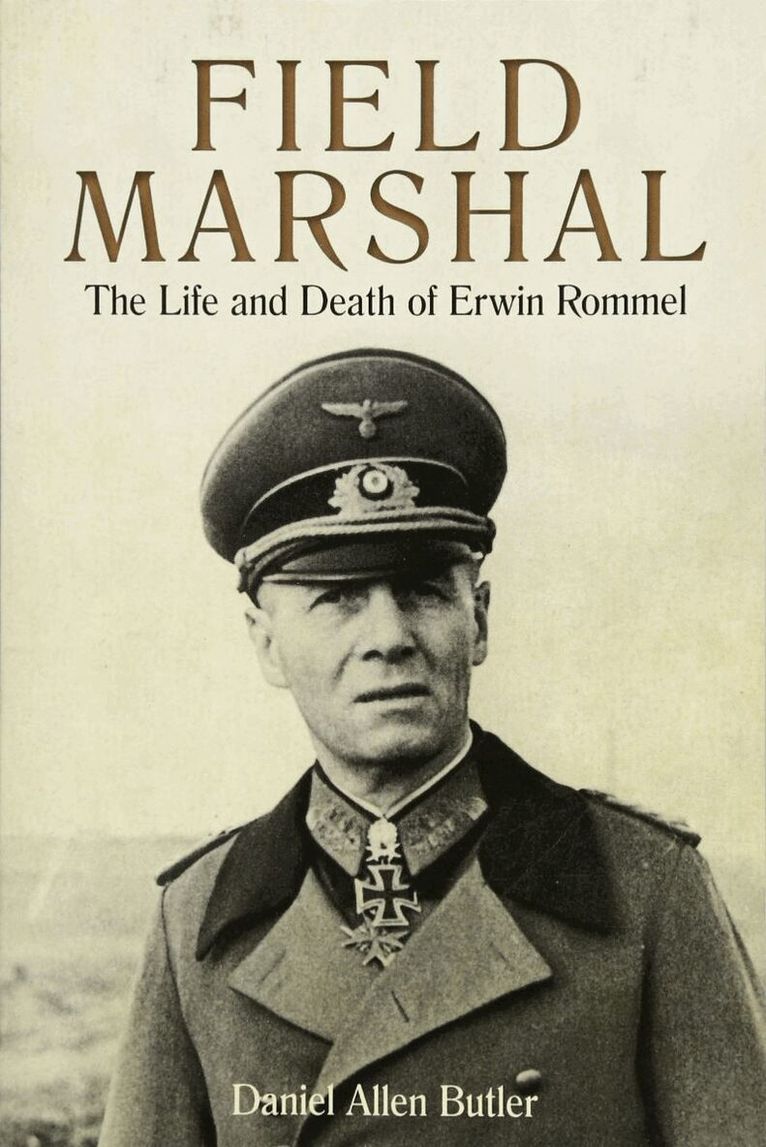
Erwin Rommel was a complex man: a born leader, brilliant soldier, a devoted husband and proud father; intelligent, instinctive, brave, compassionate, vain, egotistical, and arrogant. In France in 1940, then for two years in North Africa, then finally back in France again, in Normandy in 1944, he proved himself a master of armored warfare, running rings around a succession of Allied generals who never got his measure and could only resort to overwhelming numbers to bring about his defeat.And yet for all his military genius, Rommel was also naive, a man who could admire Adolf Hitler at the same time that he despised the Nazis, dazzled by a Führer whose successes blinded him to the true nature of the Third Reich. Above all, he was the quintessential German patriot, who ultimately would refuse to abandon his moral compass, so that on one pivotal day in June 1944 he came to understand that he had mistakenly served an evil man and evil cause. He would still fight for Germany even as he abandoned his oath of allegiance to the Führer, when he came to realize that Hitler had morphed into nothing more than an agent of death and destruction. In the end Erwin Rommel was forced to die by his own hand, not because, as some would claim, he had dabbled in a tyrannicidal conspiracy, but because he had committed a far greater crime - he dared to tell Adolf Hitler the truth.In Field Marshal historian Daniel Allen Butler not only describes the swirling, innovative campaigns in which Rommel won his military reputation, but assesses the temper of the man who in the final reckoning fought only for his country, with no dark depths beyond.
211 kr
Skickas
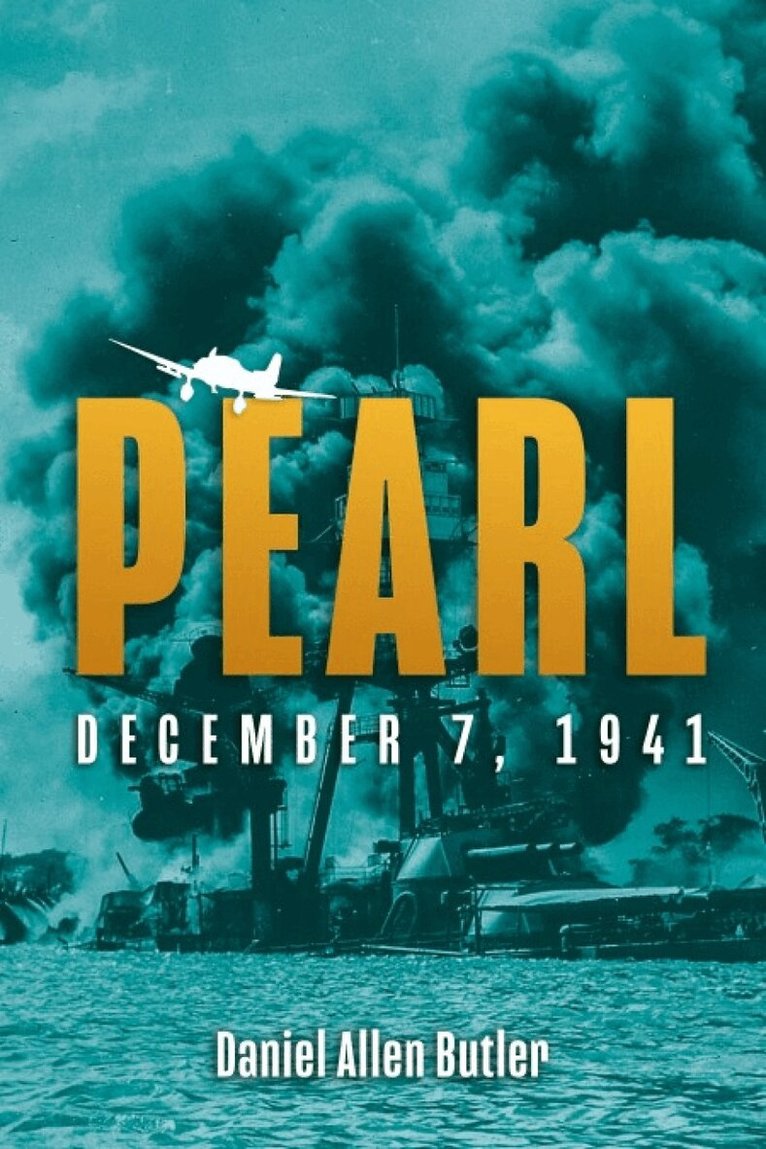
"The account that Butler lays out is very clear and easy to follow. It provides a series of dramatic moments and hits all the key elements of the story of Pearl Harbor that have appeared in the existing literature."—The Northern MarinerWhat happened at Pearl Harbor? What really happened?The Japanese attack on Pearl Harbor is one of those rare moments where, in the space of a few hours, the "hinge of Fate" turned and the course of history was utterly changed. Nearly eight decades later, it has become one of those events which almost everyone knows of, but hardly anyone seems to know about. How—and why—did the Empire of Japan and the United States of America collide on blood and flames that Sunday morning when the sun rose and the bombs fell?Pearl: December 7, 1941 is the story of how America and Japan, two nations with seemingly little over which to quarrel, let peace slip away, so that on that "day which will live in infamy," more than 350 dive bombers, high-level bombers, torpedo planes, and fighters of the Imperial Japanese Navy did their best to cripple the United States Navy's Pacific Fleet, killing 2,403 American servicemen and civilians, and wounding another 1,178.It's a story of emperors and presidents, diplomats and politicians, admirals and generals—and it's also the tale of ordinary sailors, soldiers, and airmen, all of whom were overtaken by a rush of events that ultimately overwhelmed them. Pearl shows the real reasons why America's political and military leaders underestimated Japan's threat against America's security, and why their Japanese counterparts ultimately felt compelled to launch the Pearl Harbor attack.Pearl offers more than superficial answers, showing how both sides blundered their way through arrogance, overconfidence, racism, bigotry, and old-fashioned human error to arrive at the moment when the Japanese were convinced that there was no alternative to war. Once the battle is joined, Pearl then takes the reader into the heart of the attack, where the fighting men of both nations showed that neither side had a monopoly on heroism, courage, cowardice, or luck, as they fought to protect their nations.
337 kr
Skickas inom 3-6 vardagar
Other Side Of The Night
The Carpathia, the Californian, and the Night the Titanic was Lost
Häftad, Engelska, 2011
295 kr
Skickas inom 3-6 vardagar
After every disaster, someone has something to hide... A few minutes before midnight on April 14, 1912, the “unsinkable” RMS Titanic, on her maiden voyage to New York, struck an iceberg. Less than three hours later she lay at the bottom of the Atlantic Ocean. While the world has remained fascinated by the tragedy, the most amazing drama of those fateful hours was not played out aboard the doomed liner but aboard the decks of two other ships, one 58 miles distant from the sinking Titanic, the other barely ten miles away. The masters of the steamships Carpathia and Californian, Captain Arthur Rostron and Captain Stanley Lord, were informed within minutes of each other that their vessels had picked up the distress signals of a sinking ship. Their actions in the hours and days that followed would become the stuff of legend, as one would choose to take his ship into dangerous waters to answer the call for help, while the other would decide that the hazard to himself and his command was too great to risk responding. After years of research, Daniel Allen Butler now tells this incredible story, moving from ship to ship on the icy waters of the North Atlantic—in real-time—to recount how hundreds of people could have been rescued, but in the end only a few outside of the meager lifeboats were saved. He then looks alike at the U.S. Senate Investigation in Washington, and ultimately the British Board of Trade Inquiry in London, where the actions of each captain are probed, questioned, and judged, until the truth of what actually happened aboard the Titanic, the Carpathia and the Californian is revealed.