Daniel Byman - Böcker
Visar alla böcker från författaren Daniel Byman. Handla med fri frakt och snabb leverans.
12 produkter
12 produkter
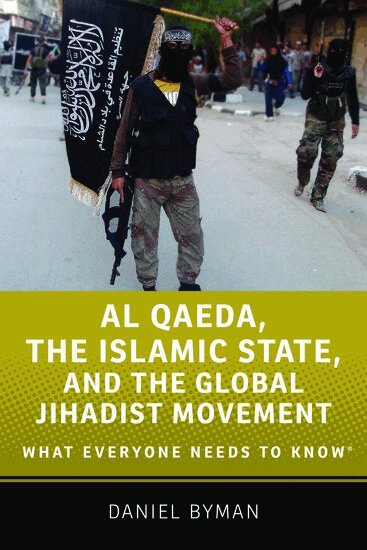
Al Qaeda, the Islamic State, and the Global Jihadist Movement
What Everyone Needs to Know®
Inbunden, Engelska, 2015
781 kr
Skickas inom 5-8 vardagar
On the morning of September 11, 2001, the entire world was introduced to Al Qaeda and its enigmatic leader, Osama bin Laden. But the organization that changed the face of terrorism forever and unleashed a whirlwind of counterterrorism activity and two major wars had been on the scene long before that eventful morning. In Al Qaeda, the Islamic State, and the Global Jihadist Movement: What Everyone Needs to Know, Daniel L. Byman, an eminent scholar of Middle East terrorism and international security who served on the 9/11 Commission, provides a sharp and concise overview of Al Qaeda, from its humble origins in the mountains of Afghanistan to the present, explaining its perseverance and adaptation since 9/11 and the limits of U.S. and allied counterterrorism efforts. The organization that would come to be known as Al Qaeda traces its roots to the anti-Soviet jihad in Afghanistan in the 1980s. Founded as the Soviets withdrew from Afghanistan, Al Qaeda achieved a degree of international notoriety with a series of spectacular attacks in the 1990s; however, it was the dramatic assaults on the World Trade Center and the Pentagon on 9/11 that truly launched Al Qaeda onto the global stage. The attacks endowed the organization with world-historical importance and provoked an overwhelming counterattack by the United States and other western countries. Within a year of 9/11, the core of Al Qaeda had been chased out of Afghanistan and into a variety of refuges across the Muslim world. Splinter groups and franchised offshoots were active in the 2000s in countries like Pakistan, Iraq, and Yemen, but by early 2011, after more than a decade of relentless counterterrorism efforts by the United States and other Western military and intelligence services, most felt that Al Qaeda's moment had passed. With the death of Osama bin Laden in May of that year, many predicted that Al Qaeda was in its death throes. Shockingly, Al Qaeda has staged a remarkable comeback in the last few years. In almost every conflict in the Muslim world, from portions of the Xanjing region in northwest China to the African subcontinent, Al Qaeda franchises or like-minded groups have played a role. Al Qaeda's extreme Salafist ideology continues to appeal to radicalized Sunni Muslims throughout the world, and it has successfully altered its organizational structure so that it can both weather America's enduring full-spectrum assault and tailor its message to specific audiences. Authoritative and highly readable, Byman's account offers readers insightful and penetrating answers to the fundamental questions about Al Qaeda: who they are, where they came from, where they're going-and, perhaps most critically-what we can do about it.
Al Qaeda, the Islamic State, and the Global Jihadist Movement
What Everyone Needs to Know®
Häftad, Engelska, 2015
191 kr
Skickas inom 5-8 vardagar
On the morning of September 11, 2001, the entire world was introduced to Al Qaeda and its enigmatic leader, Osama bin Laden. But the organization that changed the face of terrorism forever and unleashed a whirlwind of counterterrorism activity and two major wars had been on the scene long before that eventful morning. In Al Qaeda, the Islamic State, and the Global Jihadist Movement: What Everyone Needs to Know, Daniel L. Byman, an eminent scholar of Middle East terrorism and international security who served on the 9/11 Commission, provides a sharp and concise overview of Al Qaeda, from its humble origins in the mountains of Afghanistan to the present, explaining its perseverance and adaptation since 9/11 and the limits of U.S. and allied counterterrorism efforts. The organization that would come to be known as Al Qaeda traces its roots to the anti-Soviet jihad in Afghanistan in the 1980s. Founded as the Soviets withdrew from Afghanistan, Al Qaeda achieved a degree of international notoriety with a series of spectacular attacks in the 1990s; however, it was the dramatic assaults on the World Trade Center and the Pentagon on 9/11 that truly launched Al Qaeda onto the global stage. The attacks endowed the organization with world-historical importance and provoked an overwhelming counterattack by the United States and other western countries. Within a year of 9/11, the core of Al Qaeda had been chased out of Afghanistan and into a variety of refuges across the Muslim world. Splinter groups and franchised offshoots were active in the 2000s in countries like Pakistan, Iraq, and Yemen, but by early 2011, after more than a decade of relentless counterterrorism efforts by the United States and other Western military and intelligence services, most felt that Al Qaeda's moment had passed. With the death of Osama bin Laden in May of that year, many predicted that Al Qaeda was in its death throes. Shockingly, Al Qaeda has staged a remarkable comeback in the last few years. In almost every conflict in the Muslim world, from portions of the Xanjing region in northwest China to the African subcontinent, Al Qaeda franchises or like-minded groups have played a role. Al Qaeda's extreme Salafist ideology continues to appeal to radicalized Sunni Muslims throughout the world, and it has successfully altered its organizational structure so that it can both weather America's enduring full-spectrum assault and tailor its message to specific audiences. Authoritative and highly readable, Byman's account offers readers insightful and penetrating answers to the fundamental questions about Al Qaeda: who they are, where they came from, where they're going-and, perhaps most critically-what we can do about it.
253 kr
Skickas
Ever since the Soviet invasion of Afghanistan in 1979, fighters from abroad have journeyed in ever-greater numbers to conflict zones in the Muslim world to defend Islam from-in their view-infidels and apostates. The phenomenon recently reached its apogee in Syria, where the foreign fighter population quickly became larger and more diverse than in any previous conflict. In Road Warriors, Daniel Byman provides a sweeping history of the jihadist foreign fighter movement. He begins by chronicling the movement's birth in Afghanistan, its growing pains in Bosnia and Chechnya, and its emergence as a major source of terrorism in the West in the 1990s, culminating in the 9/11 attacks. Since that bloody day, the foreign fighter movement has seen major ups and downs. It rode high after the 2003 US invasion of Iraq, when the ultra-violent Al Qaeda in Iraq (AQI) attracted thousands of foreign fighters. AQI overreached, however, and suffered a crushing defeat. Demonstrating the resilience of the movement, however, AQI reemerged anew during the Syrian civil war as the Islamic State, attracting tens of thousands of fighters from around the world and spawning the bloody 2015 attacks in Paris among hundreds of other strikes. Although casualty rates are usually high, the survivors of Afghanistan, Syria, and other fields of jihad often became skilled professional warriors, going from one war to the next. Still others returned to their home countries, some to peaceful retirement but a deadly few to conduct terrorist attacks. Over time, both the United States and Europe have learned to adapt. Before 9/11, volunteers went to and fro to Afghanistan and other hotspots with little interference. Today, the United States and its allies have developed a global program to identify, arrest, and kill foreign fighters. Much remains to be done, however-jihadist ideas and networks are by now deeply embedded, even as groups such as Al Qaeda and the Islamic State rise and fall. And as Byman makes abundantly clear, the problem is not likely to go away any time soon.
371 kr
Skickas inom 5-8 vardagar
In the sixty-plus years of the Jewish state's existence, Israeli governments have exhausted almost every option in defending their country against terror attacks. Israel has survived and even thrived--but both its citizens and its Arab neighbors have paid dearly.In A High Price, Daniel Byman breaks down the dual myths of Israeli omnipotence and--conversely--ineptitude in fighting terror, offering instead a nuanced, definitive historical account of the state's bold but often failed efforts to fight terrorist groups. The product of painstaking research and countless interviews, the book chronicles different periods of Israeli counterterrorism. Beginning with the violent border disputes that emerged after Israel's founding in 1948, Byman charts the rise of Yasir Arafat's Fatah and leftist groups such as the Popular Front for the Liberation of Palestine--organizations that ushered in the era of international terrorism epitomized by the 1972 hostage-taking at the Munich Olympics. Byman follows how Israel fought these groups and new ones, such as Hamas, in the decades that follow, with particular attention to the grinding and painful struggle during the second intifada. Israel's debacles in Lebanon against groups like the Lebanese Hizballah are also examined in-depth, as is the country's problematic response to Jewish terrorist groups that have struck at Arabs and Israelis seeking peace.In surveying Israel's response to terror, the author points to the coups of shadowy Israeli intelligence services, the much-emulated use of defensive measures such as sky marshals on airplanes, and the role of controversial techniques such as targeted killings and the security barrier that separates Israel from Palestinian areas. Equally instructive are the shortcomings that have undermined Israel's counterterrorism goals, including a disregard for long-term planning and a failure to recognize the long-term political repercussions of counterterrorism tactics.Israel is often a laboratory: new terrorist techniques are often used against it first, and Israel in turn develops innovative countermeasures that other states copy. Ultimately, A High Price expertly explains how Israel's successes and failures can serve to inform all countries fighting terrorism today.
302 kr
Skickas
Spreading Hate examines the evolution of the white power movement around the world, explaining its appeal and the threat it poses as well as many failures.The modern white power movement is now a global, transnational phenomenon. In this sweeping, authoritative account, Daniel Byman traces the key moments in the white power movement's evolution in the United States and around the world and then details its many facets today. Using a wide range of sources, Byman explodes several myths about white power terrorism and exposes dangerous gaps in current policies.For almost two decades since 9/11, white supremacist terrorism has been relegated to a secondary concern in the US and Europe despite the fact that it was clearly metastasizing. This neglect has led to shocking episodes of violence from New Zealand to Norway to South Carolina and has eroded faith in Western democratic institutions. Because white power terrorists' grievances echo mainstream debates and their violence often exacerbates polarization, their political impact can be inordinately high even if the body count is low. As Byman stresses, they are not a hide-bound movement seeking to turn back the clock, but are dynamic, drawing on ideas from around the world and exploiting the most cutting-edge technologies, especially social media.White power terrorists, however, have many weaknesses. They are divided, with poor leadership, and often attract the incompetent and the criminal as well as the dangerous and deluded. If governments act decisively and treat white power terrorism with the same urgency they use to manage jihadist violence, then the threat can be reduced. This will require aggressive law enforcement, international intelligence cooperation, crackdowns by technology companies, and other forceful steps. Considering policy solutions as well as synthesizing a vast body of scholarly research, Spreading Hate will be essential reading for anyone worried about this an increasingly networked movement that threatens to grow more dangerous in the years to come.
317 kr
Kommande
Amidst heightened rhetoric and increasing polarization in the United States, American Pogroms chronicles the causes and consequences of two centuries of mob violence in American history, highlighting exactly what's at stake when we allow leaders to legitimate violence and the mob to rule.For much of American history, members of the majority population of the United States indiscriminately attacked and terrorized minority communities. In some parts of the country, mob violence seemed a near-constant part of the regions history, while in others it was a brief, horrific spasm that perpetrators—but not victims—quickly forgot.In American Pogroms, terrorism expert Daniel Byman argues that there is a word for this type of communal violence: pogrom. Although pogroms are historically associated with the orchestrated campaigns of anti-Jewish violence in Tsarist Russia, Byman asserts that pogroms have been an all-too-frequent feature of American history. Tracing two centuries of communal violence, Byman recounts cases of attacks against American religious minorities such as Catholics and Mormons, the killing of thousands of ethnic Mexicans in Texas, the murder and wholesale expulsion of Chinese workers from the American West, and the repeated attacks on the Black community that killed thousands and enabled decades of brutal discrimination. In all these cases, pogroms helped cement a system of injustice that left religious, ethnic, and racial minorities politically and economically marginalized. While the idea of mob violence now strikes most Americans as unthinkable, Byman warns that increased polarization and selective news consumption in recent years has coarsened discourse and legitimized violence, raising the risk that at least some violence will return.A broad-ranging synthesis of how and why majorities have so frequently resorted to community-level violence to restore or cement their power, American Pogroms illustrates the outsized role of violence in U.S. history and how it shapes the country today.
326 kr
Skickas inom 3-6 vardagar
The product of painstaking research and countless interviews, A High Price offers a nuanced, definitive historical account of Israel's bold but often failed efforts to fight terrorist groups. Beginning with the violent border disputes that emerged after Israel's founding in 1948, Daniel Byman charts the rise of Yasir Arafat's Fatah and leftist groups such as the Popular Front for the Liberation of Palestine--organizations that ushered in the era of international terrorism epitomized by the 1972 hostage-taking at the Munich Olympics. Byman reveals how Israel fought these groups and others, such as Hamas, in the decades that follow, with particular attention to the grinding and painful struggle during the second intifada. Israel's debacles in Lebanon against groups like the Lebanese Hizballah are examined in-depth, as is the country's problematic response to Jewish terrorist groups that have struck at Arabs and Israelis seeking peace. In surveying Israel's response to terror, the author points to the coups of shadowy Israeli intelligence services, the much-emulated use of defensive measures such as sky marshals on airplanes, and the role of controversial techniques such as targeted killings and the security barrier that separates Israel from Palestinian areas. Equally instructive are the shortcomings that have undermined Israel's counterterrorism goals, including a disregard for long-term planning and a failure to recognize the long-term political repercussions of counterterrorism tactics.
The Dynamics of Coercion
American Foreign Policy and the Limits of Military Might
Häftad, Engelska, 2002
560 kr
Skickas inom 7-10 vardagar
Successful coercion should be relatively simple for the United States. Since the demise of the Soviet Union, the United States is without rivals in military might, political influence, or economic strength. Yet despite the lopsided US edge in raw power, regional foes persist in defying the threats and ultimatums brought by the United States and its allies. This book examines why some attempts to strong-arm an adversary work while others do not. It explores how coercion today differs from coercion during the Cold War. It describes the constraints on the United States emanating from the need to work within coalitions and the restrictions imposed by domestic politics, and it assesses the special challenges likely to arise when an adversary is a non-state actor or when the use of weapons of mass destruction is possible.
360 kr
Skickas inom 7-10 vardagar
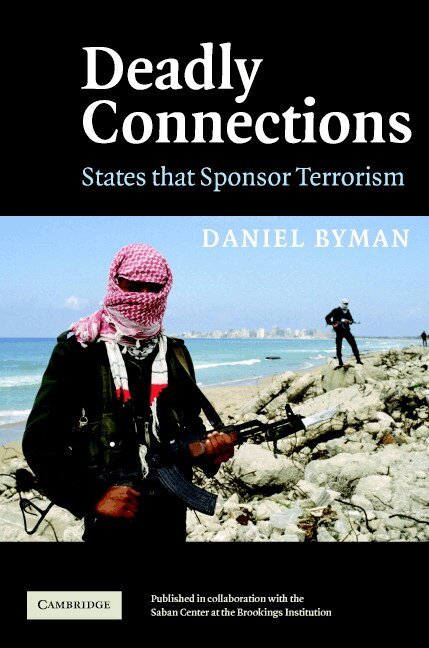
Thousands of people have died at the hands of terrorist groups who rely on state support for their activities. Iran and Syria are well known as sponsors of terrorism, while other countries, some with strong connections to the West, have enabled terrorist activity by turning a blind eye. Daniel Byman's hard-hitting and articulate book analyzes this phenomenon. Focusing primarily on sponsors from the Middle East and South Asia, it examines the different types of support that states provide, their motivations, and the impact of such sponsorship. The book also considers regimes that allow terrorists to raise money and recruit without providing active support. The experiences of Iran, Pakistan, Afghanistan, Syria, Saudi Arabia, and Libya are detailed here, alongside the histories of radical groups such as al-Qaida and Hizballah. The book concludes by assessing why it is often difficult to force sponsors to cut ties to terrorist groups and suggesting ways in which it could be done better in the future.
The Dynamics of Coercion
American Foreign Policy and the Limits of Military Might
Inbunden, Engelska, 2002
1 245 kr
Skickas inom 7-10 vardagar
Successful coercion should be relatively simple for the United States. Since the demise of the Soviet Union, the United States is without rivals in military might, political influence, or economic strength. Yet despite the lopsided US edge in raw power, regional foes persist in defying the threats and ultimatums brought by the United States and its allies. This book examines why some attempts to strong-arm an adversary work while others do not. It explores how coercion today differs from coercion during the Cold War. It describes the constraints on the United States emanating from the need to work within coalitions and the restrictions imposed by domestic politics, and it assesses the special challenges likely to arise when an adversary is a non-state actor or when the use of weapons of mass destruction is possible.
481 kr
Skickas inom 7-10 vardagar
Thousands of people have died at the hands of terrorist groups who rely on state support for their activities. Iran and Syria are well known as sponsors of terrorism, while other countries, some with strong connections to the West, have enabled terrorist activity by turning a blind eye. Daniel Byman's hard-hitting and articulate book analyzes this phenomenon. Focusing primarily on sponsors from the Middle East and South Asia, it examines the different types of support that states provide, their motivations, and the impact of such sponsorship. The book also considers regimes that allow terrorists to raise money and recruit without providing active support. The experiences of Iran, Pakistan, Afghanistan, Syria, Saudi Arabia, and Libya are detailed here, alongside the histories of radical groups such as al-Qaida and Hizballah. The book concludes by assessing why it is often difficult to force sponsors to cut ties to terrorist groups and suggesting ways in which it could be done better in the future.
349 kr
Skickas inom 7-10 vardagar
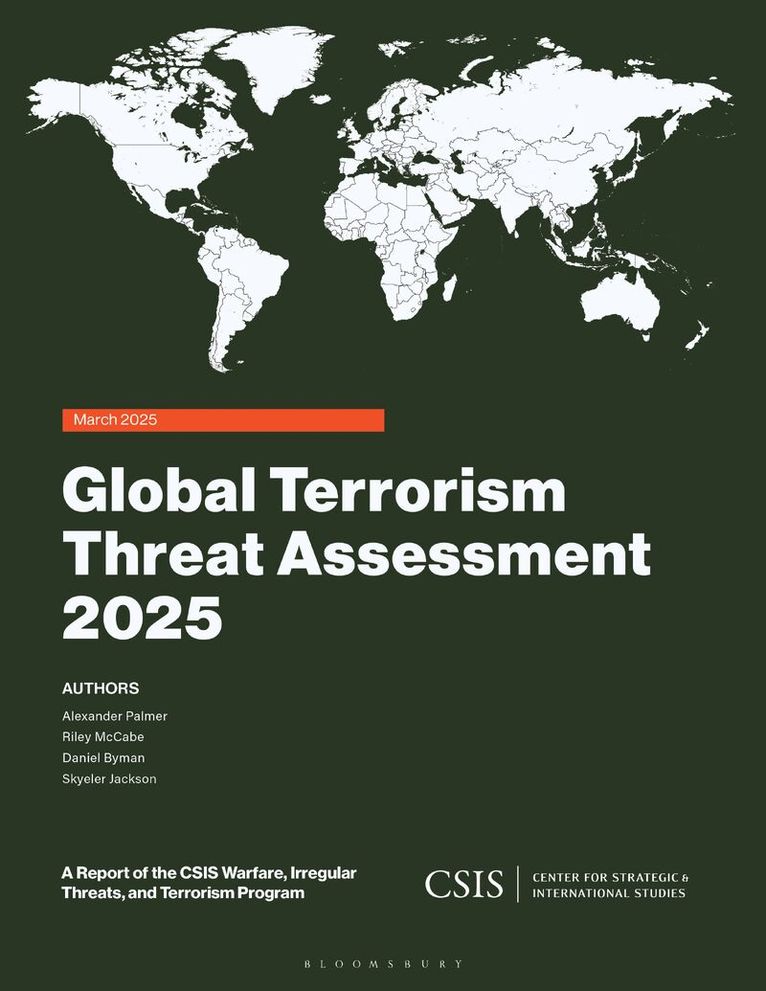
Terrorism remains a threat to U.S. citizens, assets, and interests despite the national security community's decreasing focus on counterterrorism.In 2025, domestic terrorism represents a greater threat to the United States than do international terrorist organizations. Most domestic terrorist attacks in the United States are carried out by lone actors or small groups who believe in a wide range of ideologies, such as white supremacy, partisan extremism, and Salafi-jihadism. In the Middle East, the Al Qaeda core, Al Qaeda in the Arabian Peninsula, and the Islamic State remain committed to conducting attacks against the U.S. homeland as well as U.S. interests, although all three are weaker than they were during their heydays. Israel has degraded Hezbollah’s and Hamas’s capabilities, while the Houthis have become a more active regional threat. Africa remains the most active theater for Salafi-jihadist organizations, but the continent’s groups are mostly tertiary priorities for the United States, with the exception of East Africa’s Al Shabaab.This report consists of three regional assessments of the threat from terrorist groups and movements in the United States, the Middle East (including Afghanistan), and Africa. The purpose of this assessment is to help U.S. national security policymakers, intelligence and law enforcement professionals, and military decision-makers prioritize among different terrorist threats.