Daniel J. Penny – författare
2 401 kr
Skickas inom 3-6 vardagar
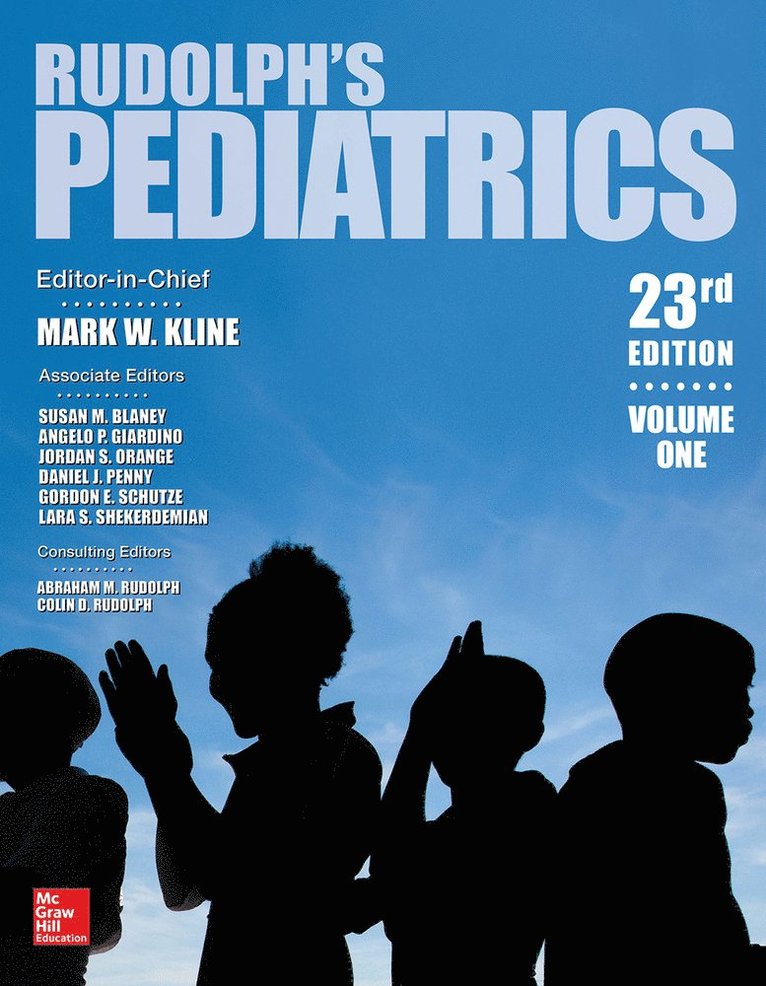
The landmark pediatrics reference – completely reinvented by an all-new team of editorsRudolph's Pediatrics has virtually defined the pediatric field for over a century, becoming one of the most important and well-respected pediatrics texts ever published. Renowned for its balance of clinical features and treatment of disease with underlying biological principles, this classic sourcebook has helped generations of pediatricians optimize their care of infants, children, and adolescents. The Twenty-Third Edition of Rudolph's has been completely restructured and streamlined thanks to an all new team of editors whose goal was to reinvent this classic with today’s busy practitioner in mind. Presented in full color, the Twenty-Third Edition provides an up-to-date, in-depth survey of pediatric medicine unmatched by any other text. With its algorithmic approach to pediatric systems, the book facilitates the diagnosis and treatment of both common and uncommon pediatric illnesses; and it reflects new technologies and advances in molecular medicine that continue to evolve with current thinking about normal childhood development and pediatric disease processes.• New team of editors achieves consistency in both tone and depth of content• Contributions from section editors and authors from leading academic pediatrics programs give expert coverage of general pediatrics and all of the pediatric sub-specialties• Streamlined and consistent format for most chapters outlining Pathogenesis and Epidemiology, Clinical Manifestations, Diagnosis, Treatment, and Prevention• New 2-Volume presentation improves portability• Hundreds of full-color illustrations and tables• The acclaimed balance between clinical applicability and underlying biological principles offers pediatricians a depth of coverage not found anywhere else• Brand new or significantly revised chapters include: Complementary and Integrative Pediatrics, Childhood Adversity and Toxic Stress, Autism Spectrum Disorder, Pediatric Depression and Bipolar Spectrum Disorders, Extracorporeal Membrane Oxygenation (ECMO), Palliative Care for Children with Chronic Diseases, Arboviruses (with new coverage of Zika virus and chikungunya virus), Physiologic Basis of Pulmonary Function; Acute Lymphoblastic Leukemia; Neuroblastoma “You'd be hard pressed to find a resource that matches up to the comprehensive scope of Rudolph's. It's no wonder it's a staple in most offices and hospitals.” -Doody’s Review Service
2 721 kr
Läs direkt efter köp
The landmark pediatrics reference – completely reinvented by an all-new team of editorsRudolph''s Pediatrics has virtually defined the pediatric field for over a century, becoming one of the most important and well-respected pediatrics texts ever published. Renowned for its balance of clinical features and treatment of disease with underlying biological principles, this classic sourcebook has helped generations of pediatricians optimize their care of infants, children, and adolescents. The Twenty-Third Edition of Rudolph''s has been completely restructured and streamlined thanks to an all new team of editors whose goal was to reinvent this classic with today’s busy practitioner in mind.Presented in full color, the Twenty-Third Edition provides an up-to-date, in-depth survey of pediatric medicine unmatched by any other text. With its algorithmic approach to pediatric systems, the book facilitates the diagnosis and treatment of both common and uncommon pediatric illnesses; and it reflects new technologies and advances in molecular medicine that continue to evolve with current thinking about normal childhood development and pediatric disease processes.• New team of editors achieves consistency in both tone and depth of content• Contributions from section editors and authors from leading academic pediatrics programs give expert coverage of general pediatrics and all of the pediatric sub-specialties• Streamlined and consistent format for most chapters outlining Pathogenesis and Epidemiology, Clinical Manifestations, Diagnosis, Treatment, and Prevention• New 2-Volume presentation improves portability• Hundreds of full-color illustrations and tables• The acclaimed balance between clinical applicability and underlying biological principles offers pediatricians a depth of coverage not found anywhere else• Brand new or significantly revised chapters include: Complementary and Integrative Pediatrics, Childhood Adversity and Toxic Stress, Autism Spectrum Disorder, Pediatric Depression and Bipolar Spectrum Disorders, Extracorporeal Membrane Oxygenation (ECMO), Palliative Care for Children with Chronic Diseases, Arboviruses (with new coverage of Zika virus and chikungunya virus), Physiologic Basis of Pulmonary Function; Acute Lymphoblastic Leukemia; Neuroblastoma “You''d be hard pressed to find a resource that matches up to the comprehensive scope of Rudolph''s. It''s no wonder it''s a staple in most offices and hospitals.” -Doody’s Review Service
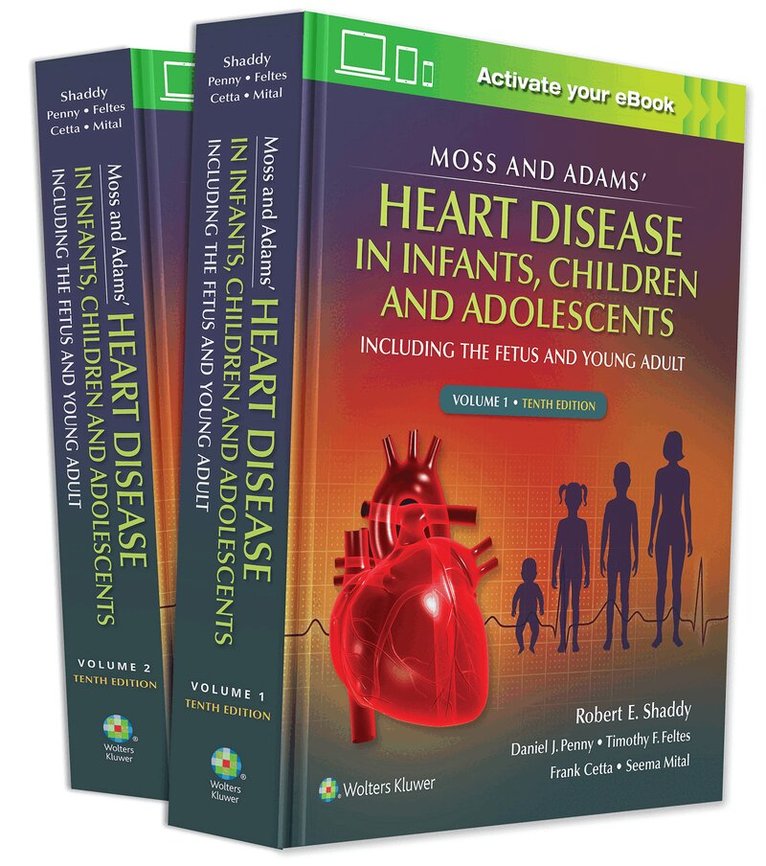
Moss & Adams' Heart Disease in infants, Children, and Adolescents
Including the Fetus and Young Adult
4 614 kr
Skickas inom 7-10 vardagar
1 565 kr
Skickas inom 5-8 vardagar
1 887 kr
Läs direkt efter köp
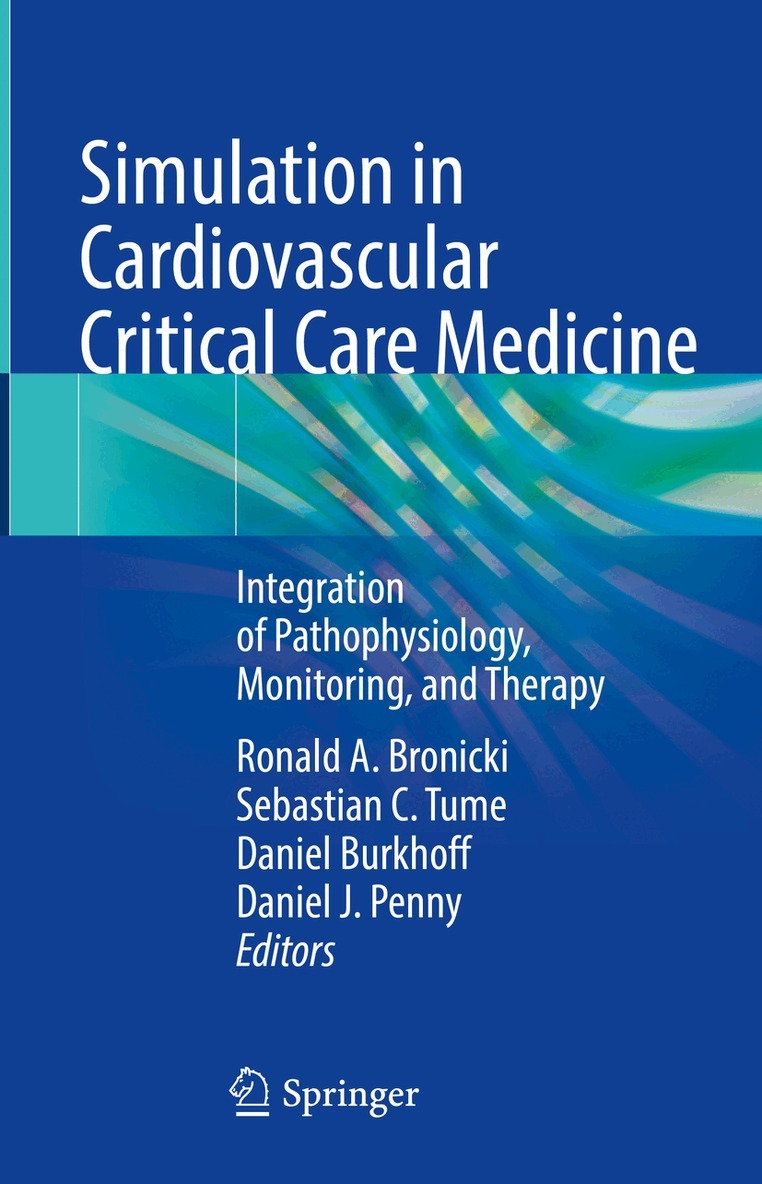
This book uses a validated cardiovascular simulator to illustrate cardiovascular physiology and pathophysiology, principles of hemodynamic monitoring, and the impact of therapy in patients with a wide spectrum of critical care diseases. The simulator considers the closed-loop nature of the cardiovascular system and is thus ideally suited for demonstrating the complex and dynamic nature of the cardiovascular system.
The book uses the Harvi cardiovascular simulator (Harvi Dynamics, Inc) in which heart chambers are modeled according to the time-varying elastance principles of Suga and Sunagawa, and Guyton’s model of the vasculature, which describes systemic and pulmonary vascular properties by a series of resistances and capacitances. The simulator generates ventricular pressure-volume loops from each of the four chambers, time-dependent tracings of pressure, flow and volumes, and the hemodynamic parameters derived from these signals. The principles of the time varying elastance model are reviewed and then applied to a spectrum of cardiovascular lesions, including acute and chronic systolic heart failure, sepsis phenotypes, pulmonary hypertension, valvular disease, and the impact of therapies such as vasoactive agents and acute and chronic mechanical circulatory support devices.
Simulation in Cardiovascular Critical Care Medicine is a valuable resource for all levels of learners in the fields of Cardiology, Critical Care Medicine, and Cardiac Critical Care Medicine.