Daniel Jewesbury – författare
Visar alla böcker från författaren . Handla med fri frakt och snabb leverans.
2 produkter
2 produkter
Del 4 - Explorations in Heritage Studies
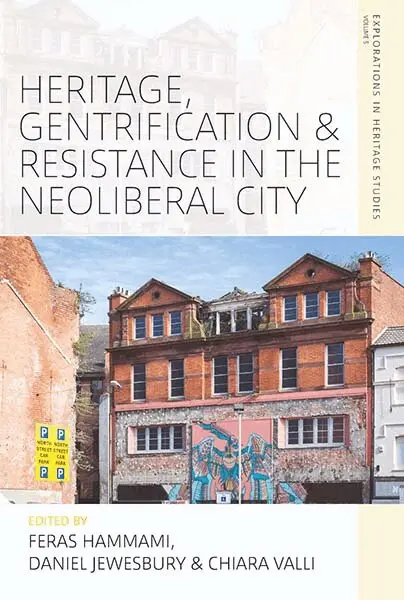
Heritage, Gentrification and Resistance in the Neoliberal City
Inbunden, Engelska, 2022
2 024 kr
Skickas inom 3-6 vardagar
What happens when versions of the past become silenced, suppressed, or privileged due to urban restructuring? In what ways are the interpretations and performances of ‘the past’ linked to urban gentrification, marginalization, displacement, and social responses? Authors explore a variety of attempts to interrupt and interrogate urban restructuring, and to imagine alternative forms of urban organization, produced by diverse coalitions of resisting groups and individuals. Armed with historical narratives, oral histories, objects, physical built environment, memorials, and intangible aspects of heritage that include traditions, local knowledge and experiences, memories, authors challenge the ‘devaluation’ of their neighborhoods in official heritage and development narratives.
Häftad, Engelska, 2025
277 kr
Skickas inom 7-10 vardagar
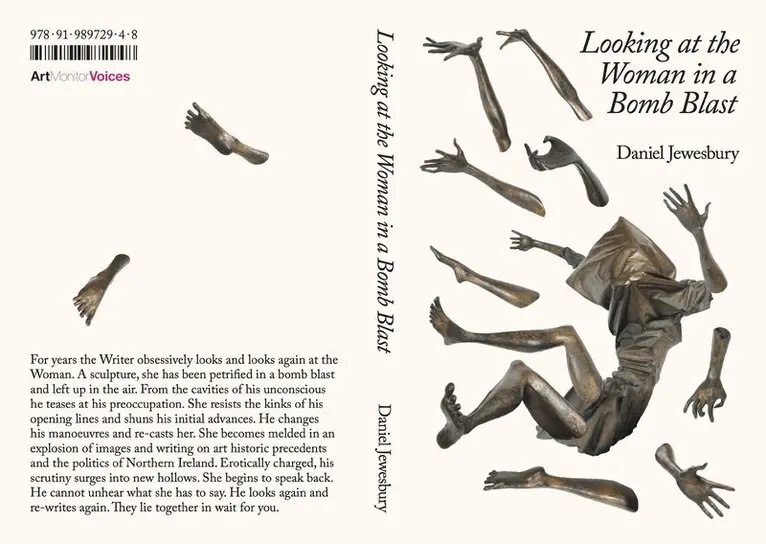
A slender young woman falls backwards, blown off her feet by a bomb. Frozen in time, her bare legs stick up, her hands grasping the air. Her face is covered by a page from a newspaper. People approach to look at her, bending down to study the folds of her dress, the immature curve of her thigh, her neat toes, splayed in surprise. The woman is a sculpture, made by the Irish artist F. E. McWilliam in 1974. In this bronze figure’s awkwardly graceful near-death contortions, entire histories of pain, death, sex and visual pleasure have been condensed. Looking at the Woman in a Bomb Blast is an experimental artist’s book that uses different voices to unravel these histories: a writer labours over an elaborate ‘explanation’ of what she means, while the voice of the Woman herself offers acerbic insights and asides. In a series of short chapters, they assert their contrasting ideas, insisting on their own approaches to discovering her ‘true meaning’: by turns affective, confessional, detached and analytical. As the writer looks, and tries to thread together a coherent account, we we are led through formalistic accounts of drapery, gesture, and emotion, and encounter histories of violent and sexualised imagery in Western art, of the nude, and the artist’s model. But, pushing itself forward, increasingly impossible to ignore, is the tension that the work continually performs, between itself, its viewer, and the imagined motivations of its creator: who is looking at whom, whose desire is indulged, what fantasies and pleasures are crystallised in the work? Eventually, the writer confronts the disturbing fetishism that runs through the work like an electrical charge, connecting artist, viewer and woman in a perverse visual contract. Only then do we understand the way the work oscillates, between voyeurism and exhibitionism – between masochistic and sadistic desires. The sculpture becomes simultaneously compelling and repellent – it can make one feel shameful for looking, and guilty for looking away. This female body, suspended at the moment of her death, her skirt lifted above her legs, her face covered by a sheet of newspaper, is complex, banal, mythic, formalistic, attractive, fragile, misogynistic: it exceeds any single attempt to describe it. In tone, the book cuts between a poetic ekphrasis, a visual essay, an art-historical murder mystery, and a pornographic surrealist novella. It’s neither a conventional artist’s book, a novel, nor an academic art history.