Daniel Lord Smail - Böcker
Visar alla böcker från författaren Daniel Lord Smail. Handla med fri frakt och snabb leverans.
11 produkter
11 produkter
271 kr
Skickas
When does history begin? What characterizes it? This brilliant and beautifully written book dissolves the logic of a beginning based on writing, civilization, or historical consciousness and offers a model for a history that escapes the continuing grip of the Judeo-Christian time frame. Daniel Lord Smail argues that in the wake of the "Decade of the Brain" and the best-selling historical work of scientists like Jared Diamond, the time has come for fundamentally new ways of thinking about our past. He shows how recent work in evolution and paleohistory makes it possible to join the deep past with the recent past and abandon, once and for all, the idea of prehistory. Making an enormous literature accessible to the general reader, he lays out a bold new case for bringing neuroscience and neurobiology into the realm of history.
454 kr
Skickas inom 7-10 vardagar
Humans have always been interested in their origins, but historians have been reluctant to write about the long stretches of time before the invention of writing. In fact, the deep past was left out of most historical writing almost as soon as it was discovered. This breakthrough book, as important for readers interested in the present as in the past,brings science into history to offer a dazzling new vision of humanity across time. Team-written by leading experts in a variety of fields, it maps events, cultures, and eras across millions of years to present a new scale for understanding the human body, energy and ecosystems, language, food, kinship, migration, and more. Combining cutting-edge social and evolutionary theory with the latest discoveries about human genes, brains, and material culture, "Deep History" invites scholars and general readers alike to explore the dynamic of connectedness that spans all of human history. With Timothy Earle, Gillian Feeley-Harnik, Felipe Fernandez-Armesto, Clive Gamble, April McMahon, John C. Mitani, Hendrik Poinar, Mary C. Stiner, and Thomas R. Trautmann.
251 kr
Skickas inom 7-10 vardagar
Humans have always been interested in their origins, but historians have been reluctant to write about the long stretches of time before the invention of writing. In fact, the deep past was left out of most historical writing almost as soon as it was discovered. This breakthrough book, as important for readers interested in the present as in the past, brings science into history to offer a dazzling new vision of humanity across time. Team-written by leading experts in a variety of fields, it maps events, cultures, and eras across millions of years to present a new scale for understanding the human body, energy and ecosystems, language, food, kinship, migration, and more. Combining cutting-edge social and evolutionary theory with the latest discoveries about human genes, brains, and material culture, "Deep History" invites scholars and general readers alike to explore the dynamic of connectedness that spans all of human history. With Timothy Earle, Gillian Feeley-Harnik, Felipe Fernandez-Armesto, Clive Gamble, April McMahon, John C. Mitani, Hendrik Poinar, Mary C. Stiner, and Thomas R. Trautmann.
373 kr
Skickas inom 7-10 vardagar
As Europe began to grow rich during the Middle Ages, its wealth materialized in the well-made clothes, linens, and wares of ordinary households. Such items were indicators of one’s station in life in a society accustomed to reading visible signs of rank. In a world without banking, household goods became valuable commodities that often substituted for hard currency. Pawnbrokers and resellers sprang up, helping to push these goods into circulation. Simultaneously, a harshly coercive legal system developed to ensure that debtors paid their due.Focusing on the Mediterranean cities of Marseille and Lucca, Legal Plunder explores how the newfound wealth embodied in household goods shaped the beginnings of a modern consumer economy in late medieval Europe. The vigorous trade in goods that grew up in the fourteenth and fifteenth centuries entangled households in complex relationships of credit and debt, and one of the most common activities of law courts during the period was debt recovery. Sergeants of the law were empowered to march into debtors’ homes and seize belongings equal in value to the debt owed. These officials were agents of a predatory economy, cogs in a political machinery of state-sponsored plunder.As Daniel Smail shows, the records of medieval European law courts offer some of the most vivid descriptions of material culture in this period, providing insights into the lives of men and women on the cusp of modern capitalism. Then as now, money and value were implicated in questions of power and patterns of violence.
292 kr
Skickas inom 7-10 vardagar
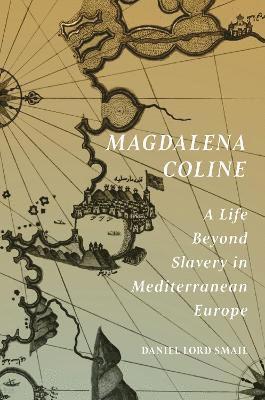
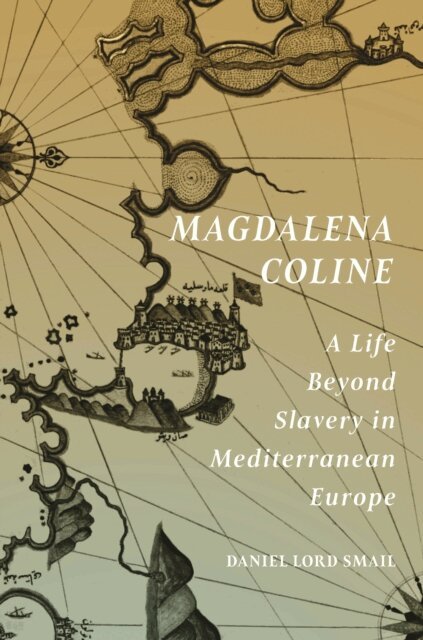
The courtroom drama that denied the legitimacy of slavery in late medieval EuropeIn 1387, a young Muslim woman from North Africa was captured on a galley in the Bay of Naples and brought to Marseille as a slave. For more than ten years, she was held in bondage to a shipwright and privateer named Peire Huguet. Daniel Lord Smail tells the extraordinary story of Magdalena Coline, a woman who dared to file suit against the man who called himself her master, and whose passage from servitude to freedom raises tantalizing questions about how the people of her time made sense of slavery as a social category.In a masterful narrative that takes readers from the waters of the Mediterranean to the court of the Angevin King Louis II, claimant to the throne of Naples, Smail describes how Peire, pressed by Magdalena’s supporters, reluctantly granted her a tacit manumission through her marriage to her first husband, whose death two years later placed her in a state of considerable ambiguity. In 1406, following her second marriage to an immigrant shoemaker, a dispute with Peire exploded in the law courts of Marseille, where it played out over two tumultuous years through numerous suits and appeals. In a dramatic turn of events, Magdalena traveled to the royal court in nearby Aix-en-Provence, where she successfully petitioned the king and returned home victorious.Drawing on court records and an array of other archival sources from the period, Magdalena Coline brings these remarkable legal proceedings vividly to life, shedding new light on the ways slavery was understood and practiced in the late medieval Mediterranean world.
904 kr
Skickas inom 10-15 vardagar
How, in the years before the advent of urban maps, did city residents conceptualize and navigate their communities? In his strikingly original book, Daniel Lord Smail develops a new method and a new vocabulary for understanding how urban men and women thought about their personal geography. His thorough research of property records of late medieval Marseille leads him to conclude that its inhabitants charted their city, its social structure, and their own identities within that structure through a set of cartographic grammars which powerfully shaped their lives.Prior to the fourteenth century, different interest groups—notaries, royal officials, church officials, artisans—developed their own cartographies in accordance with their own social, political, or administrative agendas. These competing templates were created around units ranging from streets and islands to vicinities and landmarks. Smail shows how the notarial template, which privileged the street as the most basic marker of address, gradually emerged as the cartographic norm. This transformation, he argues, led to the rise of modern urban maps and helped to inaugurate the process whereby street addresses were attached to citizen identities, a crucial development in the larger enterprise of nation building.Imaginary Cartographies opens up powerful new means for exploring late medieval and Renaissance urban society while advancing understanding of the role of social perceptions in history.
1 754 kr
Skickas inom 10-15 vardagar
In medieval Europe, the word fama denoted both talk (what was commonly said about a person or event) and an individual's ensuing reputation (one's fama). Although talk by others was no doubt often feared, it was also valued and even cultivated as a vehicle for shaping one's status. People had to think about how to "manage" their fama, which played an essential role in the medieval culture of appearances.At the same time, however, institutions such as law courts and the church, alarmed by the power of talk, sought increasingly to regulate it. Christian moral discourse, literary and visual representation, juristic manuals, and court records reflected concern about talk. This book's authors consider how talk was created and entered into memory. They address such topics as fama's relation to secular law and the preoccupations of the church, its impact on women's lives, and its capacity to shape the concept of literary authorship.
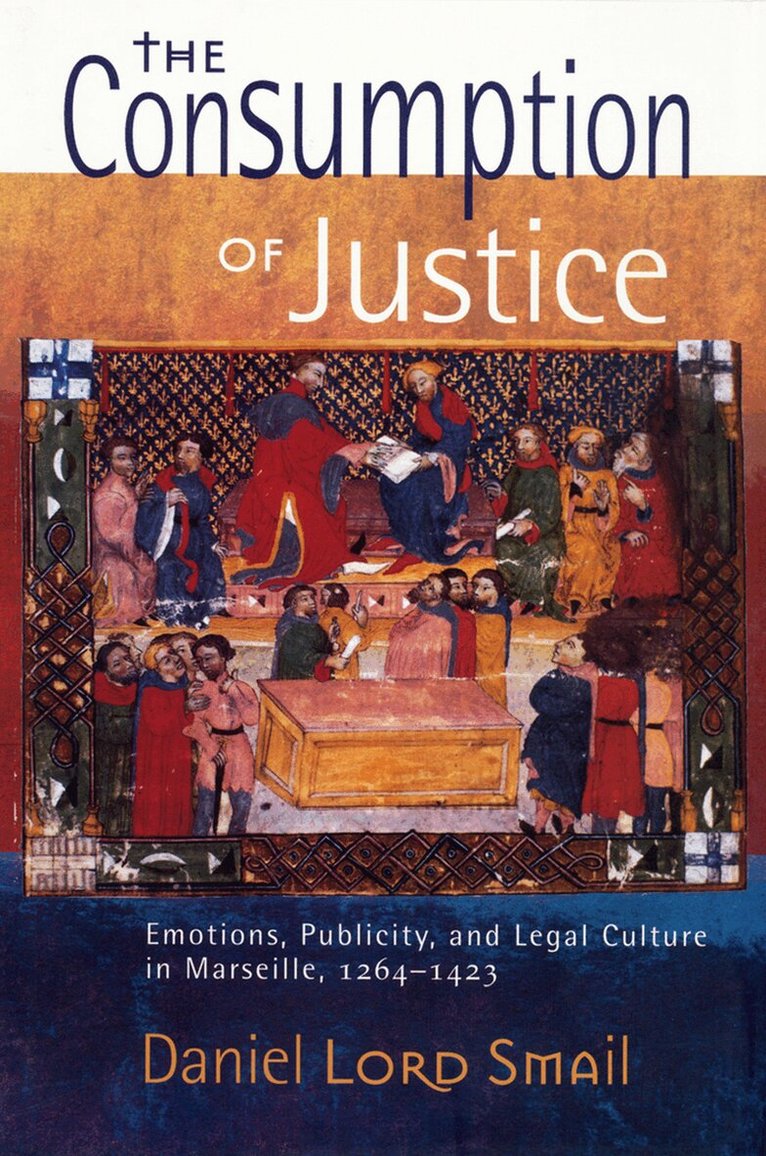
Consumption of Justice
Emotions, Publicity, and Legal Culture in Marseille, 1264–1423
Inbunden, Engelska, 2003
766 kr
Skickas inom 10-15 vardagar
In the thirteenth and fourteenth centuries, the ideas and practices of justice in Europe underwent significant change as procedures were transformed and criminal and civil caseloads grew apace. Drawing on the rich judicial records of Marseille from the years 1264 to 1423, especially records of civil litigation, this book approaches the courts of law from the perspective of the users of the courts (the consumers of justice) and explains why men and women chose to invest resources in the law.Smail shows that the courts were quickly adopted as a public stage on which litigants could take revenge on their enemies. Even as the new legal system served the interest of royal or communal authority, it also provided the consumers of justice with a way to broadcast their hatreds and social sanctions to a wider audience and negotiate their own community standing in the process. The emotions that had driven bloodfeuds and other forms of customary vengeance thus never went away, and instead were fully incorporated into the new procedures.
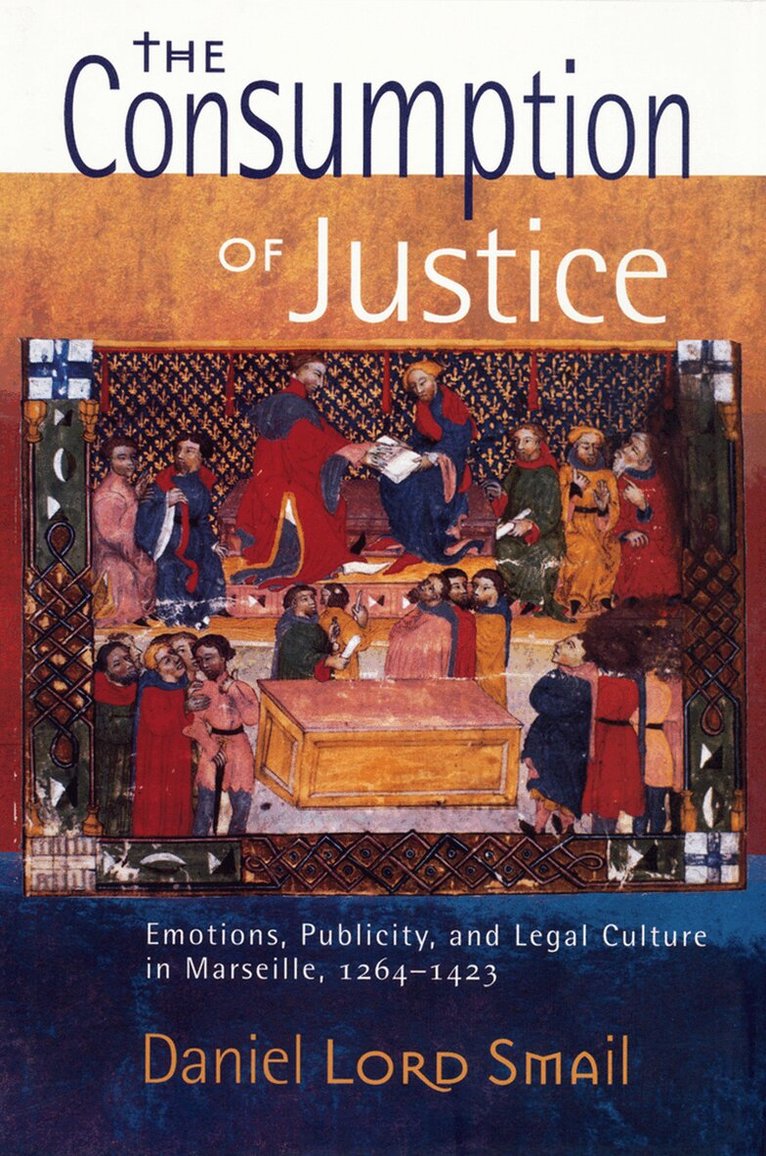
Consumption of Justice
Emotions, Publicity, and Legal Culture in Marseille, 1264–1423
Häftad, Engelska, 2013
325 kr
Skickas inom 10-15 vardagar
In the thirteenth and fourteenth centuries, the ideas and practices of justice in Europe underwent significant change as procedures were transformed and criminal and civil caseloads grew apace. Drawing on the rich judicial records of Marseille from the years 1264 to 1423, especially records of civil litigation, this book approaches the courts of law from the perspective of the users of the courts (the consumers of justice) and explains why men and women chose to invest resources in the law.Smail shows that the courts were quickly adopted as a public stage on which litigants could take revenge on their enemies. Even as the new legal system served the interest of royal or communal authority, it also provided the consumers of justice with a way to broadcast their hatreds and social sanctions to a wider audience and negotiate their own community standing in the process. The emotions that had driven bloodfeuds and other forms of customary vengeance thus never went away, and instead were fully incorporated into the new procedures.
393 kr
Skickas inom 10-15 vardagar
In medieval Europe, the word fama denoted both talk (what was commonly said about a person or event) and an individual's ensuing reputation (one's fama). Although talk by others was no doubt often feared, it was also valued and even cultivated as a vehicle for shaping one's status. People had to think about how to "manage" their fama, which played an essential role in the medieval culture of appearances.At the same time, however, institutions such as law courts and the church, alarmed by the power of talk, sought increasingly to regulate it. Christian moral discourse, literary and visual representation, juristic manuals, and court records reflected concern about talk. This book's authors consider how talk was created and entered into memory. They address such topics as fama's relation to secular law and the preoccupations of the church, its impact on women's lives, and its capacity to shape the concept of literary authorship.
495 kr
Skickas inom 7-10 vardagar
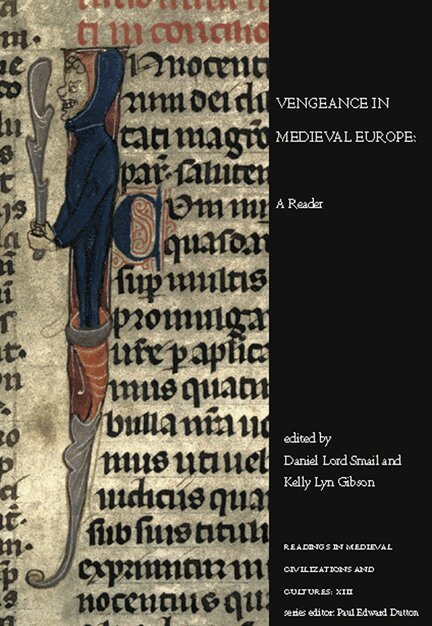
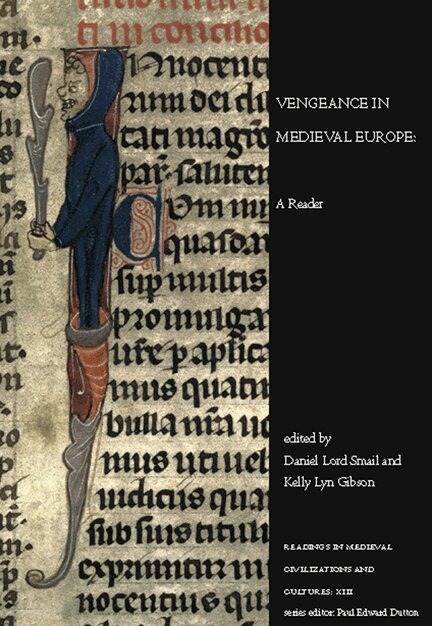
How did medieval society deal with private justice, with grudges, and with violent emotions? This ground-breaking reader collects for the first time a number of unpublished or difficult-to-find texts that address violence and emotion in the Middle Ages.The sources collected here illustrate the power and reach of the language of vengeance in medieval European society. They span the early, high, and later middle ages, and capture a range of perspectives including legal sources, learned commentaries, narratives, and documents of practice. Though social elites necessarily figure prominently in all medieval sources, sources concerning relatively low-status individuals and sources pertaining to women are included. The sources range from saints' lives that illustrate the idea of vengeance to later medieval court records concerning vengeful practices. A secondary goal of the collection is to illustrate the prominence of mechanisms for peacemaking in medieval European society.The introduction traces recent scholarly developments in the study of vengeance and discusses the significance of these concepts for medieval political and social history.