Daniel Mahoney – författare
Visar alla böcker från författaren Daniel Mahoney. Handla med fri frakt och snabb leverans.
11 produkter
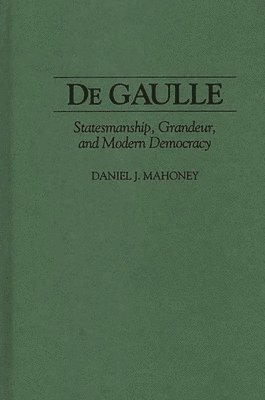
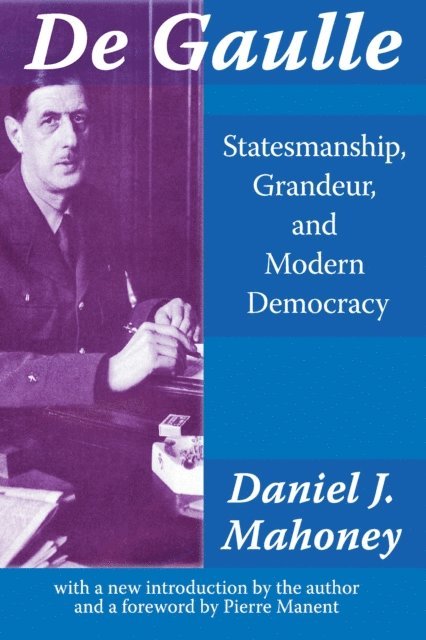
De Gaulle
Statesmanship, Grandeur, and Modern Democracy
Inbunden, 1996
1134 kr
Lägg i varukorg
Mahoney provides a comprehensive study of the thought and action of Charles de Gaulle. This volume is neither a biography nor a historical narrative, although it addresses important aspects of de Gaulle's life and political career. Mahoney asserts that de Gaulle is systematically misunderstood, …
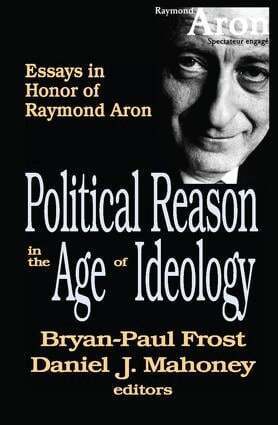
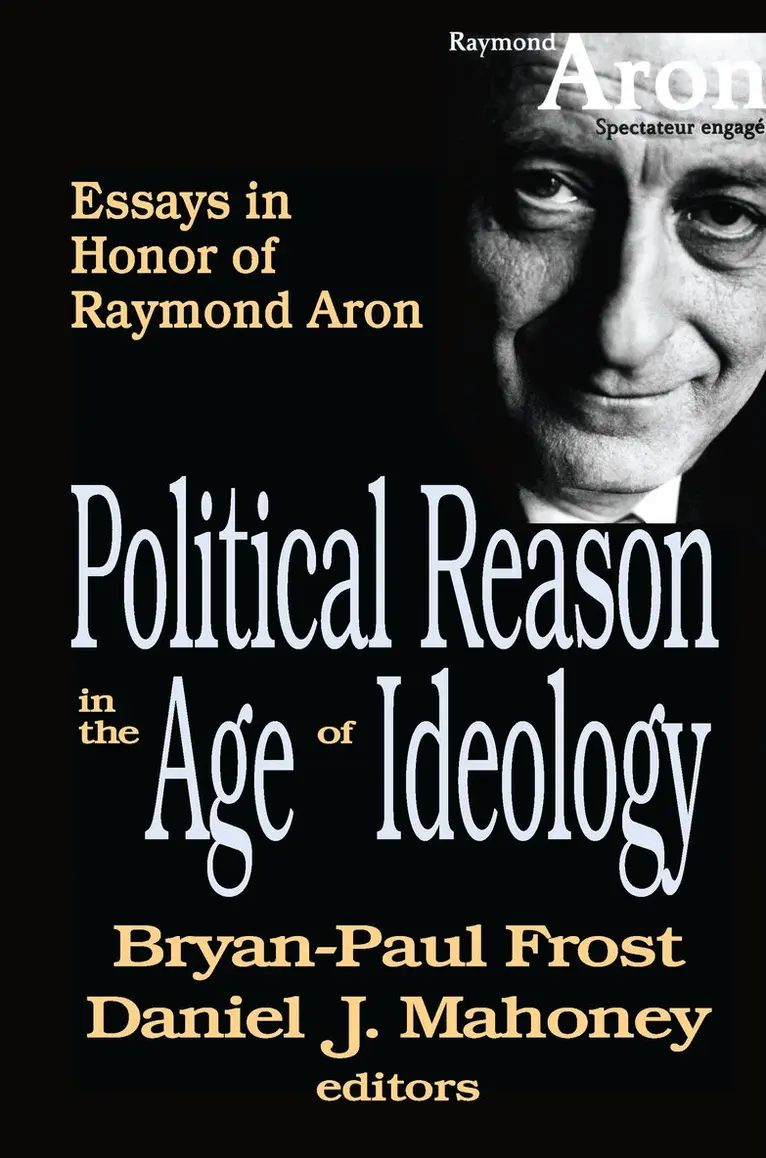
Political Reason in the Age of Ideology
Essays in Honor of Raymond Aron
Inbunden, 2006
2510 kr
Lägg i varukorg
A little over one hundred years after his birth, and not quite twenty-five years since his death, interest in the French political philosopher and sociologist Raymond Aron (1905-1983) continues to grow. Aron is now widely recognized as one of the most significant intellectual figures of the postwar …
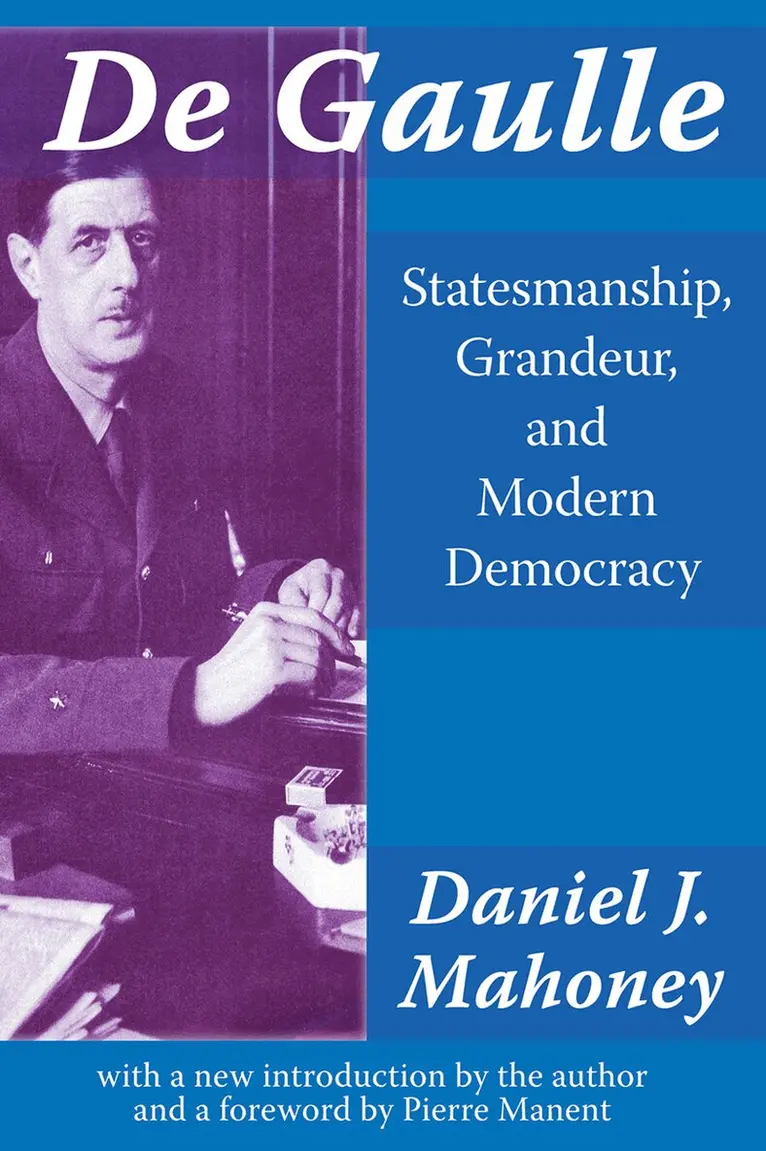
De Gaulle
Statesmanship, Grandeur and Modern Democracy
Häftad, 2000
816 kr
Lägg i varukorg
This analysis of the thought and action of Charles de Gaulle explores the intellectual foundations of Gaullist statecraft. Mahoney's careful exegesis of de Gaulle's major writings and speeches, reveals a penetrating political thinker as well as a major political actor. He explains de Gaulle to an …
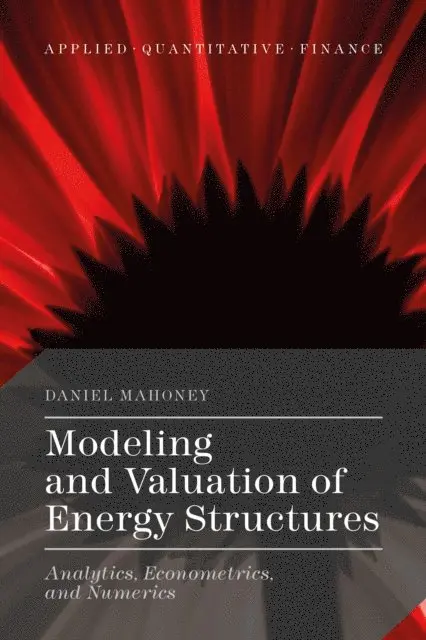
Modeling and Valuation of Energy Structures
Analytics, Econometrics, and Numerics
Inbunden, 2015
1205 kr
Lägg i varukorg
Commodity markets present several challenges for quantitative modeling. These include high volatilities, small sample data sets, and physical, operational complexity. In addition, the set of traded products in commodity markets is more limited than in financial or equity markets, making value …
Modeling and Valuation of Energy Structures
Analytics, Econometrics, and Numerics
E-bok, 2016
1686 kr
Lägg i varukorg
Commodity markets present several challenges for quantitative modeling. These include high volatilities, small sample data sets, and physical, operational complexity. In addition, the set of traded products in commodity markets is more limited than in financial or equity markets, making value …
Political Reason in the Age of Ideology
Essays in Honor of Raymond Aron
Häftad, 2017
765 kr
Lägg i varukorg
A little over one hundred years after his birth, and not quite twenty-five years since his death, interest in the French political philosopher and sociologist Raymond Aron (1905-1983) continues to grow. Aron is now widely recognized as one of the most significant intellectual figures of the postwar …
Political Reason in the Age of Ideology
Essays in Honor of Raymond Aron
E-bok, 2017
901 kr
Lägg i varukorg
A little over one hundred years after his birth, and not quite twenty-five years since his death, interest in the French political philosopher and sociologist Raymond Aron (1905-1983) continues to grow. Aron is now widely recognized as one of the most significant intellectual figures of the postwar …
Political Reason in the Age of Ideology
Essays in Honor of Raymond Aron
E-bok, 2017
881 kr
Lägg i varukorg
A little over one hundred years after his birth, and not quite twenty-five years since his death, interest in the French political philosopher and sociologist Raymond Aron (1905-1983) continues to grow. Aron is now widely recognized as one of the most significant intellectual figures of the postwar …
De Gaulle
Statesmanship, Grandeur and Modern Democracy
E-bok, 2018
915 kr
Lägg i varukorg
This analysis of the thought and action of Charles de Gaulle explores the intellectual foundations of Gaullist statecraft. Mahoney''s careful exegesis of de Gaulle''s major writings and speeches, reveals a penetrating political thinker as well as a major political actor. He explains de Gaulle to an …
De Gaulle
Statesmanship, Grandeur and Modern Democracy
E-bok, 2018
935 kr
Lägg i varukorg
This analysis of the thought and action of Charles de Gaulle explores the intellectual foundations of Gaullist statecraft. Mahoney''s careful exegesis of de Gaulle''s major writings and speeches, reveals a penetrating political thinker as well as a major political actor. He explains de Gaulle to an …
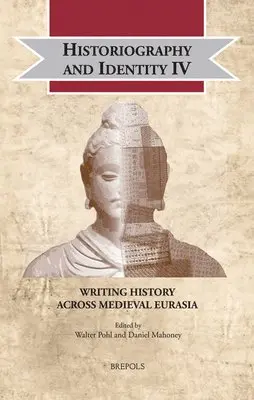
Historiography and Identity IV
Writing History Across Medieval Eurasia
Av Walter Pohl, Daniel Mahoney
Inbunden, 2021
1552 kr
Lägg i varukorg