Daniel Okrent – författare
Visar alla böcker från författaren Daniel Okrent. Handla med fri frakt och snabb leverans.
12 produkter
12 produkter
Inbunden, Engelska, 2026
392 kr
Skickas inom 3-6 vardagar
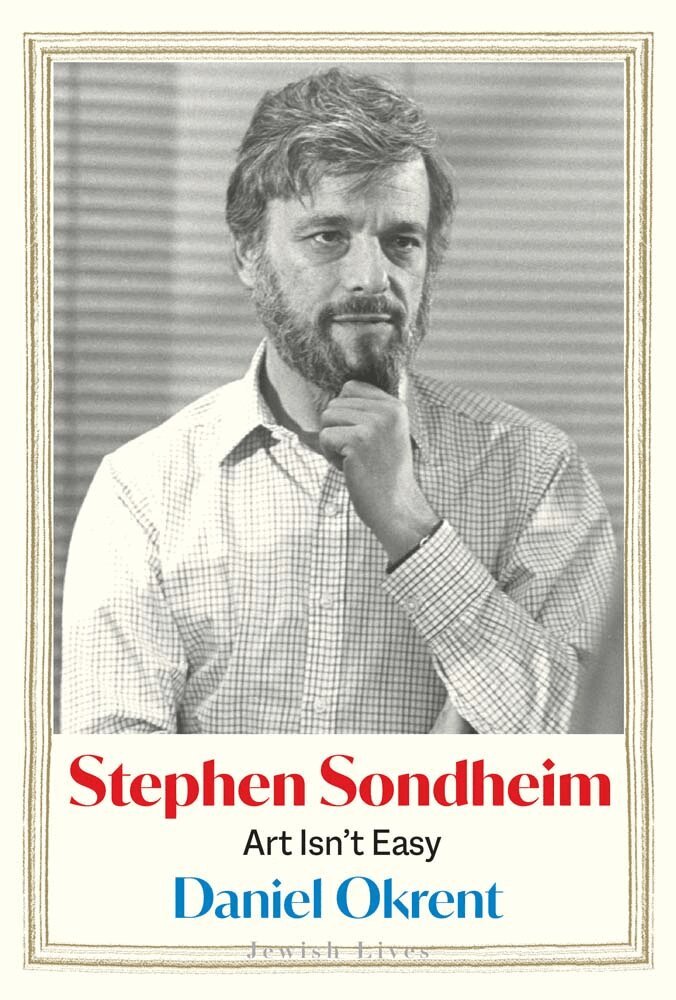
A revelatory look at the complex inner world of one of the twentieth century’s most beloved theatrical composers“A superb biography of the musical master. Packed with gossip and incident, this book is also a fascinating study in the gestation of genius.”—Guardian“[An] illuminating consideration of Sondheim’s long career. Without grandstanding in a game of biographical gotcha, Okrent takes up key themes of Sondheim’s life and links them persuasively to songs in his shows.”—David Hajdu, The AtlanticStephen Sondheim (1930–2021) was a towering figure in American musical theater. Celebrated for such iconic Broadway shows as Company, Sweeney Todd, and Into the Woods, his accolades include eight Tony Awards, multiple Grammy Awards, an Academy Award, and a Pulitzer Prize. In this intimate biography, Daniel Okrent follows Sondheim through the tumult of his upbringing and his parents’ divorce, his life-changing relationship with Oscar Hammerstein II and subsequent immersion in musical theater, and his rise to fame as both a lyricist and composer.Okrent shines new light on Sondheim’s complicated emotional life, wavering self-confidence, and alcoholism, drawing on the artist’s intimate correspondence with such notable figures as Hal Prince, Leonard Bernstein, and Arthur Laurents; exclusive interviews with his close friends and collaborators, including James Lapine and John Weidman; and Sondheim’s own oral history, which remained closed until his death. He also reveals a previously unknown (and crucial) aspect of the infamous letter from Sondheim’s mother that made him believe she regretted his birth. As Okrent explores the ways Sondheim’s music and lyrics express the inner man, he shows us a life that was defined by two parallel arcs: the movement from alienation to connection, and from ambivalence to resolution.
Häftad, Engelska, 2004
297 kr
Skickas inom 5-8 vardagar
E-bok
Engelska, 2000103 kr
Läs direkt efter köp
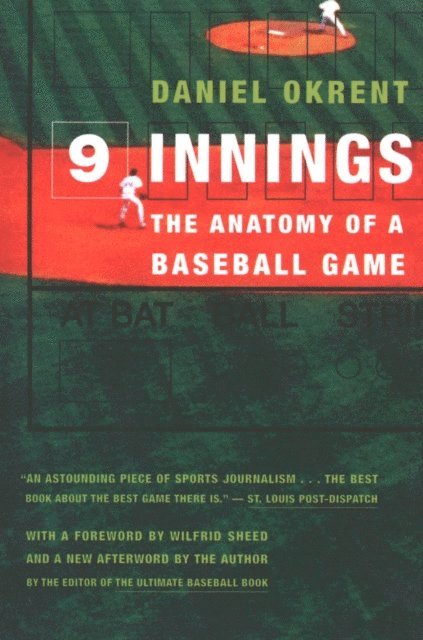
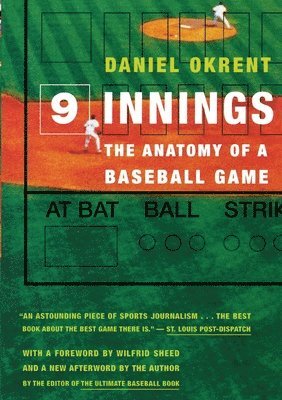
Brewers-Orioles, 6/10/82: “An astounding piece of sports journalism . . . the best book about the best game there is.” —St. Louis Post-DispatchA timeless baseball classic, Nine Innings dissects a single baseball game played in June 1982—inning by inning, play by play. Daniel Okrent, New York Times–bestselling author and lifelong fan, chose as his subject a Milwaukee Brewers-Baltimore Orioles matchup, though it could have been any game, because, as Okrent reveals, the essence of baseball, no matter where or when it’s played, has been and will always be the same. In this particular moment of baseball history you will discover myriad aspects of the sport that are crucial to its nature but so often invisible to the fans—the hidden language of catchers’ signals, the physiology of pitching, the balance sheet of a club owner, the gait of a player stepping up to the plate. With the purity of heart and unwavering attention to detail that characterize our national pastime, Okrent goes straight to the core of the world’s greatest game. You’ll never watch baseball the same way again.“Informative and amusing . . . we get a little bit of everything and a lot of entertainment.” —TheNew York Times“Develop[s] a momentum that puts us on the edge of our seats . . . This is one of the best books ever on our national game.” —Ken Burns
Häftad, Engelska, 2010
172 kr
Skickas inom 5-8 vardagar
Häftad, Engelska, 2011
270 kr
Skickas inom 3-6 vardagar
Ljudbok
Engelska, 2010207 kr
Lyssna direkt efter köp
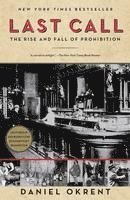
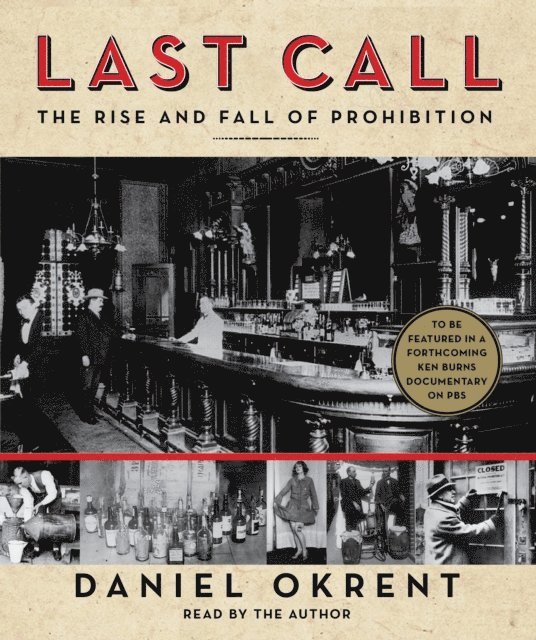
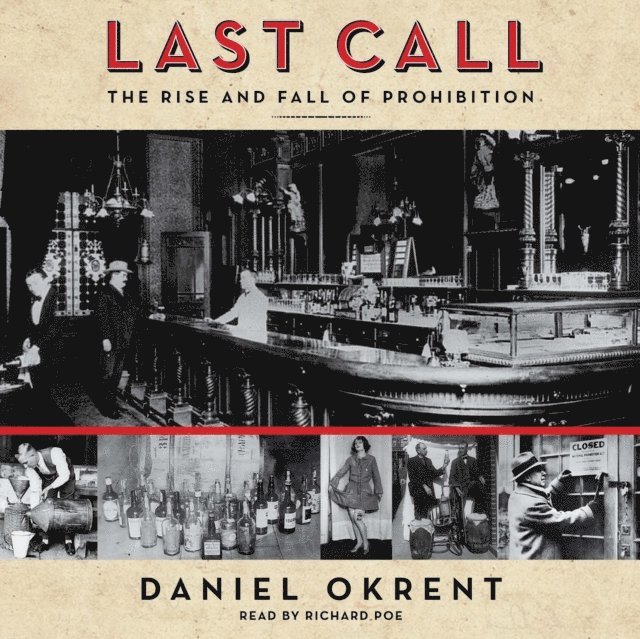
A brilliant, authoritative, and fascinating history of America’s most puzzling era, the years 1920 to 1933, when the US Constitution was amended to restrict one of America’s favorite pastimes: drinking alcoholic beverages.From its start, America has been awash in drink. The sailing vessel that brought John Winthrop to the shores of the New World in 1630 carried more beer than water. By the 1820s, liquor flowed so plentifully it was cheaper than tea. That Americans would ever agree to relinquish their booze was as improbable as it was astonishing. Yet we did, and Last Call is Daniel Okrent’s dazzling explanation of why we did it, what life under Prohibition was like, and how such an unprecedented degree of government interference in the private lives of Americans changed the country forever. Writing with both wit and historical acuity, Okrent reveals how Prohibition marked a confluence of diverse forces: the growing political power of the women’s suffrage movement, which allied itself with the antiliquor campaign; the fear of small-town, native-stock Protestants that they were losing control of their country to the immigrants of the large cities; the anti-German sentiment stoked by World War I; and a variety of other unlikely factors, ranging from the rise of the automobile to the advent of the income tax. Through it all, Americans kept drinking, going to remarkably creative lengths to smuggle, sell, conceal, and convivially (and sometimes fatally) imbibe their favorite intoxicants. Last Call is peopled with vivid characters of an astonishing variety: Susan B. Anthony and Billy Sunday, William Jennings Bryan and bootlegger Sam Bronfman, Pierre S. du Pont and H. L. Mencken, Meyer Lansky and the incredible—if long-forgotten—federal official Mabel Walker Willebrandt, who throughout the twenties was the most powerful woman in the country. (Perhaps most surprising of all is Okrent’s account of Joseph P. Kennedy’s legendary, and long-misunderstood, role in the liquor business.) It’s a book rich with stories from nearly all parts of the country. Okrent’s narrative runs through smoky Manhattan speakeasies, where relations between the sexes were changed forever; California vineyards busily producing “sacramental” wine; New England fishing communities that gave up fishing for the more lucrative rum-running business; and in Washington, the halls of Congress itself, where politicians who had voted for Prohibition drank openly and without apology. Last Call is capacious, meticulous, and thrillingly told. It stands as the most complete history of Prohibition ever written and confirms Daniel Okrent’s rank as a major American writer.
E-bok
Engelska, 2004211 kr
Läs direkt efter köp
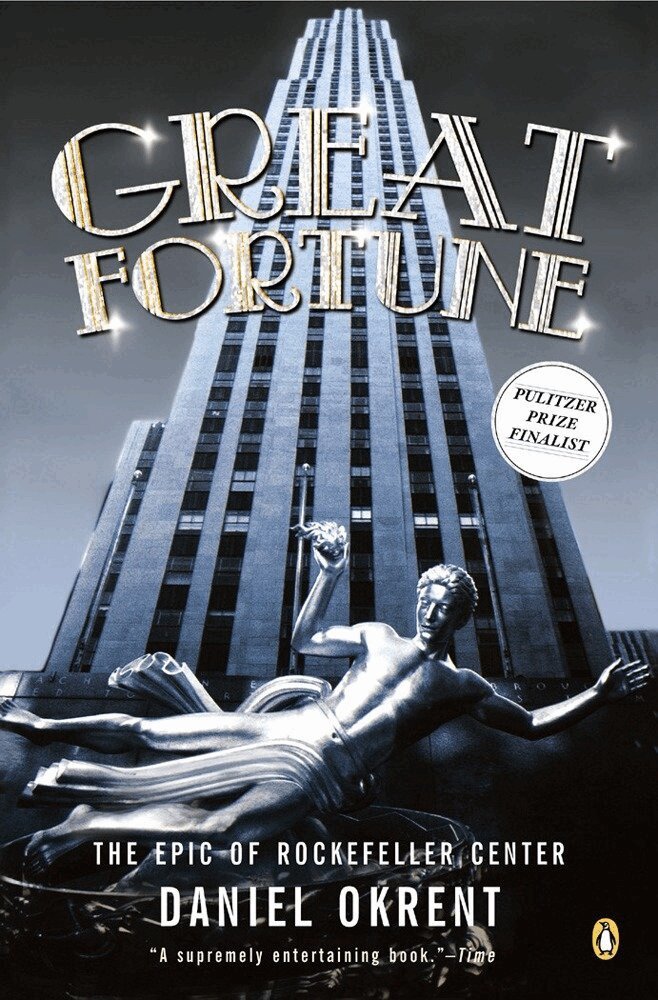
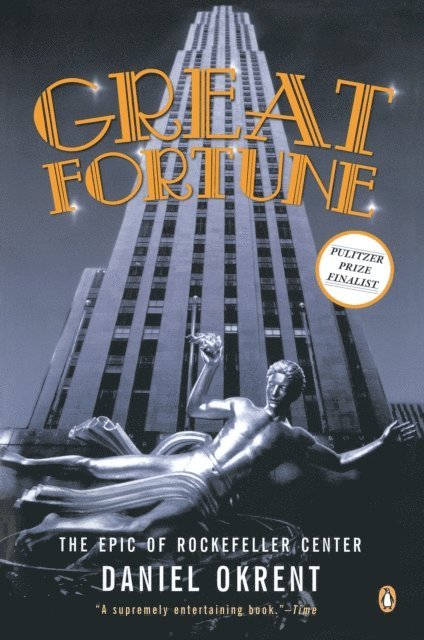
In this hugely appealing book, a finalist for the Pulitzer Prize, acclaimed author and journalist Daniel Okrent weaves together themes of money, politics, art, architecture, business, and society to tell the story of the majestic suite of buildings that came to dominate the heart of midtown Manhattan and with it, for a time, the heart of the world. At the center of Okrent?s riveting story are four remarkable individuals?tycoon John D. Rockefeller, his ambitious son Nelson Rockefeller, real estate genius John R. Todd, and visionary skyscraper architect Raymond Hood. In the tradition of David McCullough?s The Great Bridge, Ron Chernow?s Titan, and Robert Caro?s The Power Broker, Great Fortune is a stunning tribute to an American landmark that captures the heart and spirit of New York at its apotheosis.
E-bok
Engelska, 2010215 kr
Läs direkt efter köp
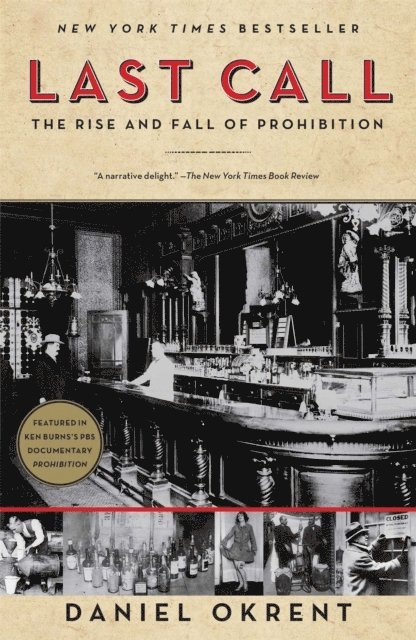
A brilliant, authoritative, and fascinating history of America’s most puzzling era, the years 1920 to 1933, when the U.S. Constitution was amended to restrict one of America’s favorite pastimes: drinking alcoholic beverages. From its start, America has been awash in drink. The sailing vessel that brought John Winthrop to the shores of the New World in 1630 carried more beer than water. By the 1820s, liquor flowed so plentifully it was cheaper than tea. That Americans would ever agree to relinquish their booze was as improbable as it was astonishing. Yet we did, and Last Call is Daniel Okrent’s dazzling explanation of why we did it, what life under Prohibition was like, and how such an unprecedented degree of government interference in the private lives of Americans changed the country forever. Writing with both wit and historical acuity, Okrent reveals how Prohibition marked a confluence of diverse forces: the growing political power of the women’s suffrage movement, which allied itself with the antiliquor campaign; the fear of small-town, native-stock Protestants that they were losing control of their country to the immigrants of the large cities; the anti-German sentiment stoked by World War I; and a variety of other unlikely factors, ranging from the rise of the automobile to the advent of the income tax. Through it all, Americans kept drinking, going to remarkably creative lengths to smuggle, sell, conceal, and convivially (and sometimes fatally) imbibe their favorite intoxicants. Last Call is peopled with vivid characters of an astonishing variety: Susan B. Anthony and Billy Sunday, William Jennings Bryan and bootlegger Sam Bronfman, Pierre S. du Pont and H. L. Mencken, Meyer Lansky and the incredible—if long-forgotten—federal official Mabel Walker Willebrandt, who throughout the twenties was the most powerful woman in the country. (Perhaps most surprising of all is Okrent’s account of Joseph P. Kennedy’s legendary, and long-misunderstood, role in the liquor business.) It’s a book rich with stories from nearly all parts of the country. Okrent’s narrative runs through smoky Manhattan speakeasies, where relations between the sexes were changed forever; California vineyards busily producing “sacramental” wine; New England fishing communities that gave up fishing for the more lucrative rum-running business; and in Washington, the halls of Congress itself, where politicians who had voted for Prohibition drank openly and without apology. Last Call is capacious, meticulous, and thrillingly told. It stands as the most complete history of Prohibition ever written and confirms Daniel Okrent’s rank as a major American writer.
Ljudbok
Engelska, 2011413 kr
Lyssna direkt efter köp
A brilliant, authoritative, and fascinating history of America’s most puzzling era, the years 1920 to 1933, when the US Constitution was amended to restrict one of America’s favorite pastimes: drinking alcoholic beverages.From its start, America has been awash in drink. The sailing vessel that brought John Winthrop to the shores of the New World in 1630 carried more beer than water. By the 1820s, liquor flowed so plentifully it was cheaper than tea. That Americans would ever agree to relinquish their booze was as improbable as it was astonishing. Yet we did, and Last Call is Daniel Okrent’s dazzling explanation of why we did it, what life under Prohibition was like, and how such an unprecedented degree of government interference in the private lives of Americans changed the country forever. Writing with both wit and historical acuity, Okrent reveals how Prohibition marked a confluence of diverse forces: the growing political power of the women’s suffrage movement, which allied itself with the antiliquor campaign; the fear of small-town, native-stock Protestants that they were losing control of their country to the immigrants of the large cities; the anti-German sentiment stoked by World War I; and a variety of other unlikely factors, ranging from the rise of the automobile to the advent of the income tax. Through it all, Americans kept drinking, going to remarkably creative lengths to smuggle, sell, conceal, and convivially (and sometimes fatally) imbibe their favorite intoxicants. Last Call is peopled with vivid characters of an astonishing variety: Susan B. Anthony and Billy Sunday, William Jennings Bryan and bootlegger Sam Bronfman, Pierre S. du Pont and H. L. Mencken, Meyer Lansky and the incredible—if long-forgotten—federal official Mabel Walker Willebrandt, who throughout the twenties was the most powerful woman in the country. (Perhaps most surprising of all is Okrent’s account of Joseph P. Kennedy’s legendary, and long-misunderstood, role in the liquor business.) It’s a book rich with stories from nearly all parts of the country. Okrent’s narrative runs through smoky Manhattan speakeasies, where relations between the sexes were changed forever; California vineyards busily producing “sacramental” wine; New England fishing communities that gave up fishing for the more lucrative rum-running business; and in Washington, the halls of Congress itself, where politicians who had voted for Prohibition drank openly and without apology. Last Call is capacious, meticulous, and thrillingly told. It stands as the most complete history of Prohibition ever written and confirms Daniel Okrent’s rank as a major American writer.
E-bok
Engelska, 2019190 kr
Läs direkt efter köp
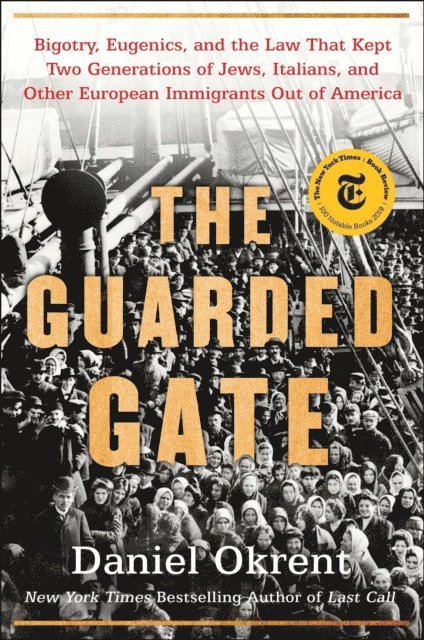
“An extraordinary book, I can’t recommend it highly enough.” –Whoopi Goldberg, The View By the widely celebrated New York Times bestselling author of Last Call—the powerful, definitive, and timely account of how the rise of eugenics helped America close the immigration door to “inferiors” in the 1920s.A forgotten, dark chapter of American history with implications for the current day, The Guarded Gate tells the story of the scientists who argued that certain nationalities were inherently inferior, providing the intellectual justification for the harshest immigration law in American history. Brandished by the upper class Bostonians and New Yorkers—many of them progressives—who led the anti-immigration movement, the eugenic arguments helped keep hundreds of thousands of Jews, Italians, and other unwanted groups out of the US for more than 40 years. Over five years in the writing, The Guarded Gate tells the complete story from its beginning in 1895, when Henry Cabot Lodge and other Boston Brahmins launched their anti-immigrant campaign. In 1921, Vice President Calvin Coolidge declared that “biological laws” had proven the inferiority of southern and eastern Europeans; the restrictive law was enacted three years later. In his characteristic style, both lively and authoritative, Okrent brings to life the rich cast of characters from this time, including Lodge’s closest friend, Theodore Roosevelt; Charles Darwin’s first cousin, Francis Galton, the idiosyncratic polymath who gave life to eugenics; the fabulously wealthy and profoundly bigoted Madison Grant, founder of the Bronx Zoo, and his best friend, H. Fairfield Osborn, director of the American Museum of Natural History; Margaret Sanger, who saw eugenics as a sensible adjunct to her birth control campaign; and Maxwell Perkins, the celebrated editor of Hemingway and Fitzgerald. A work of history relevant for today, The Guarded Gate is an important, insightful tale that painstakingly connects the American eugenicists to the rise of Nazism, and shows how their beliefs found fertile soil in the minds of citizens and leaders both here and abroad.
Ljudbok
Engelska, 2019413 kr
Lyssna direkt efter köp
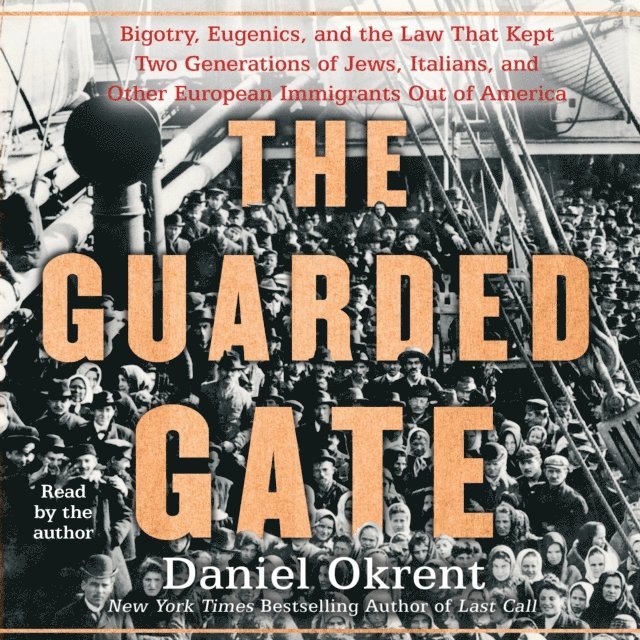
NAMED ONE OF THE “100 NOTABLE BOOKS OF THE YEAR” BY THE NEW YORK TIMES BOOK REVIEW From the widely celebrated New York Times bestselling author of Last Call—this “rigorously historical” (The Washington Post) and timely account of how the rise of eugenics helped America keep out “inferiors” in the 1920s is “a sobering, valuable contribution to discussions about immigration” (Booklist). A forgotten, dark chapter of American history with implications for the current day, The Guarded Gate tells the story of the scientists who argued that certain nationalities were inherently inferior, providing the intellectual justification for the harshest immigration law in American history. Brandished by the upper class Bostonians and New Yorkers—many of them progressives—who led the anti-immigration movement, the eugenic arguments helped keep hundreds of thousands of Jews, Italians, and other unwanted groups out of the US for more than forty years. Over five years in the writing, The Guarded Gate tells the complete story from its beginning in 1895, when Henry Cabot Lodge and other Boston Brahmins launched their anti-immigrant campaign. In 1921, Vice President Calvin Coolidge declared that “biological laws” had proven the inferiority of southern and eastern Europeans; the restrictive law was enacted three years later. In his trademark lively and authoritative style, Okrent brings to life the rich cast of characters from this time, including Lodge’s closest friend, Theodore Roosevelt; Charles Darwin’s first cousin, Francis Galton, the idiosyncratic polymath who gave life to eugenics; the fabulously wealthy and profoundly bigoted Madison Grant, founder of the Bronx Zoo, and his best friend, H. Fairfield Osborn, director of the American Museum of Natural History; Margaret Sanger, who saw eugenics as a sensible adjunct to her birth control campaign; and Maxwell Perkins, the celebrated editor of Hemingway and Fitzgerald. A work of history relevant for today, The Guarded Gate is “a masterful, sobering, thoughtful, and necessary book” that painstakingly connects the American eugenicists to the rise of Nazism, and shows how their beliefs found fertile soil in the minds of citizens and leaders both here and abroad.
E-bok
Engelska, 201429 kr
Läs direkt efter köp
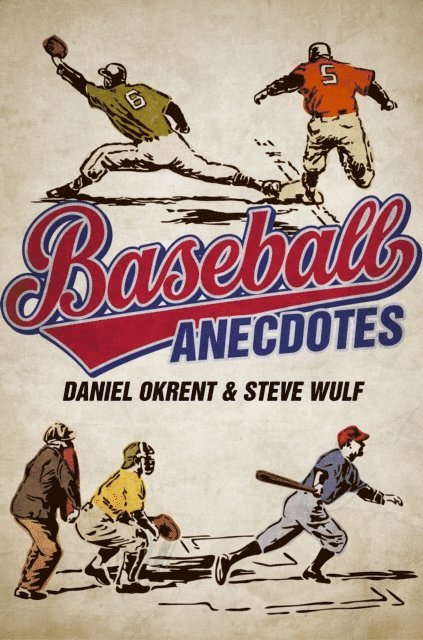
From its winners to its sinners, two bestselling sportswriters chronicle a dizzying trip through more than a century of baseball lore and legend. Some of the stories are celebrated—from Ruth’s called shot to DiMaggio’s streak to Mays’s catch. Some of the men are titans of the game—Mantle, Williams, Koufax. But alongside those stories passed from generation to generation, Daniel Okrent and Steve Wulf have assembled tales both hard-to-believe and a pleasure to read. From the Black Sox scandal to Bill Veeck’s bizarre promotions, from its icons and iconoclasts, from the humble origins of the game to the landmark moments that made it the national pastime, Baseball Anecdotes reveals the enthralling (and often amusing) game that goes on both on the field and behind the scenes of baseball. “A dandy introduction to the game.” —Newsweek “A must . . . Its greatest value might be to those of us who want to pass along baseball lore to our children.” —San Jose Mercury News “Beguiling . . . A history of the game in stories . . . Comic, tragic, controversial.” —The New York Times Book Review