Daniel Owen Spence – författare
Visar alla böcker från författaren Daniel Owen Spence. Handla med fri frakt och snabb leverans.
2 produkter
2 produkter
E-bok
PDF, Engelska, 2015672 kr
Läs direkt efter köp
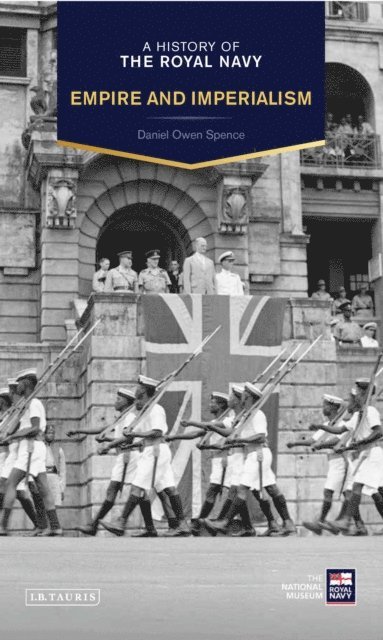
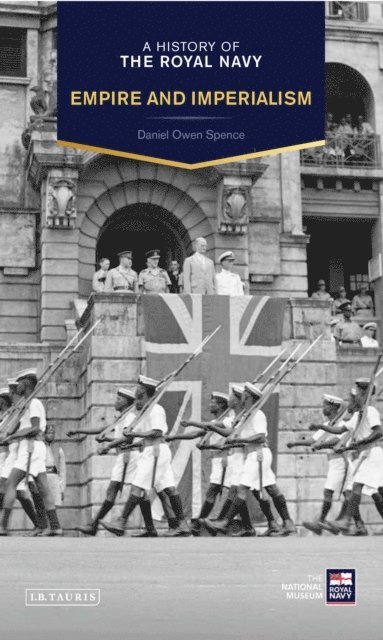
The British Empire, the largest empire in history, was fundamentally a maritime one. Britain s imperial power was inextricably tied to the strength of the Royal Navy the ability to protect and extend Britain s political and economic interests overseas, and to provide the vital bonds that connected the metropole with the colonies. This book will examine the intrinsic relationship between the Royal Navy and the empire, by examining not only the navy s expansionist role on land and sea, but also the ideological and cultural influence it exerted for both the coloniser and colonised. The navy s voyages of discovery created new scientific knowledge and inspired art, literature and film. Using the model of the Royal Navy, colonies began to develop their own navies, many of which supported the Royal Navy in the major conflicts of the twentieth century. Daniel Owen Spence here provides a history of the navy s role in empire from the earliest days of colonisation to the present-day Commonwealth. In doing so, he shows how the relationship between the navy and the empire played a part in shaping the globalised society we inhabit today."
E-bok
Engelska, 2015692 kr
Läs direkt efter köp
The Seven Years War (1756-1763) was the first global conflict and became the key factor in creating the British Empire. What started as a tussle between Britain and France over their North American territories escalated into an international maritime war which engulfed the world. This book looks at Britain's maritime strategic, operational and tactical success (and failures), through a wide-ranging history of the Royal Navy's role in the war. By the time the war ended in 1763 Britain was by no means a hegemonic power, but it was the only state capable of sustained global power projection on a global scale. Through the Treaty of Paris, Britain gained much territory, including many of France's colonies in North America (including Canada), Spanish Florida, parts of the Caribbean, Senegal in West Africa and many of France's trading posts in South Asia. Key to Britain's success was political and strategic direction from London, through the war planning of Pitt the Elder and the successful implementation of his policies by a stellar cast of naval and military leaders at an operational and tactical level. Martin Robson highlights the work of some of the key protagonists in the Royal Navy, men such as Admiral Sir Edward Hawke whose moral courage and appreciation of the wider strategic context at Quiberon Bay in 1759 decided the fate of North America and formed one of the most decisive victories in naval history. However he also explores living conditions in the lower decks, providing insights into what life was like for ordinary sailors at this time. Using a variety of sources, documents, images and artefacts, Robson ultimately shows that the creation, containment and expansion of the British Empire was made possible by the exercise of maritime power through the Royal Navy.