Daniel S. Claster - Böcker
Visar alla böcker från författaren Daniel S. Claster. Handla med fri frakt och snabb leverans.
2 produkter
2 produkter
1 009 kr
Skickas inom 10-15 vardagar
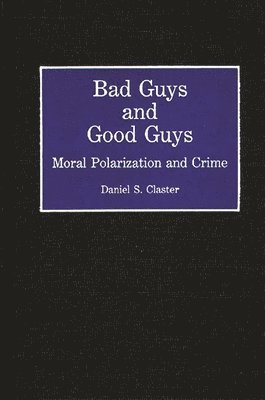
Are victims good guys and criminals bad guys? Sometimes--but, often, the public's stereotypes and perceptions of offenders, victims, and groups are quite complex. In spite of widespread concern about crime, there is great resistance on the part of the public and its elected representatives to certain measures that would seem to be sensible ways of ameliorating the problem. How can this resistance be explained? At the same time, measures like community service, shock probation, determinate sentencing, and reality therapy are embraced by the public. Claster shows how these contradictions are not mutually exclusive and explains the importance of moral polarization in the way the public perceives crime and victims.Claster begins by examining the various ways crime is perceived moralistically. He then examines stereotypes about the participants in a crime, which are illustrated by references to popular fiction as well as scholarly analysis, to the media, to public opinion surveys, and to statements of public officials. After examining the criminal as bad guy and good guy he reviews the positive as well as the negative stereotypes of victims' groups (gangs, families, and immigrant and occupational subcultures). Claster then examines psychological and sociological explanations of the process underlying these stereotypes; he provides cases to illustrate how pervasive the process, of what he calls moral polarization, is; and he concludes by exploring the practical implication of moral polarization. This work will be of considerable interest to scholars in criminology as well as those involved with criminal justice policy.
513 kr
Skickas inom 10-15 vardagar
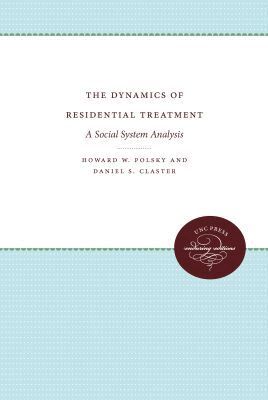
This original research study of residential treatments of problem adolescents represents one of the few attempts in the field to observe in a systematic fashion the residents' living situation in the institutional setting. An innovative field experiment is developed to contrast the interaction of counsellors and residents as they create three distinctive cottage subcultures.