Daniel Sheehy – författare
1 236 kr
Skickas inom 10-15 vardagar
1 472 kr
Läs direkt efter köp
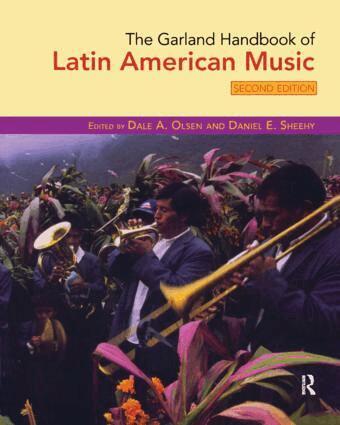
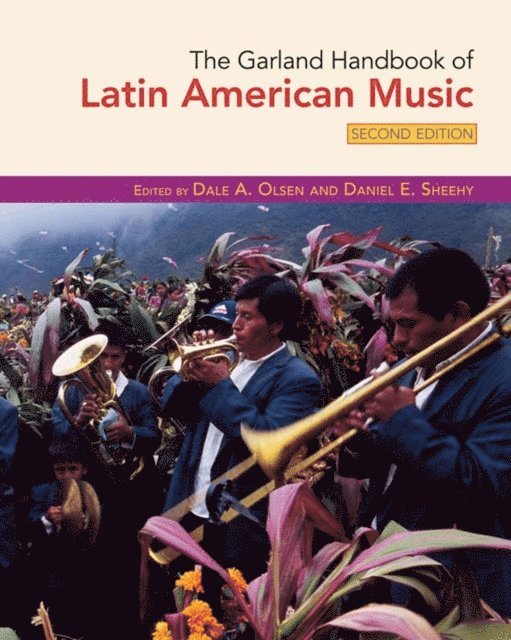
The Garland Handbook of Latin American Music is comprised of essays from The Garland Encyclopedia of World Music: Volume 2, South America, Mexico, Central America, and the Carribean, (1998). Revised and updated, the essays offer detailed, regional studies of the different musical cultures of Latin America and examine the ways in which music helps to define the identity of this particular area.
Part One provides an in-depth introduction to the area of Latin America and describes the history, geography, demography, and cultural settings of the regions that comprise Latin America. It also explores the many ways to research Latin American music, including archaeology, iconography, mythology, history, ethnography, and practice. Part Two focuses on issues and processes, such as history, politics, geography, and immigration, which are responsible for the similarities and the differences of each region’s uniqueness and individuality. Part Three focuses on the different regions, countries, and cultures of Caribbean Latin America, Middle Latin America, and South America with selected regional case studies.
The second edition has been expanded to cover Haiti, Panama, several more Amerindian musical cultures, and Afro-Peru. Questions for Critical Thinking at the end of each major section guide focus attention on what musical and cultural issues arise when one studies the music of Latin America -- issues that might not occur in the study of other musics of the world. Two audio compact discs offer musical examples of some of the music of Latin America.
1 472 kr
Läs direkt efter köp
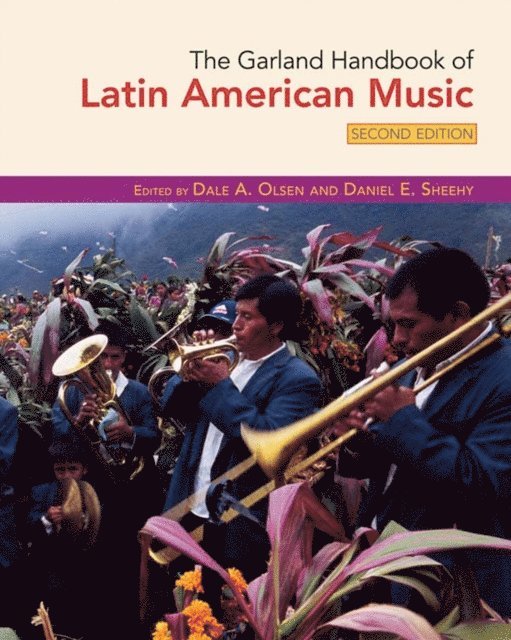
The Garland Handbook of Latin American Music is comprised of essays from The Garland Encyclopedia of World Music: Volume 2, South America, Mexico, Central America, and the Carribean, (1998). Revised and updated, the essays offer detailed, regional studies of the different musical cultures of Latin America and examine the ways in which music helps to define the identity of this particular area.
Part One provides an in-depth introduction to the area of Latin America and describes the history, geography, demography, and cultural settings of the regions that comprise Latin America. It also explores the many ways to research Latin American music, including archaeology, iconography, mythology, history, ethnography, and practice. Part Two focuses on issues and processes, such as history, politics, geography, and immigration, which are responsible for the similarities and the differences of each region’s uniqueness and individuality. Part Three focuses on the different regions, countries, and cultures of Caribbean Latin America, Middle Latin America, and South America with selected regional case studies.
The second edition has been expanded to cover Haiti, Panama, several more Amerindian musical cultures, and Afro-Peru. Questions for Critical Thinking at the end of each major section guide focus attention on what musical and cultural issues arise when one studies the music of Latin America -- issues that might not occur in the study of other musics of the world. Two audio compact discs offer musical examples of some of the music of Latin America.
2 494 kr
Skickas inom 10-15 vardagar
167 kr
Skickas inom 5-8 vardagar
75 kr
Läs direkt efter köp
These citizens became activists when they saw that, if America is to survive as a nation and culture, her people will have to save her, because an out-of-touch Washington establishment has grown too corrupt to defend the land and Constitution that hundreds of thousands of Americans have died to preserve.
Fighting Immigration Anarchy focuses on the struggles of eight citizen activists to awaken their fellow Americans to the encroaching danger. Through the individual stories, readers learn about the recent history of illegal immigration in America the political victories and defeats as citizens awoke and fought back against the open-borders juggernaut.
Like the patriots of the American Revolution, todays citizen activists refuse to cower before powerful foreign tyrants like those in Mexico City demanding America accept their surplus people. Modern patriots also confront domestic business interests grown addicted to exploitable foreigners now doing formerly American jobs at near-slave wages.
This book is a warning for all Americans of the chaos spreading rapidly from the southwestern border zone to every corner of the nation. In its wake have come massive job displacement for American workers, increased crime, schools overwhelmed by non-English-speaking students, bankrupt hospitals, and other serious problems. And these newcomers have not come to join the American community through assimilation, as did legal immigrants in the past, demanding instead that we change our culture to fit them.