Daniel Shoemaker – författare
620 kr
Skickas
Providing 100% coverage of the latest CSSLP exam, this self-study guide offers everything you need to ace the exam
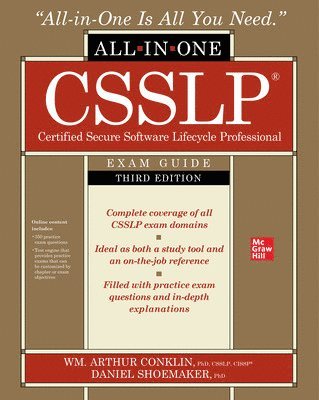
Get complete coverage of all the material included on the Certified Secure Software Lifecycle Professional exam. CSSLP Certified Secure Software Lifecycle Professional All-in-One Exam Guide, Third Edition covers all eight exam domains developed by the International Information Systems Security Certification Consortium (ISC)2®. You’ll find learning objectives at the beginning of each chapter, exam tips, and practice questions with explanations. Designed to help you pass the exam with ease, this definitive resource also serves as an essential on-the-job reference.
Covers all eight exam domains:
Secure Software ConceptsSecure Software RequirementsSecure Software Architecture and DesignSecure Software ImplementationSecure Software TestingSecure Software Lifecycle ManagementSecure Software Deployment, Operations, MaintenanceSecure Software Supply ChainOnline content includes:Test engine that provides full-length practice exams or customized quizzes by chapter or exam domain2 130 kr
Skickas inom 10-15 vardagar
727 kr
Läs direkt efter köp
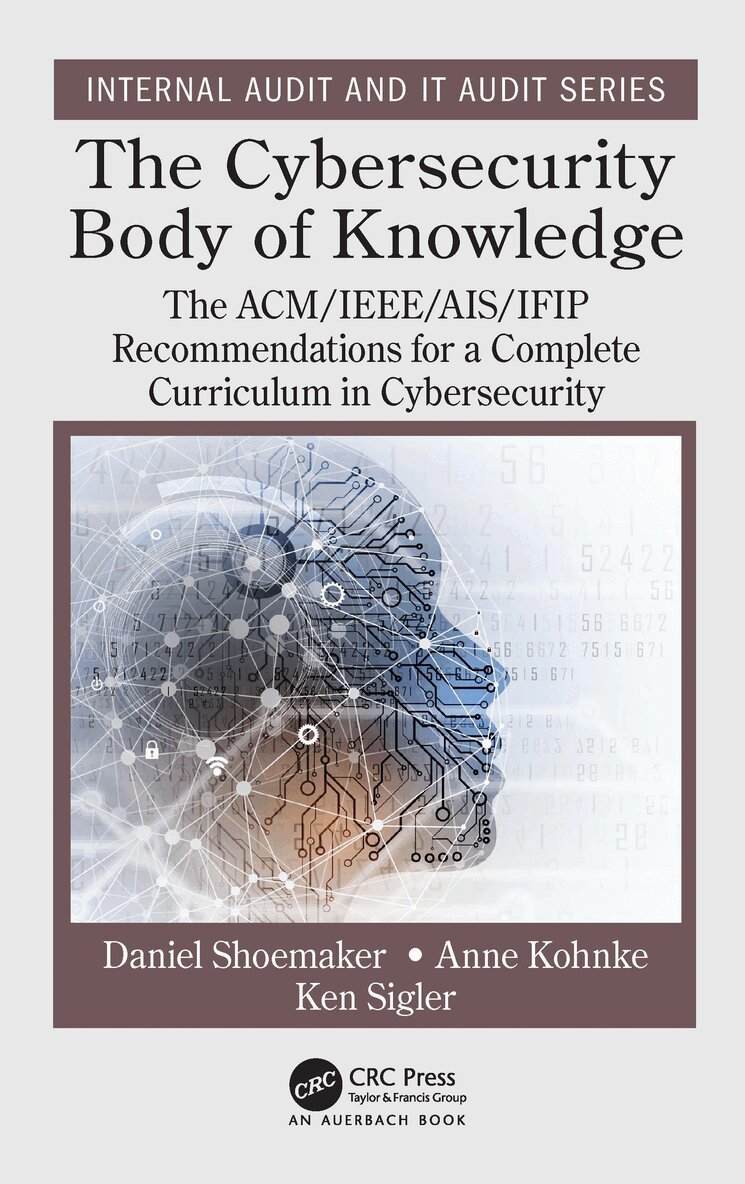
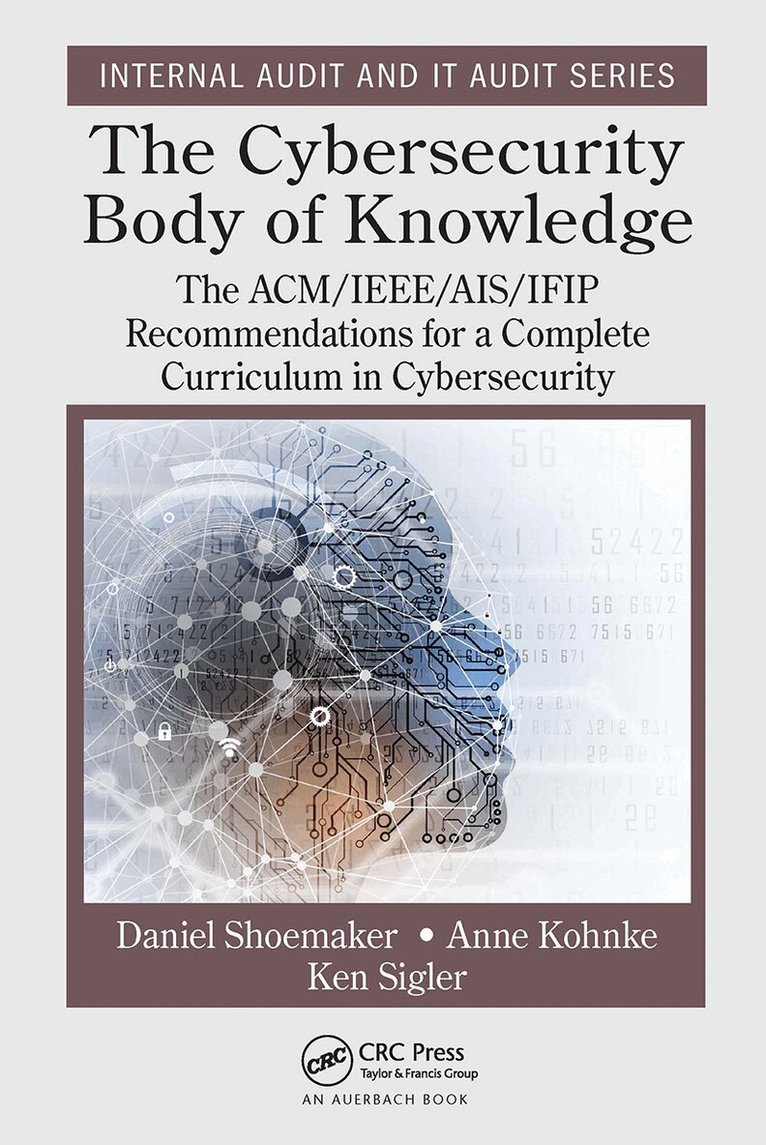
The Cybersecurity Body of Knowledge explains the content, purpose, and use of eight knowledge areas that define the boundaries of the discipline of cybersecurity. The discussion focuses on, and is driven by, the essential concepts of each knowledge area that collectively capture the cybersecurity body of knowledge to provide a complete picture of the field.
This book is based on a brand-new and up to this point unique, global initiative, known as CSEC2017, which was created and endorsed by ACM, IEEE-CS, AIS SIGSEC, and IFIP WG 11.8. This has practical relevance to every educator in the discipline of cybersecurity. Because the specifics of this body of knowledge cannot be imparted in a single text, the authors provide the necessary comprehensive overview. In essence, this is the entry-level survey of the comprehensive field of cybersecurity. It will serve as the roadmap for individuals to later drill down into a specific area of interest.
This presentation is also explicitly designed to aid faculty members, administrators, CISOs, policy makers, and stakeholders involved with cybersecurity workforce development initiatives. The book is oriented toward practical application of a computing-based foundation, crosscutting concepts, and essential knowledge and skills of the cybersecurity discipline to meet workforce demands.
Dan Shoemaker, PhD, is full professor, senior research scientist, and program director at the University of Detroit Mercy’s Center for Cyber Security and Intelligence Studies. Dan is a former chair of the Cybersecurity & Information Systems Department and has authored numerous books and journal articles focused on cybersecurity.
Anne Kohnke, PhD, is an associate professor of cybersecurity and the principle investigator of the Center for Academic Excellence in Cyber Defence at the University of Detroit Mercy. Anne’s research is focused in cybersecurity, risk management, threat modeling, and mitigating attack vectors.
Ken Sigler, MS, is a faculty member of the Computer Information Systems (CIS) program at the Auburn Hills campus of Oakland Community College in Michigan. Ken’s research is in the areas of software management, software assurance, and cybersecurity.
702 kr
Läs direkt efter köp
The Cybersecurity Body of Knowledge explains the content, purpose, and use of eight knowledge areas that define the boundaries of the discipline of cybersecurity. The discussion focuses on, and is driven by, the essential concepts of each knowledge area that collectively capture the cybersecurity body of knowledge to provide a complete picture of the field.
This book is based on a brand-new and up to this point unique, global initiative, known as CSEC2017, which was created and endorsed by ACM, IEEE-CS, AIS SIGSEC, and IFIP WG 11.8. This has practical relevance to every educator in the discipline of cybersecurity. Because the specifics of this body of knowledge cannot be imparted in a single text, the authors provide the necessary comprehensive overview. In essence, this is the entry-level survey of the comprehensive field of cybersecurity. It will serve as the roadmap for individuals to later drill down into a specific area of interest.
This presentation is also explicitly designed to aid faculty members, administrators, CISOs, policy makers, and stakeholders involved with cybersecurity workforce development initiatives. The book is oriented toward practical application of a computing-based foundation, crosscutting concepts, and essential knowledge and skills of the cybersecurity discipline to meet workforce demands.
Dan Shoemaker, PhD, is full professor, senior research scientist, and program director at the University of Detroit Mercy’s Center for Cyber Security and Intelligence Studies. Dan is a former chair of the Cybersecurity & Information Systems Department and has authored numerous books and journal articles focused on cybersecurity.
Anne Kohnke, PhD, is an associate professor of cybersecurity and the principle investigator of the Center for Academic Excellence in Cyber Defence at the University of Detroit Mercy. Anne’s research is focused in cybersecurity, risk management, threat modeling, and mitigating attack vectors.
Ken Sigler, MS, is a faculty member of the Computer Information Systems (CIS) program at the Auburn Hills campus of Oakland Community College in Michigan. Ken’s research is in the areas of software management, software assurance, and cybersecurity.
605 kr
Läs direkt efter köp
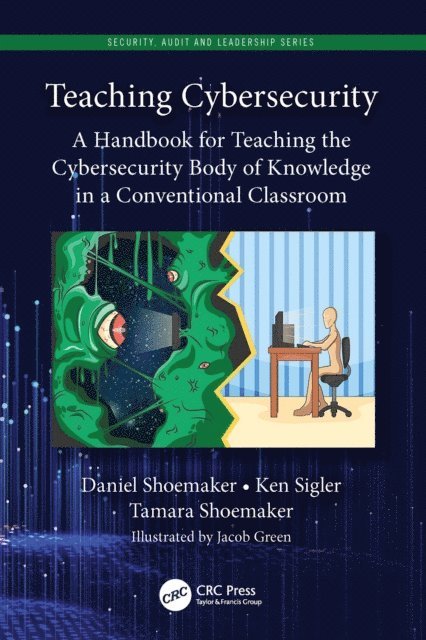
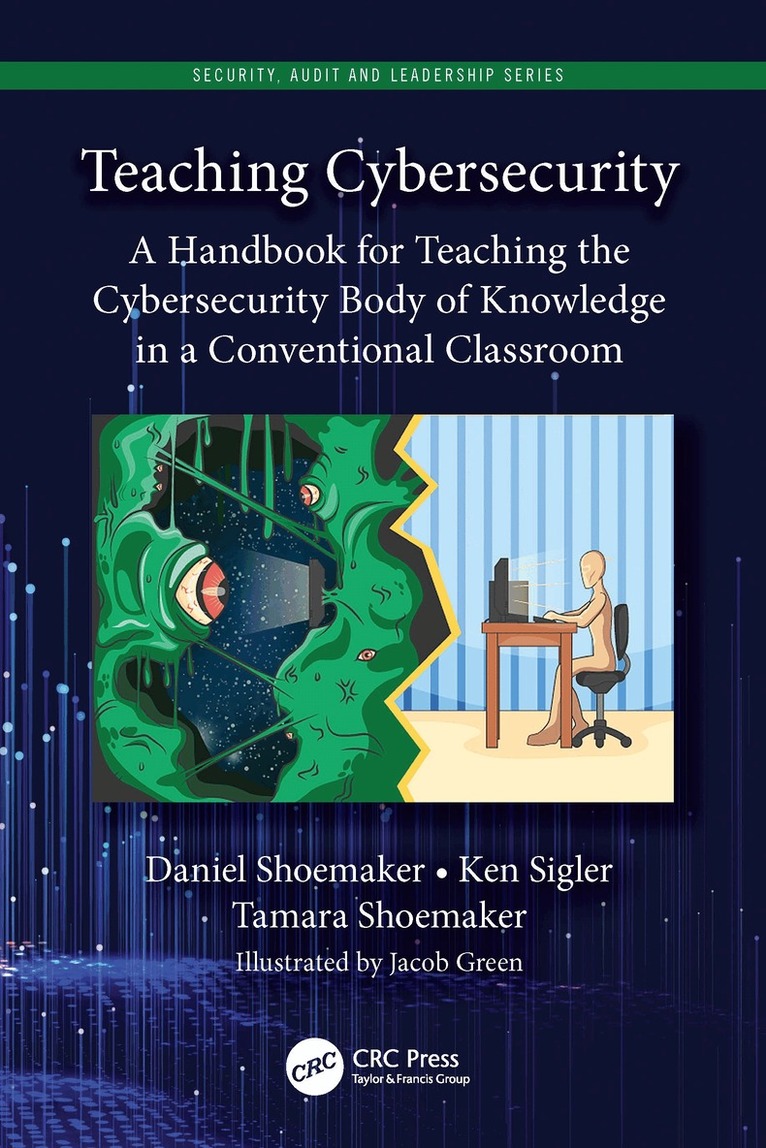
Let’s be realistic here. Ordinary K-12 educators don’t know what "cybersecurity" is and could probably care less about incorporating it into their lesson plans. Yet, teaching cybersecurity is a critical national priority. So, this book aims to cut through the usual roadblocks of confusing technical jargon and industry stovepipes and give you, the classroom teacher, a unified understanding of what must be taught. That advice is based on a single authoritative definition of the field. In 2017, the three societies that write the standards for computing, software engineering, and information systems came together to define a single model of the field of cybersecurity. It is based on eight building blocks. That definition is presented here. However, we also understand that secondary school teachers are not experts in arcane subjects like software, component, human, or societal security. Therefore, this book explains cybersecurity through a simple story rather than diving into execution details. Tom, a high school teacher, and Lucy, a middle school teacher, are tasked by their district to develop a cybersecurity course for students in their respective schools. They are aided in this by "the Doc," an odd fellow but an expert in the field. Together they work their way through the content of each topic area, helping each other to understand what the student at each level in the educational process has to learn. The explanations are simple, easy to understand, and geared toward the teaching aspect rather than the actual performance of cybersecurity work. Each chapter is a self-contained explanation of the cybersecurity content in that area geared to teaching both middle and high school audiences. The eight component areas are standalone in that they can be taught separately. But the real value lies in the comprehensive but easy-to-understand picture that the reader will get of a complicated field.
605 kr
Läs direkt efter köp
Let’s be realistic here. Ordinary K-12 educators don’t know what "cybersecurity" is and could probably care less about incorporating it into their lesson plans. Yet, teaching cybersecurity is a critical national priority. So, this book aims to cut through the usual roadblocks of confusing technical jargon and industry stovepipes and give you, the classroom teacher, a unified understanding of what must be taught. That advice is based on a single authoritative definition of the field. In 2017, the three societies that write the standards for computing, software engineering, and information systems came together to define a single model of the field of cybersecurity. It is based on eight building blocks. That definition is presented here. However, we also understand that secondary school teachers are not experts in arcane subjects like software, component, human, or societal security. Therefore, this book explains cybersecurity through a simple story rather than diving into execution details. Tom, a high school teacher, and Lucy, a middle school teacher, are tasked by their district to develop a cybersecurity course for students in their respective schools. They are aided in this by "the Doc," an odd fellow but an expert in the field. Together they work their way through the content of each topic area, helping each other to understand what the student at each level in the educational process has to learn. The explanations are simple, easy to understand, and geared toward the teaching aspect rather than the actual performance of cybersecurity work. Each chapter is a self-contained explanation of the cybersecurity content in that area geared to teaching both middle and high school audiences. The eight component areas are standalone in that they can be taught separately. But the real value lies in the comprehensive but easy-to-understand picture that the reader will get of a complicated field.
1 722 kr
Skickas inom 10-15 vardagar
528 kr
Skickas inom 10-15 vardagar
647 kr
Skickas inom 10-15 vardagar