Daniel Situnayake – författare
708 kr
Läs direkt efter köp
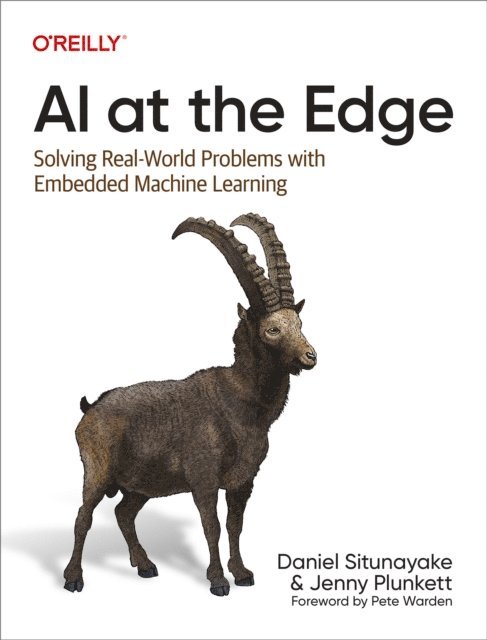
Edge AI is transforming the way computers interact with the real world, allowing IoT devices to make decisions using the 99% of sensor data that was previously discarded due to cost, bandwidth, or power limitations. With techniques like embedded machine learning, developers can capture human intuition and deploy it to any target--from ultra-low power microcontrollers to embedded Linux devices.
This practical guide gives engineering professionals, including product managers and technology leaders, an end-to-end framework for solving real-world industrial, commercial, and scientific problems with edge AI. You''ll explore every stage of the process, from data collection to model optimization to tuning and testing, as you learn how to design and support edge AI and embedded ML products. Edge AI is destined to become a standard tool for systems engineers. This high-level road map helps you get started.
Develop your expertise in AI and ML for edge devicesUnderstand which projects are best solved with edge AIExplore key design patterns for edge AI appsLearn an iterative workflow for developing AI systemsBuild a team with the skills to solve real-world problemsFollow a responsible AI process to create effective products734 kr
Läs direkt efter köp
Edge AI is transforming the way computers interact with the real world, allowing IoT devices to make decisions using the 99% of sensor data that was previously discarded due to cost, bandwidth, or power limitations. With techniques like embedded machine learning, developers can capture human intuition and deploy it to any target--from ultra-low power microcontrollers to embedded Linux devices.
This practical guide gives engineering professionals, including product managers and technology leaders, an end-to-end framework for solving real-world industrial, commercial, and scientific problems with edge AI. You''ll explore every stage of the process, from data collection to model optimization to tuning and testing, as you learn how to design and support edge AI and embedded ML products. Edge AI is destined to become a standard tool for systems engineers. This high-level road map helps you get started.
Develop your expertise in AI and ML for edge devicesUnderstand which projects are best solved with edge AIExplore key design patterns for edge AI appsLearn an iterative workflow for developing AI systemsBuild a team with the skills to solve real-world problemsFollow a responsible AI process to create effective products741 kr
Skickas inom 5-8 vardagar
509 kr
Läs direkt efter köp
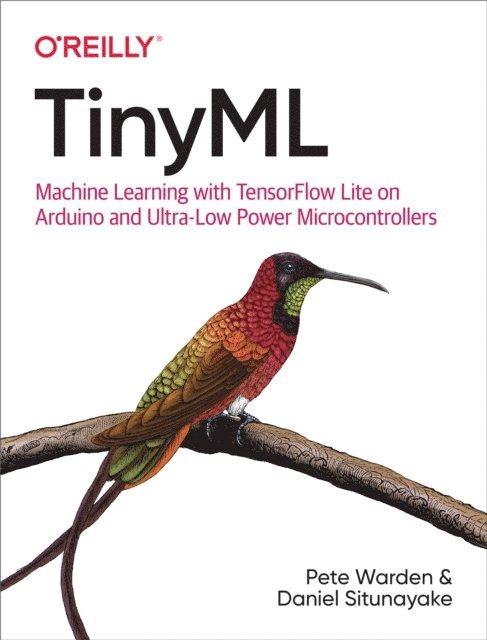
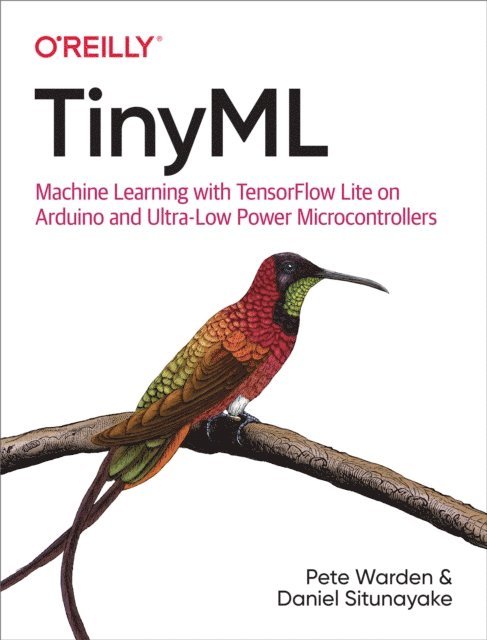
Deep learning networks are getting smaller. Much smaller. The Google Assistant team can detect words with a model just 14 kilobytes in size—small enough to run on a microcontroller. With this practical book you’ll enter the field of TinyML, where deep learning and embedded systems combine to make astounding things possible with tiny devices.
Pete Warden and Daniel Situnayake explain how you can train models small enough to fit into any environment. Ideal for software and hardware developers who want to build embedded systems using machine learning, this guide walks you through creating a series of TinyML projects, step-by-step. No machine learning or microcontroller experience is necessary.
Build a speech recognizer, a camera that detects people, and a magic wand that responds to gesturesWork with Arduino and ultra-low-power microcontrollersLearn the essentials of ML and how to train your own modelsTrain models to understand audio, image, and accelerometer dataExplore TensorFlow Lite for Microcontrollers, Google’s toolkit for TinyMLDebug applications and provide safeguards for privacy and securityOptimize latency, energy usage, and model and binary size509 kr
Läs direkt efter köp
Deep learning networks are getting smaller. Much smaller. The Google Assistant team can detect words with a model just 14 kilobytes in size—small enough to run on a microcontroller. With this practical book you’ll enter the field of TinyML, where deep learning and embedded systems combine to make astounding things possible with tiny devices.
Pete Warden and Daniel Situnayake explain how you can train models small enough to fit into any environment. Ideal for software and hardware developers who want to build embedded systems using machine learning, this guide walks you through creating a series of TinyML projects, step-by-step. No machine learning or microcontroller experience is necessary.
Build a speech recognizer, a camera that detects people, and a magic wand that responds to gesturesWork with Arduino and ultra-low-power microcontrollersLearn the essentials of ML and how to train your own modelsTrain models to understand audio, image, and accelerometer dataExplore TensorFlow Lite for Microcontrollers, Google’s toolkit for TinyMLDebug applications and provide safeguards for privacy and securityOptimize latency, energy usage, and model and binary size