Daniel Tanner - Böcker
Visar alla böcker från författaren Daniel Tanner. Handla med fri frakt och snabb leverans.
4 produkter
4 produkter
2 037 kr
Skickas inom 10-15 vardagar
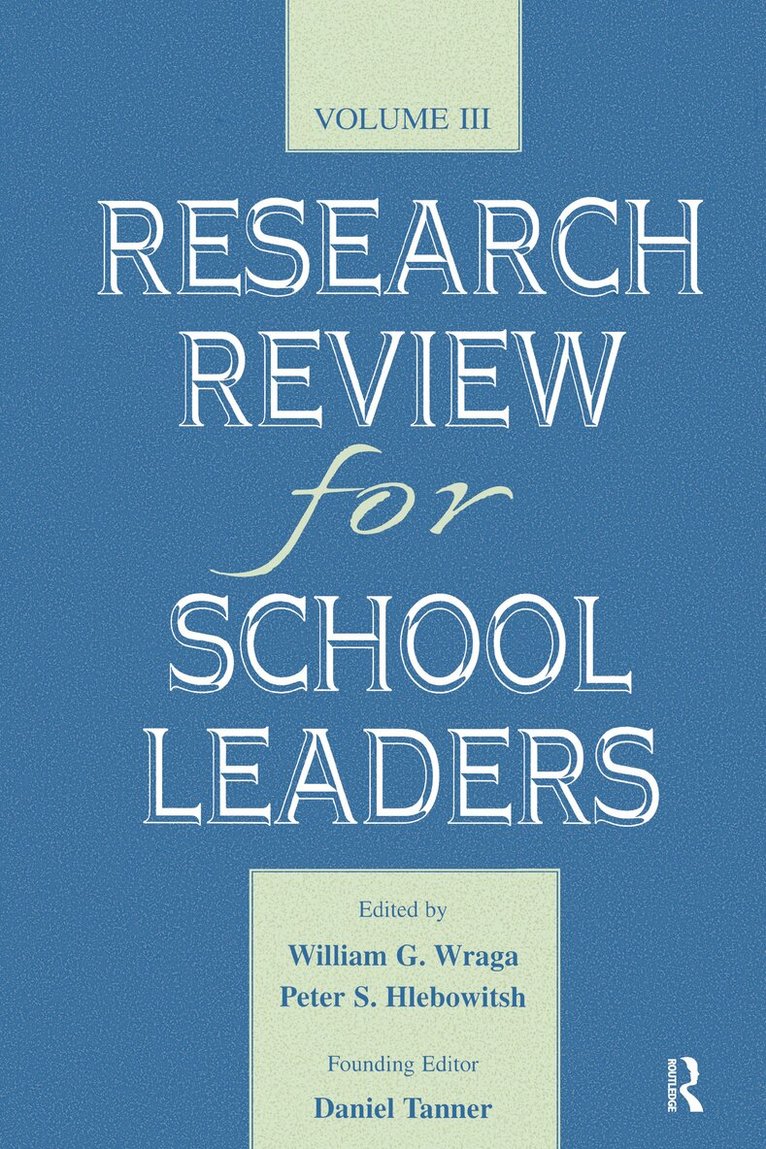
The Research Review for School Leaders, Volume III is specifically designed as a practical resource for school leaders whose schedules preclude opportunities to locate and review key research on every issue they must address. It places comprehensive, current, and accessible reviews of educational research at their fingertips, and is organized to make the research and practices it summarizes useful to them in their professional endeavors.This is the third volume of the Review. Although the title has changed, its purpose and substance is continuous with the work of the earlier volumes. The first Annual Review of Research for School Leaders (1996) summarized research on the status of public schooling, interdisciplinary curriculum, and educational applications of computers. The second volume (1998) addressed the topics of middle-level education, the extracurriculum, mathematics education reform, and drop outs. The present Volume III offers educational leaders reviews of research on five timely educational issues:* citizenship education;* multicultural education;* gifted and talented education;* classroom assessment; and* scheduling.A basic premise of this volume is that, to make sound decisions, professionals need to be up to date on current research related to the problems with which they grapple. A second premise is that research cannot simply be imposed in a formulaic way on a local setting; the nature of the particular problem to be solved will always bear upon the relevance of research to a specific context. Thus, this volume is envisioned as a helpful resource for school leaders as they engage in important discussions of the research with teachers, school board members, parents, and other interested parties as they collaboratively seek effective resolutions to local educational problems.
688 kr
Skickas inom 10-15 vardagar
The Research Review for School Leaders, Volume III is specifically designed as a practical resource for school leaders whose schedules preclude opportunities to locate and review key research on every issue they must address. It places comprehensive, current, and accessible reviews of educational research at their fingertips, and is organized to make the research and practices it summarizes useful to them in their professional endeavors.This is the third volume of the Review. Although the title has changed, its purpose and substance is continuous with the work of the earlier volumes. The first Annual Review of Research for School Leaders (1996) summarized research on the status of public schooling, interdisciplinary curriculum, and educational applications of computers. The second volume (1998) addressed the topics of middle-level education, the extracurriculum, mathematics education reform, and drop outs. The present Volume III offers educational leaders reviews of research on five timely educational issues:* citizenship education;* multicultural education;* gifted and talented education;* classroom assessment; and* scheduling.A basic premise of this volume is that, to make sound decisions, professionals need to be up to date on current research related to the problems with which they grapple. A second premise is that research cannot simply be imposed in a formulaic way on a local setting; the nature of the particular problem to be solved will always bear upon the relevance of research to a specific context. Thus, this volume is envisioned as a helpful resource for school leaders as they engage in important discussions of the research with teachers, school board members, parents, and other interested parties as they collaboratively seek effective resolutions to local educational problems.
1 027 kr
Tillfälligt slut
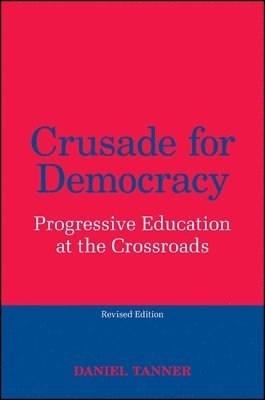
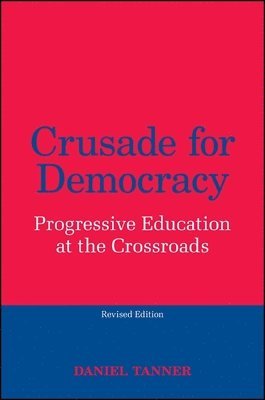
Tells the fascinating story of the Progressive Education movement of the 1930s and 1940s.Attacks on public schools and efforts to impose nationalizing "reforms" are no less threatening today than they were during the era of progressive education under the conditions that gave rise to the John Dewey Society. Crusade for Democracy, Second Edition, tells the fascinating story of the Progressive Education movement of the 1930s and 1940s, whose core is the founding and early activities of the John Dewey Society for the Study of Education and Culture. In a compelling narrative, Daniel Tanner details, through close examination of the scholarly literature and heretofore unexamined archival materials, the colorful personalities and powerful philosophies of this group of educators who worked from the conviction that the struggle and growth of American democracy could not be conducted apart from the public schools. The issues to which the Society directed its attention are, he argues, perennial ones-the appropriate relationship between school and society, the purpose of education in a democracy, social inequality, textbook censorship, academic freedom, and so on. In this new edition, Tanner points to such recent phenomena as charter schools, testing mandates, and narrowed "core standards" curricula as raising the question of whether the John Dewey Society is losing its way, becoming just another philosophical society, or whether it will reclaim its legacy by advancing the democratic prospect for school and society.
365 kr
Tillfälligt slut
Tells the fascinating story of the Progressive Education movement of the 1930s and 1940s.Attacks on public schools and efforts to impose nationalizing "reforms" are no less threatening today than they were during the era of progressive education under the conditions that gave rise to the John Dewey Society. Crusade for Democracy, Second Edition, tells the fascinating story of the Progressive Education movement of the 1930s and 1940s, whose core is the founding and early activities of the John Dewey Society for the Study of Education and Culture. In a compelling narrative, Daniel Tanner details, through close examination of the scholarly literature and heretofore unexamined archival materials, the colorful personalities and powerful philosophies of this group of educators who worked from the conviction that the struggle and growth of American democracy could not be conducted apart from the public schools. The issues to which the Society directed its attention are, he argues, perennial ones-the appropriate relationship between school and society, the purpose of education in a democracy, social inequality, textbook censorship, academic freedom, and so on. In this new edition, Tanner points to such recent phenomena as charter schools, testing mandates, and narrowed "core standards" curricula as raising the question of whether the John Dewey Society is losing its way, becoming just another philosophical society, or whether it will reclaim its legacy by advancing the democratic prospect for school and society.