Daniel Thiery – författare
Visar alla böcker från författaren . Handla med fri frakt och snabb leverans.
4 produkter
4 produkter
E-bok
Engelska, 2015617 kr
Läs direkt efter köp
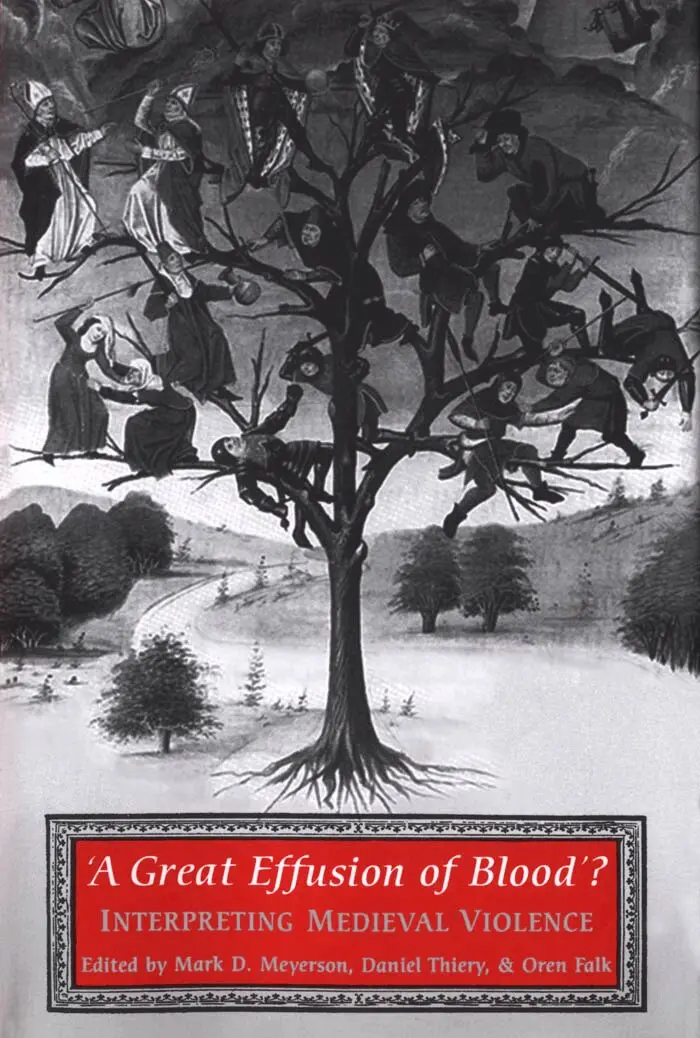
'A great effusion of blood' was a phrase used frequently throughout medieval Europe as shorthand to describe the effects of immoderate interpersonal violence. Yet the ambiguity of this phrase poses numerous problems for modern readers and scholars in interpreting violence in medieval society and culture and its effect on medieval people. Understanding medieval violence is made even more complex by the multiplicity of views that need to be reconciled: those of modern scholars regarding the psychology and comportment of medieval people, those of the medieval persons themselves as perpetrators or victims of violence, those of medieval writers describing the acts, and those of medieval readers, the audience for these accounts. Using historical records, artistic representation, and theoretical articulation, the contributors to this volume attempt to bring together these views and fashion a comprehensive understanding of medieval conceptions of violence.Exploring the issue from both historical and literary perspectives, the contributors examine violence in a broad variety of genres, places, and times, such as the Late Antique lives of the martyrs, Islamic historiography, Anglo-Saxon poetry and Norse sagas, canon law and chronicles, English and Scottish ballads, the criminal records of fifteenth-century Spain, and more. Taken together, the essays offer fresh ways of analysing medieval violence and its representations, and bring us closer to an understanding of how it was experienced by the people who lived it.
Häftad, Engelska, 2015
495 kr
Skickas inom 5-8 vardagar
'A great effusion of blood' was a phrase used frequently throughout medieval Europe as shorthand to describe the effects of immoderate interpersonal violence. Yet the ambiguity of this phrase poses numerous problems for modern readers and scholars in interpreting violence in medieval society and culture and its effect on medieval people. Understanding medieval violence is made even more complex by the multiplicity of views that need to be reconciled: those of modern scholars regarding the psychology and comportment of medieval people, those of the medieval persons themselves as perpetrators or victims of violence, those of medieval writers describing the acts, and those of medieval readers, the audience for these accounts. Using historical records, artistic representation, and theoretical articulation, the contributors to this volume attempt to bring together these views and fashion a comprehensive understanding of medieval conceptions of violence.Exploring the issue from both historical and literary perspectives, the contributors examine violence in a broad variety of genres, places, and times, such as the Late Antique lives of the martyrs, Islamic historiography, Anglo-Saxon poetry and Norse sagas, canon law and chronicles, English and Scottish ballads, the criminal records of fifteenth-century Spain, and more. Taken together, the essays offer fresh ways of analysing medieval violence and its representations, and bring us closer to an understanding of how it was experienced by the people who lived it.
E-bok
PDF, Engelska, 2004563 kr
Läs direkt efter köp
'A great effusion of blood' was a phrase used frequently throughout medieval Europe as shorthand to describe the effects of immoderate interpersonal violence. Yet the ambiguity of this phrase poses numerous problems for modern readers and scholars in interpreting violence in medieval society and culture and its effect on medieval people. Understanding medieval violence is made even more complex by the multiplicity of views that need to be reconciled: those of modern scholars regarding the psychology and comportment of medieval people, those of the medieval persons themselves as perpetrators or victims of violence, those of medieval writers describing the acts, and those of medieval readers, the audience for these accounts. Using historical records, artistic representation, and theoretical articulation, the contributors to this volume attempt to bring together these views and fashion a comprehensive understanding of medieval conceptions of violence.Exploring the issue from both historical and literary perspectives, the contributors examine violence in a broad variety of genres, places, and times, such as the Late Antique lives of the martyrs, Islamic historiography, Anglo-Saxon poetry and Norse sagas, canon law and chronicles, English and Scottish ballads, the criminal records of fifteenth-century Spain, and more. Taken together, the essays offer fresh ways of analysing medieval violence and its representations, and bring us closer to an understanding of how it was experienced by the people who lived it.
Del 3 - Later Medieval Europe
Polluting the Sacred
Violence, Faith and the 'Civilizing' of Parishioners in Late Medieval England
Inbunden, Engelska, 2009
2 872 kr
Skickas inom 5-8 vardagar
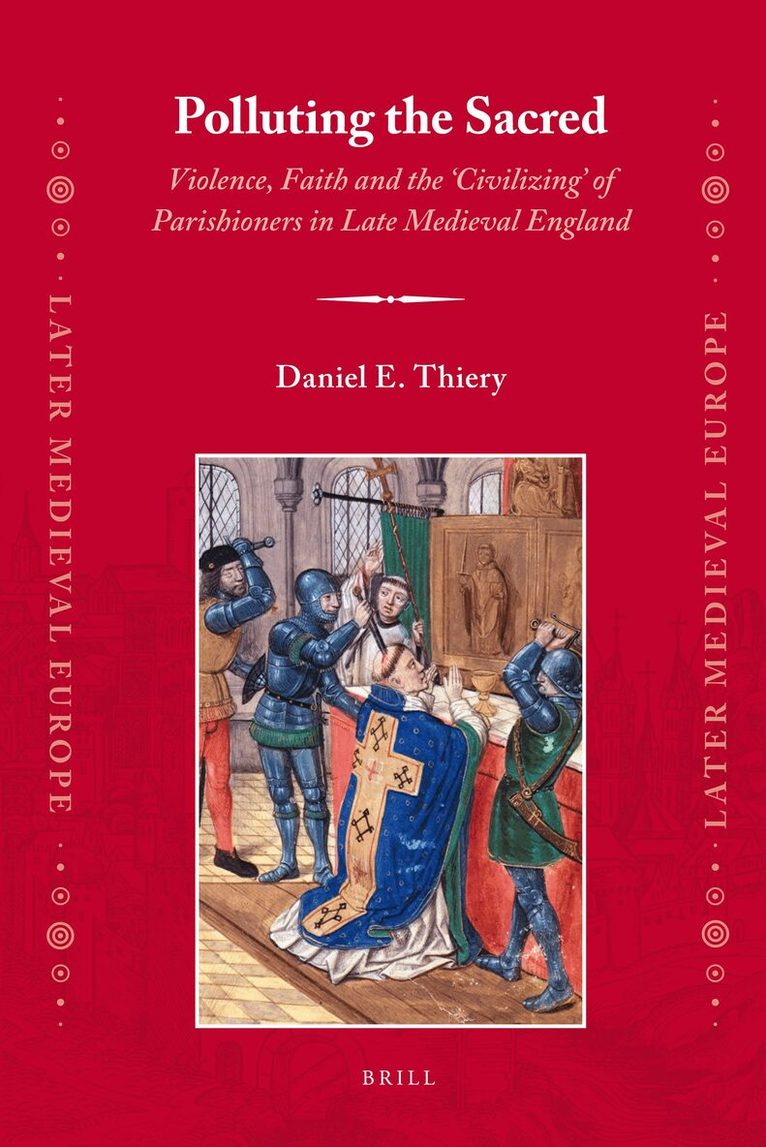
The influence of Christianity on 'the history of violence' is often exemplified by famous instances of interfaith conflict, like 'The Crusades'. However, as religions develop, they usually marginalize violence against fellow believers long before they ever, if at all, question violence against 'others'. Through an investigation of spiritual and legal sources, this book details how Christian teachings about charity, sin and purity problematized late medieval parishioners' use of violence, and how parishioners actually tried to reconcile these teachings with cultural norms that often honored violent conduct. By illuminating the impact of lessons concerning the sinfulness of violence and piety of self-restraint, this book provides a fresh perspective on the important role of religion in the 'civilizing process' of European history.