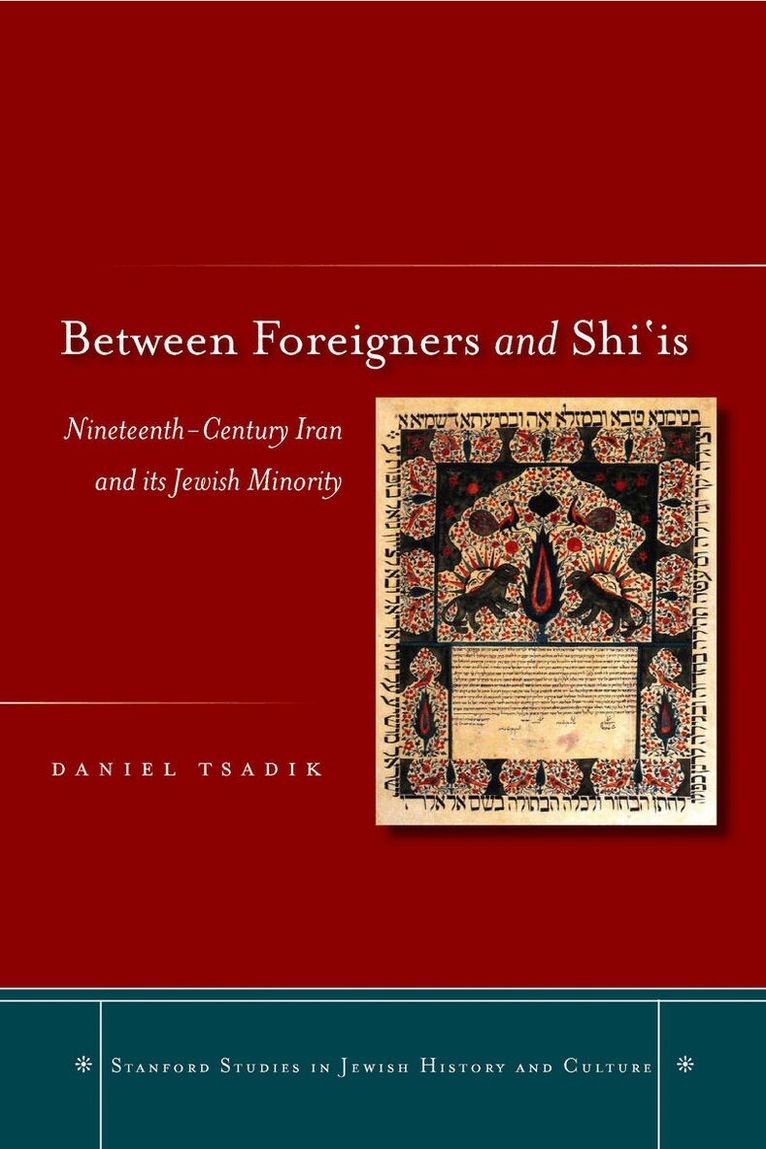
Based on archival and primary sources in Persian, Hebrew, Judeo-Persian, Arabic, and European languages, Between Foreigners and Shi'is examines the Jews' religious, social, and political status in nineteenth-century Iran. This book, which focuses on Nasir al-Din Shah's reign (1848-1896), is the first comprehensive scholarly attempt to weave all these threads into a single tapestry. This case study of the Jewish minority illuminates broader processes pertaining to other religious minorities and Iranian society in general, and the interaction among intervening foreigners, the Shi'i majority, and local Jews helps us understand Iranian dilemmas that have persisted well beyond the second half of the nineteenth century.
Iran, Israel, and the Jews have a relationship that is in the news all the time. But it cannot be understood just in modern terms. Its roots are 2,500 years old. This volume surveys that history through case studies and broad overviews--from the first intensive contacts under Cyrus the Great, through Persian influence on Judaism evident in the Dead Sea Scrolls and the Babylonian Talmud, into the Middle Ages and the flourishing of Judeo-Persian literature and culture, and finally into modern times, when the political, social, and cultural ties are multifaceted and profound. Written by experts in both Iranian and Jewish studies, these essays convey the richness and complexity of a long and tumultuous relationship between two ancient and great civilizations, which continues to shape the world today.