Daniele L. Marchisio – författare
Visar alla böcker från författaren Daniele L. Marchisio. Handla med fri frakt och snabb leverans.
3 produkter
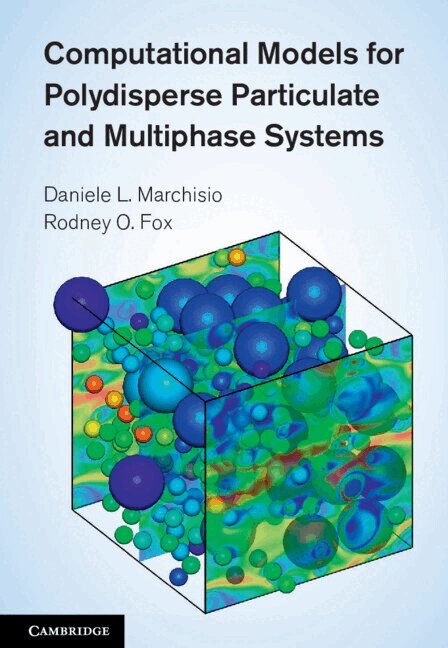
Computational Models for Polydisperse Particulate and Multiphase Systems
Av Daniele L. Marchisio, Rodney O. Fox
Inbunden, 2013
3051 kr
Lägg i varukorg
Providing a clear description of the theory of polydisperse multiphase flows, with emphasis on the mesoscale modelling approach and its relationship with microscale and macroscale models, this all-inclusive introduction is ideal whether you are working in industry or academia. Theory is linked to …
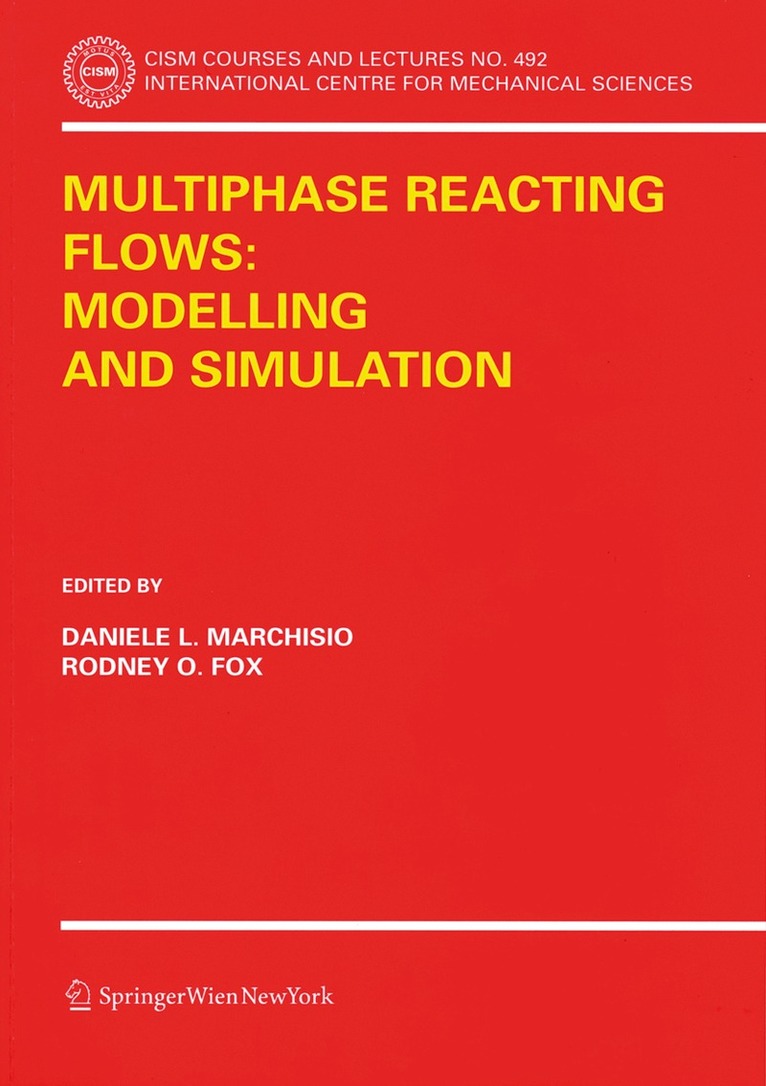
Multiphase reacting flows: modelling and simulation
Av Daniele L. Marchisio, Rodney O. Fox
Häftad, 2007
1370 kr
Lägg i varukorg
This book entitled ''Multiphase reacting flows: modelling and simulation'' contains the lecture notes of the CISM (International Centre for Mechanical Sciences) course held in Udine, Italy, on July 3-7, 2006, and it describes various modelling approaches for dealing with polydisperse multiphase …
Multiphase reacting flows: modelling and simulation
Av Rodney O. Fox, Daniele L. Marchisio
E-bok, 2007
1459 kr
Lägg i varukorg
This book entitled ''''Multiphase reacting flows: modelling and simulation'''' contains the lecture notes of the CISM (International Centre for Mechanical Sciences) course held in Udine, Italy, on July 3-7, 2006, and it describes various modelling approaches for dealing with polydisperse multiphase …