Dante Fratta - Böcker
Visar alla böcker från författaren Dante Fratta. Handla med fri frakt och snabb leverans.
3 produkter
3 produkter
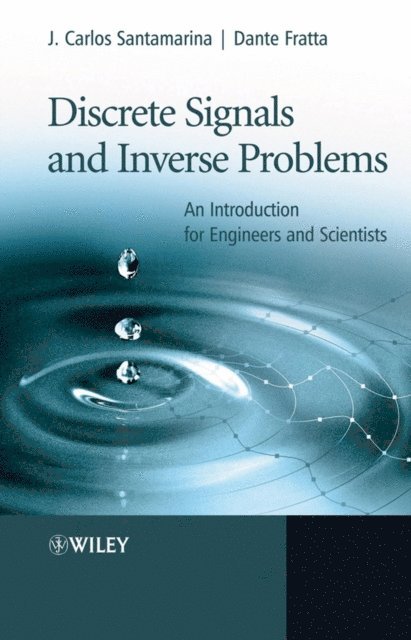
Discrete Signals and Inverse Problems
An Introduction for Engineers and Scientists
Inbunden, Engelska, 2005
1 712 kr
Skickas inom 7-10 vardagar
Discrete Signals and Inverse Problems Discrete Signals and Inverse Problems examines fundamental concepts necessary to engineers and scientists working with discrete signal processing and inverse problem solving, and places emphasis on the clear understanding of algorithms within the context of application needs. Based on the original ‘Introduction to Discrete Signals and Inverse Problems in Civil Engineering’, this expanded and enriched version: combines discrete signal processing and inverse problem solving in one bookcovers the most versatile tools that are needed to process engineering and scientific datapresents step-by-step ‘implementation procedures’ for the most relevant algorithmsprovides instructive figures, solved examples and insightful exercisesDiscrete Signals and Inverse Problems is essential reading for experimental researchers and practicing engineers in civil, mechanical and electrical engineering, non-destructive testing and instrumentation. This book is also an excellent reference for advanced undergraduate students and graduate students in engineering and science.
2 712 kr
Skickas inom 10-15 vardagar
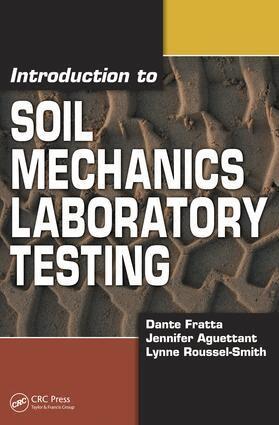
A step-by-step text on the basic tests performed in soil mechanics, Introduction to Soil Mechanics Laboratory Testing provides procedural aids and elucidates industry standards. It also covers how to properly present data and document results. Containing numerical examples and figures, the information presented is based on American Society for Testing and Materials (ASTM) standards, and US Army Corps of Engineers engineering manuals.The authors discuss the different methods of in situ field methods and ex situ laboratory methods of soil description and identification. They present equations for the physical properties of soil and laboratory methods of soil classification. They also discuss tests for the interaction of soil and water, and hydraulic conductivity and consolidation. These tests produce information useful in the identification and characterization of soil samples and their engineering behaviors. A comprehensive resource, the book describes the evaluation of physical properties of soils, including mass, weight, unit weight, and mass density of the soil mass and its component phases. These properties are then expanded to define a number of weight and volumetric relationships. The book also discusses tests used in the evaluation of the density-water content relationships in soils and in the evaluation of the quality of compaction operations. These features and more make this book an excellent guide for testing soils.
1 184 kr
Skickas inom 10-15 vardagar
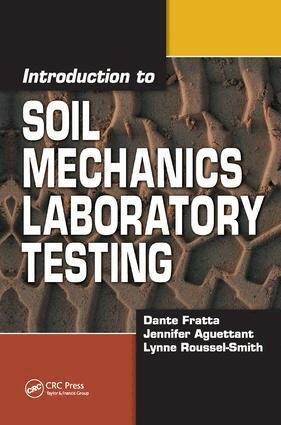
A step-by-step text on the basic tests performed in soil mechanics, Introduction to Soil Mechanics Laboratory Testing provides procedural aids and elucidates industry standards. It also covers how to properly present data and document results. Containing numerical examples and figures, the information presented is based on American Society for Testing and Materials (ASTM) standards, and US Army Corps of Engineers engineering manuals.The authors discuss the different methods of in situ field methods and ex situ laboratory methods of soil description and identification. They present equations for the physical properties of soil and laboratory methods of soil classification. They also discuss tests for the interaction of soil and water, and hydraulic conductivity and consolidation. These tests produce information useful in the identification and characterization of soil samples and their engineering behaviors. A comprehensive resource, the book describes the evaluation of physical properties of soils, including mass, weight, unit weight, and mass density of the soil mass and its component phases. These properties are then expanded to define a number of weight and volumetric relationships. The book also discusses tests used in the evaluation of the density-water content relationships in soils and in the evaluation of the quality of compaction operations. These features and more make this book an excellent guide for testing soils.