Darcy Gerbarg - Böcker
Visar alla böcker från författaren Darcy Gerbarg. Handla med fri frakt och snabb leverans.
8 produkter
8 produkter
1 062 kr
Skickas inom 10-15 vardagar
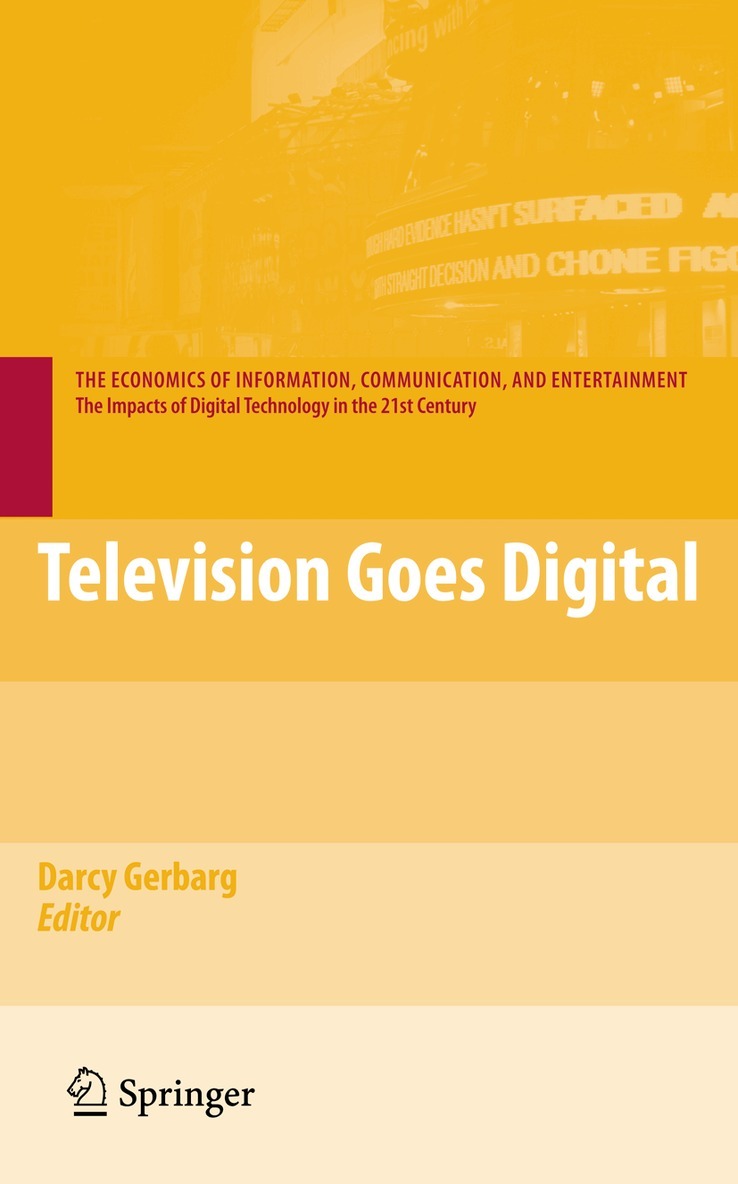
Television has become a ubiquitous part of our lives, and yet its impact continues to evolve at an extraordinary pace. The evolution of television from analog to digital technology has been underway for more than half a century. Today's digital technology is enabling a myriad of new entertainment possibilities. From jumbotrons in cyberspace to multi-dimensional viewing experiences, digital technology is changing television. Consequently, new advertising metrics that reflect the new viewer habits are emerging. The ability to capture a viewer's interactions changes the advertising proposition. Telephone and wireless companies are challenging the traditional mass media providers - broadcasters, cable and satellite companies - and they’re all finding ways to deliver TV programming, video content and Internet offerings to large and small screens in the home and on the go. This volume showcases insights from industry insiders and researchers from a variety of disciplines. It explores the economic, cultural, technical, and policy implications of digital television, addressing such questions as: How will content be monetized in the future? What programming opportunities become possible with the advent of going digital? Will content still be king or will the conduits gain the upper hand? This book analyzes the digital television evolution: its impacts on the economics of the TV industry, its significance for content creation from Hollywood blockbusters to You Tube, the changing role of the consumer, and what's coming next to a theatre near you.
2 180 kr
Skickas inom 10-15 vardagar
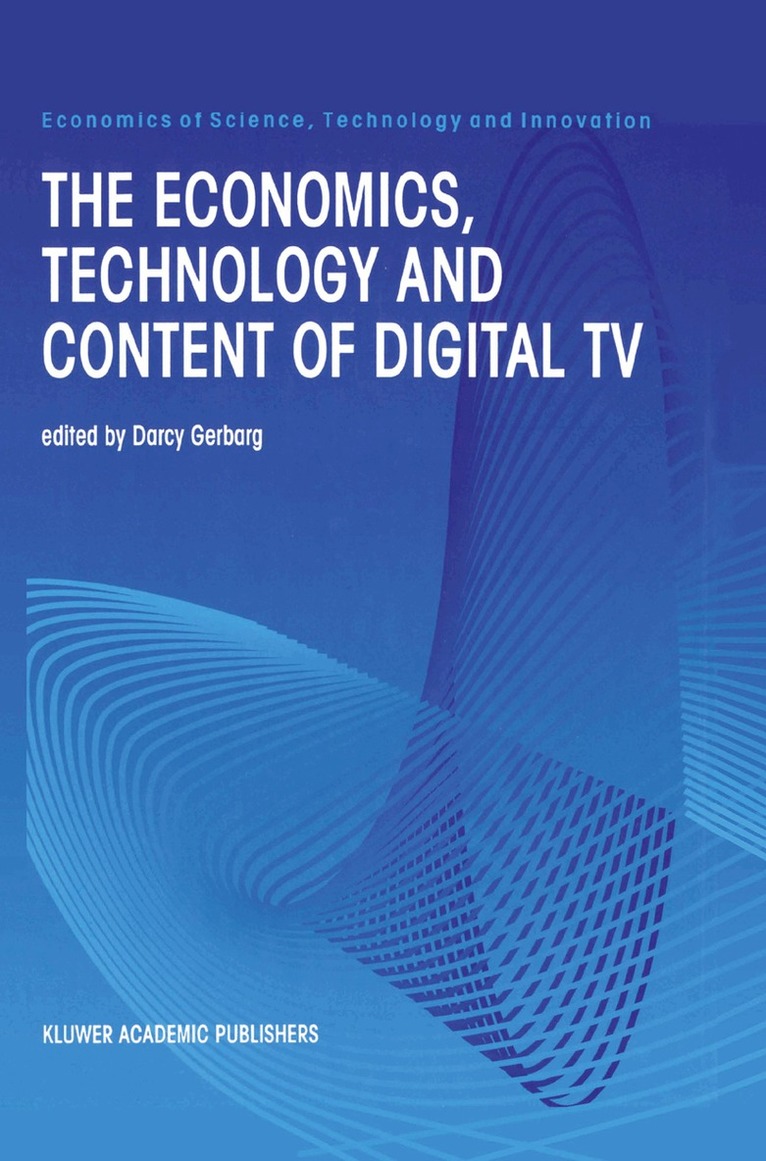
As the world of television moves from analog to digital, political and economic forces are being brought to bear on companies as they attempt to deal with changes occurring in their industries. The impetus for the conversion from analog to digital TV comes from many quarters, including the broadcasting industry, the computer industry, governments, consumer electronics manufacturers, content developers, and the Internet. The widespread acceptance of digital technology in both the home and the workplace account for the ready acceptance of the belief that the move to digital television is an appropriate advancement. Not all authors in this volume however are believers. This work is divided into four sections each dealing with one aspect of the transition from analog to digital TV broadcasting. The first section presents the various technologies. It establishes a structure for understanding the technologies currently in use as well as those being developed by the industries involved in the delivery of digital television. Section two presents information about consumer TV viewing and includes examples of innovative, experimental interactive programs.Economics and financial issues are addressed from a variety of perspectives in section three. Section four concludes the book with a look at the international environment and the history of digital TV globally.
1 023 kr
Tillfälligt slut
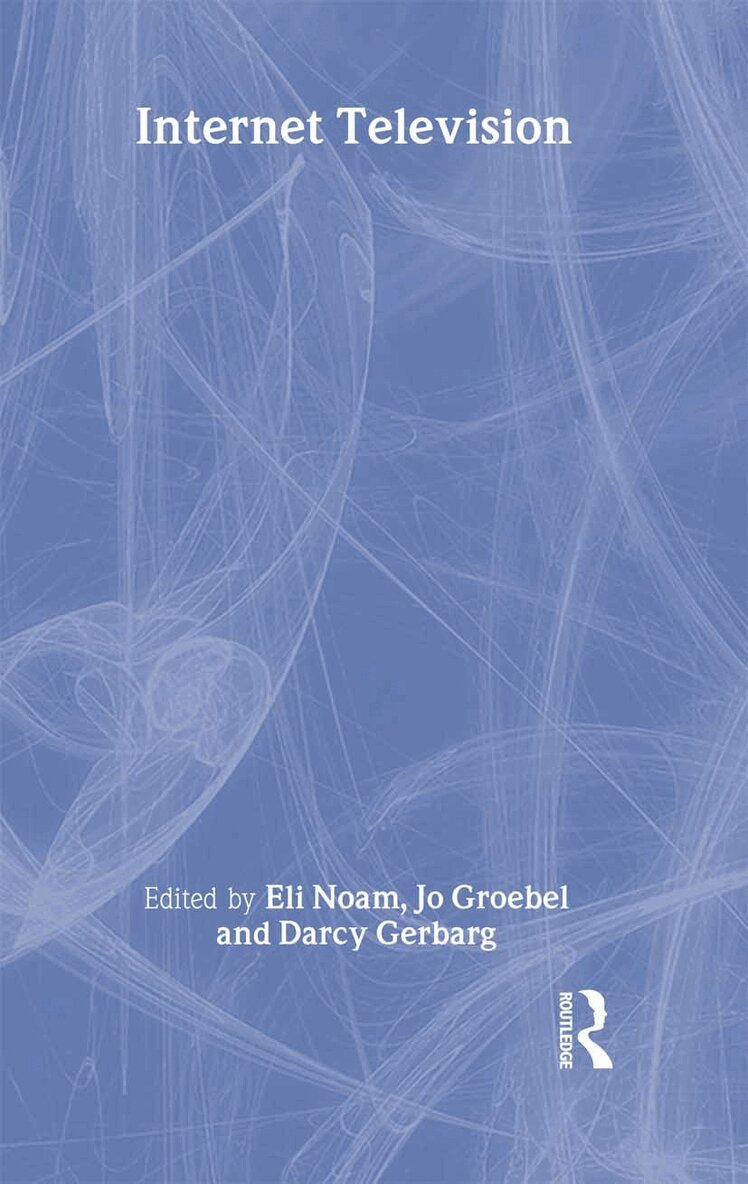
Internet TV is the quintessential digital convergence medium, linking television, telecommunications, the Internet, computer applications, games, and more. Soon, venturing beyond the convenience of viewer choice and control, Internet TV will enable and encourage new types of entertainment, education, and games that take advantage of the Internet's interactive capabilities. What Internet TV is today and can be in the future forms the context for this book. Arising from collaboration between the Columbia Institute for Tele-Information (CITI) and the European Institute for the Media (EIM), this volume investigates the advent of widely available individual broadband Internet communications and their impact on the development of Internet TV. Editors Eli Noam, Jo Groebel, and Darcy Gerbarg have collected seminal papers by leaders from the U.S. and European media and technology industries that offer a critical look at the impact of interactivity on television content, and address the need for media organizations to create interactive programming in this untapped realm with unclear consumer interest and desires. Each section of the volume fleshes out key issues and concepts of television and the Internet: *Part I, Infrastructure Implications of Internet TV, discusses questions about the required network capacity for various quality grades to deliver individualized broadband to homes. *Part II, Network Business Models and Strategies, addresses the business challenges of making Internet TV a financial success. *Part III, Policy, examines policy issues, including copyright and regulation. *Part IV, Content and Culture, reviews available content, those creating it, and how consumers view Internet TV content. *Part V, Future Impacts, considers future global prospects for Internet TV content creation and distribution. Internet Television is an essential resource for professionals and scholars in new technology and media studies, media policy, telecommunication, broadcasting, and related areas. It is also appropriate for graduate seminars in telecommunications, media and new technologies, and broadcasting and the Internet.
578 kr
Skickas inom 10-15 vardagar
Internet TV is the quintessential digital convergence medium, linking television, telecommunications, the Internet, computer applications, games, and more. Soon, venturing beyond the convenience of viewer choice and control, Internet TV will enable and encourage new types of entertainment, education, and games that take advantage of the Internet's interactive capabilities. What Internet TV is today and can be in the future forms the context for this book. Arising from collaboration between the Columbia Institute for Tele-Information (CITI) and the European Institute for the Media (EIM), this volume investigates the advent of widely available individual broadband Internet communications and their impact on the development of Internet TV. Editors Eli Noam, Jo Groebel, and Darcy Gerbarg have collected seminal papers by leaders from the U.S. and European media and technology industries that offer a critical look at the impact of interactivity on television content, and address the need for media organizations to create interactive programming in this untapped realm with unclear consumer interest and desires. Each section of the volume fleshes out key issues and concepts of television and the Internet: *Part I, Infrastructure Implications of Internet TV, discusses questions about the required network capacity for various quality grades to deliver individualized broadband to homes. *Part II, Network Business Models and Strategies, addresses the business challenges of making Internet TV a financial success. *Part III, Policy, examines policy issues, including copyright and regulation. *Part IV, Content and Culture, reviews available content, those creating it, and how consumers view Internet TV content. *Part V, Future Impacts, considers future global prospects for Internet TV content creation and distribution. Internet Television is an essential resource for professionals and scholars in new technology and media studies, media policy, telecommunication, broadcasting, and related areas. It is also appropriate for graduate seminars in telecommunications, media and new technologies, and broadcasting and the Internet.
1 093 kr
Skickas inom 10-15 vardagar
Television has become a ubiquitous part of our lives, and yet its impact continues to evolve at an extraordinary pace. The evolution of television from analog to digital technology has been underway for more than half a century. Today's digital technology is enabling a myriad of new entertainment possibilities. From jumbotrons in cyberspace to multi-dimensional viewing experiences, digital technology is changing television. Consequently, new advertising metrics that reflect the new viewer habits are emerging. The ability to capture a viewer's interactions changes the advertising proposition. Telephone and wireless companies are challenging the traditional mass media providers - broadcasters, cable and satellite companies - and they’re all finding ways to deliver TV programming, video content and Internet offerings to large and small screens in the home and on the go. This volume showcases insights from industry insiders and researchers from a variety of disciplines. It explores the economic, cultural, technical, and policy implications of digital television, addressing such questions as: How will content be monetized in the future? What programming opportunities become possible with the advent of going digital? Will content still be king or will the conduits gain the upper hand? This book analyzes the digital television evolution: its impacts on the economics of the TV industry, its significance for content creation from Hollywood blockbusters to You Tube, the changing role of the consumer, and what's coming next to a theatre near you.
2 179 kr
Skickas inom 10-15 vardagar
As the world of television moves from analog to digital, political and economic forces are being brought to bear on companies as they attempt to deal with changes occurring in their industries. The impetus for the conversion from analog to digital TV comes from many quarters, including the broadcasting industry, the computer industry, governments, consumer electronics manufacturers, content developers, and the Internet. The widespread acceptance of digital technology in both the home and the workplace account for the ready acceptance of the belief that the move to digital television is an appropriate advancement. Not all authors in this volume however are believers. This book is divided into four sections each dealing with one aspect of the transition from analog to digital TV broadcasting. The first section presents the various technologies. It establishes a structure for understanding the technologies currently in use as well as those being developed by the industries involved in the delivery of digital television. Section two presents information about consumer TV viewing and includes examples of innovative, experimental interactive programs. Economics and financial issues are addressed from a variety of perspectives in section three. Section four concludes the book with a look at the international environment and the history of digital TV globally.
1 093 kr
Skickas inom 10-15 vardagar
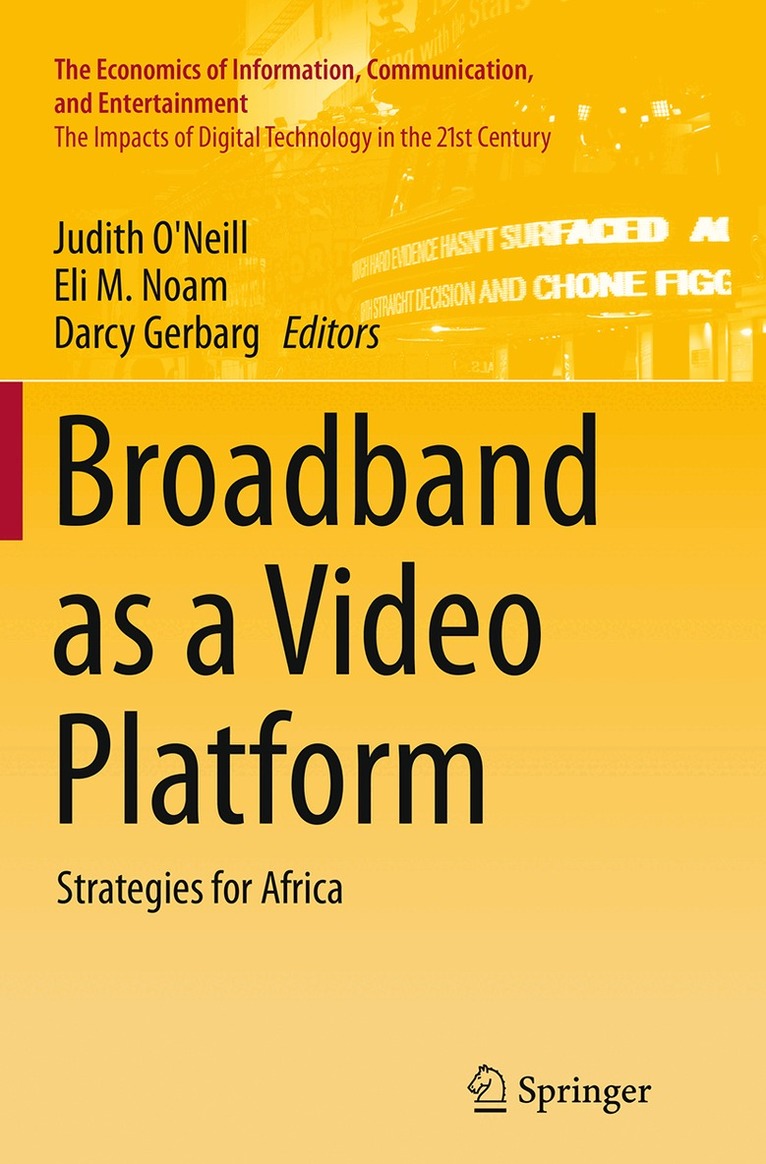
Broadband as a Video Platform
1 093 kr
Skickas inom 10-15 vardagar
This volume features contributions from a conference held in Lusaka, Zambia, to explore the role and prospects of broadband in Africa as a video platform—with emphasis on the strategies and building blocks for deployment and advancement.While it may seem that such networks and their applications are not a realistic scenario for developing countries, it would be short-sighted and economically dangerous to ignore the emerging trends. The pace of introduction of next-generation networks in industrialized countries is rapid and the developing world will not be able to stand aside. The risks of falling behind are great and in any country there will be elements of business and society who wish to forge ahead. Policymakers and network architects need to be prepared. Media companies and broadcasters, in particular, must be alert to the new developments as should be medical and educational institutions. The availability of advanced high-speed business application tools in a country will affect its participation in international transactions and its economic growth.This volume features contributions from industry leaders, policymakers and scholars, representing a variety of perspectives, including technology and infrastructure management, economic development, marketing, education and health. The authors collectively discuss how broadband deployment as a platform with sufficient speed for video may be encouraged by public policy and regulation and how investment in broadband for this and related purposes can improve the quality of life and experience in Sub Saharan Africa in media and data, while being a financeable, commercially sound business.