Dario Maestripieri - Böcker
Visar alla böcker från författaren Dario Maestripieri. Handla med fri frakt och snabb leverans.
5 produkter
5 produkter
395 kr
Skickas inom 7-10 vardagar
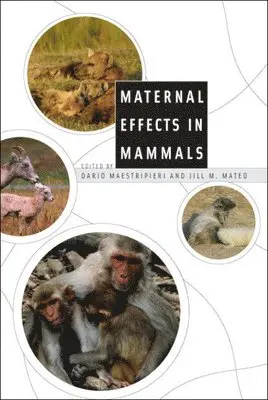
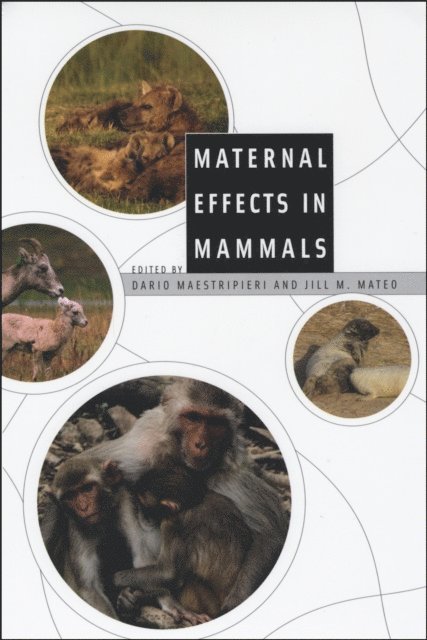
Evolutionary maternal effects occur whenever a mother's phenotypic traits directly affect her offspring's phenotype, independent of the offspring's genotype. Some of the phenotypic traits that result in maternal effects have a genetic basis, whereas others are environmentally determined. For example, the size of a litter produced by a mammalian mother - a trait with a strong genetic basis - can affect the growth rate of her offspring, while a mother's dominance rank - an environmentally determined trait - can affect the dominance rank of her offspring. The first volume published on the subject in more than a decade, "Maternal Effects in Mammals" reflects advances in genomic, ecological, and behavioral research, as well as new understandings of the evolutionary interplay between mothers and their offspring. Dario Maestripieri and Jill M. Mateo bring together a learned group of contributors to synthesize the vast literature on a range of species, highlight evolutionary processes that were previously overlooked, and propose new avenues of research."Maternal Effects in Mammals" will serve as the most comprehensive compendium on and stimulus for interdisciplinary treatments of mammalian maternal effects.
450 kr
Skickas inom 7-10 vardagar
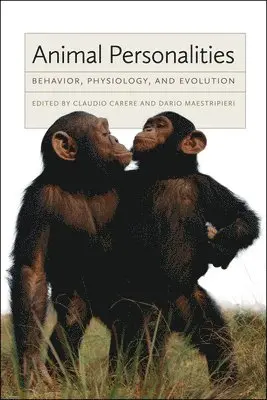
Ask anyone who has owned a pet and they'll assure you that, yes, animals have personalities. And science is beginning to agree. Researchers have demonstrated that both domesticated and non domesticated animals - from invertebrates to monkeys and apes - behave in consistently different ways, meeting the criteria for what many define as personality. But why the differences, and how are personalities shaped by genes and environment? How did they evolve? The essays in "Animal Personalities" reveal that there is much to learn from our furred and feathered friends. The study of animal personality is one of the fastest-growing areas of research in behavioral and evolutionary biology. Here Claudio Carere and Dario Maestripieri, along with a host of scholars from fields as diverse as ecology, genetics, endocrinology, neuroscience, and psychology, provide a comprehensive overview of the current research on animal personality.Grouped into thematic sections, chapters approach the topic with empirical and theoretical material and show that to fully understand why personality exists, we must consider the evolutionary processes that give rise to personality, the ecological correlates of personality differences, and the physiological mechanisms underlying personality variation.
1 090 kr
Skickas inom 7-10 vardagar
Ask anyone who has owned a pet and they'll assure you that, yes, animals have personalities. And science is beginning to agree. Researchers have demonstrated that both domesticated and non domesticated animals - from invertebrates to monkeys and apes - behave in consistently different ways, meeting the criteria for what many define as personality. But why the differences, and how are personalities shaped by genes and environment? How did they evolve? The essays in "Animal Personalities" reveal that there is much to learn from our furred and feathered friends. The study of animal personality is one of the fastest-growing areas of research in behavioral and evolutionary biology. Here Claudio Carere and Dario Maestripieri, along with a host of scholars from fields as diverse as ecology, genetics, endocrinology, neuroscience, and psychology, provide a comprehensive overview of the current research on animal personality.Grouped into thematic sections, chapters approach the topic with empirical and theoretical material and show that to fully understand why personality exists, we must consider the evolutionary processes that give rise to personality, the ecological correlates of personality differences, and the physiological mechanisms underlying personality variation.
482 kr
Skickas inom 10-15 vardagar
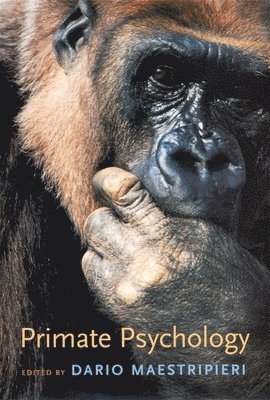
In more ways than we may sometimes care to acknowledge, the human being is just another primate--it is certainly only very rarely that researchers into cognition, emotion, personality, and behavior in our species and in other primates come together to compare notes and share insights. This book, one of the few comprehensive attempts at integrating behavioral research into human and nonhuman primates, does precisely that--and in doing so, offers a clear, in-depth look at the mutually enlightening work being done in psychology and primatology. Relying on theories of behavior derived from psychology rather than ecology or biological anthropology, the authors, internationally known experts in primatology and psychology, focus primarily on social processes in areas including aggression, conflict resolution, sexuality, attachment, parenting, social development and affiliation, cognitive development, social cognition, personality, emotions, vocal and nonvocal communication, cognitive neuroscience, and psychopathology. They show nonhuman primates to be far more complex, cognitively and emotionally, than was once supposed, with provocative implications for our understanding of supposedly unique human characteristics. Arguing that both human and nonhuman primates are distinctive for their wide range of context-sensitive behaviors, their work makes a powerful case for the future integration of human and primate behavioral research.
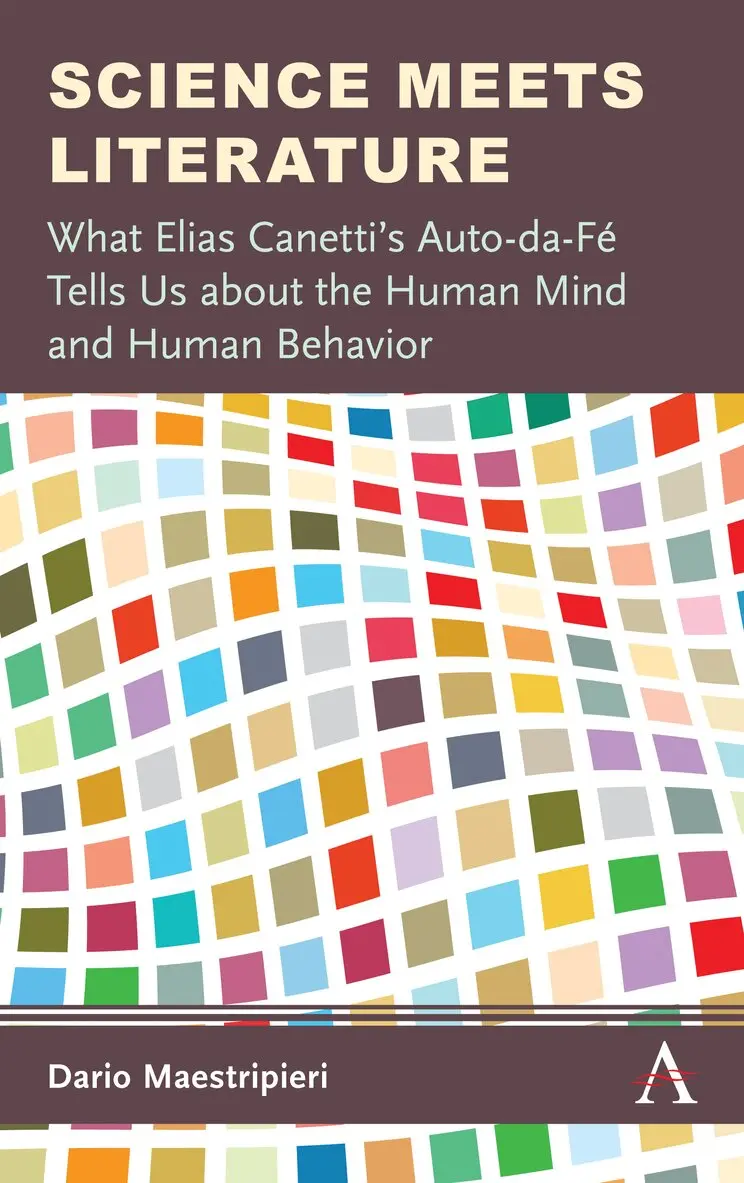
Science Meets Literature
What Elias Canetti’s Auto-da-Fé Tells Us about the Human Mind and Human Behavior
Inbunden, Engelska, 2019
1 442 kr
Skickas inom 5-8 vardagar
Elias Canetti’s 1935 novel “Auto-da-Fé” (original German title, “Die Blendung”) has traditionally been difficult to interpret and the author’s intentions in writing it have remained unclear. “Science Meets Literature” argues that “Auto-da-Fé” is a novel about human nature that illustrates the workings of the human mind and some universal aspects of human behavior and human social relationships. Canetti’s insights anticipated later scientific discoveries made by cognitive, social and evolutionary psychology including the existence of “irrational” biases in human cognition (e.g., in perception, beliefs and decision-making); the strengths and limitations of human “theory-of-mind” skills (i.e., our ability to think about other people’s minds and “read” them); the establishment, maintenance and reversal of dominance in social relationships between two individuals; and the role of dehumanization in harmful behavior. Canetti intended to warn against the conviction held by some intellectuals that human nature can be denied, controlled, ignored or dismissed. His approach in “Auto-da-Fé” was an original attempt at the integration of knowledge formation in sciences and humanities. He pointed the way for future successful attempts at the integration of evolution, cognitive science and literature, as well as for the broader integration of sciences and humanities.