Darius Bartlett – författare
987 kr
Skickas inom 10-15 vardagar
749 kr
Skickas inom 10-15 vardagar
735 kr
Skickas inom 10-15 vardagar
1 029 kr
Skickas inom 10-15 vardagar
2 386 kr
Skickas inom 10-15 vardagar
1 146 kr
Läs direkt efter köp
2 736 kr
Skickas inom 10-15 vardagar
2 806 kr
Skickas inom 10-15 vardagar
860 kr
Läs direkt efter köp
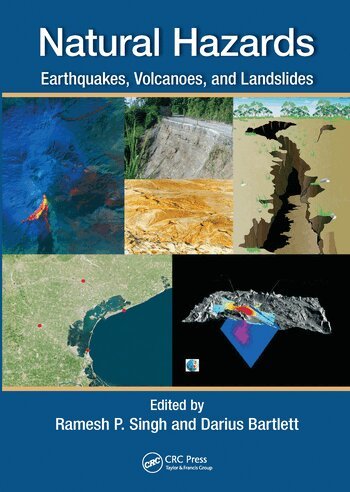
Over the years, the interactions between land, ocean, biosphere and atmosphere have increased, mainly due to population growth and anthropogenic activities, which have impacted the climate and weather conditions at local, regional and global scales. Thus, natural hazards related to climate changes have significantly impacted human life and health on different spatio-temporal scales and with socioeconomic bearings. To monitor and analyze natural hazards, satellite data have been widely used in recent years by many developed and developing countries. In an effort to better understand and characterize the various underlying processes influencing natural hazards, and to carry out related impact assessments, Natural Hazards: Earthquakes, Volcanoes, and Landslides, presents a synthesis of what leading scientists and other professionals know about the impacts and the challenges when coping with climate change.
Combining reviews of theories and methods with analysis of case studies, the book gives readers research information and analyses on satellite geophysical data, radar imaging and integrated approaches. It focuses also on dust storms, coastal subsidence and remote sensing mapping. Some case studies explore the roles of remote sensing related to landslides and volcanoes. Overall, improved understanding of the processes leading to these hazardous events will help scientists predict their occurrence.
Features
Provides information on the physics and physical processes of natural hazards, their monitoring and the mapping of damages associated with these hazards
Explains how natural hazards are strongly associated with coupling between land–ocean–atmosphere
Includes a comprehensive overview of the role of remote sensing in natural hazards worldwide
Examines risk assessment in urban areas through numerical modelling and geoinformation technologies
Demonstrates how data analysis can be used to aid in prediction and management of natural hazards
860 kr
Läs direkt efter köp
Over the years, the interactions between land, ocean, biosphere and atmosphere have increased, mainly due to population growth and anthropogenic activities, which have impacted the climate and weather conditions at local, regional and global scales. Thus, natural hazards related to climate changes have significantly impacted human life and health on different spatio-temporal scales and with socioeconomic bearings. To monitor and analyze natural hazards, satellite data have been widely used in recent years by many developed and developing countries. In an effort to better understand and characterize the various underlying processes influencing natural hazards, and to carry out related impact assessments, Natural Hazards: Earthquakes, Volcanoes, and Landslides, presents a synthesis of what leading scientists and other professionals know about the impacts and the challenges when coping with climate change.
Combining reviews of theories and methods with analysis of case studies, the book gives readers research information and analyses on satellite geophysical data, radar imaging and integrated approaches. It focuses also on dust storms, coastal subsidence and remote sensing mapping. Some case studies explore the roles of remote sensing related to landslides and volcanoes. Overall, improved understanding of the processes leading to these hazardous events will help scientists predict their occurrence.
Features
Provides information on the physics and physical processes of natural hazards, their monitoring and the mapping of damages associated with these hazards
Explains how natural hazards are strongly associated with coupling between land–ocean–atmosphere
Includes a comprehensive overview of the role of remote sensing in natural hazards worldwide
Examines risk assessment in urban areas through numerical modelling and geoinformation technologies
Demonstrates how data analysis can be used to aid in prediction and management of natural hazards
844 kr
Läs direkt efter köp
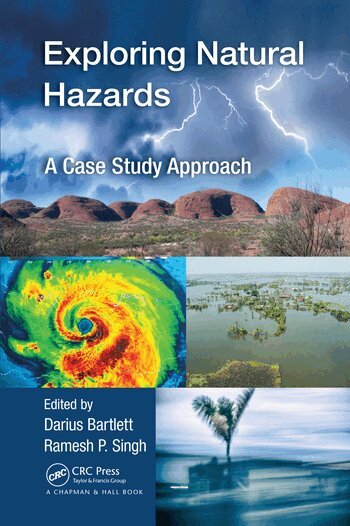
The Sendai Framework for Disaster Risk Reduction 2015–2030 has identified four priority areas for Disaster Risk Reduction: understanding disaster risk; strengthening disaster risk governance to manage disaster risk; investing in disaster risk reduction for resilience and enhancing disaster preparedness for effective response; and to "Build Back Better" in recovery, rehabilitation and reconstruction. Although tremendous progress has been made in recent decades in understanding the workings of the Earth systems and, in particular, its impacts on and responses to human actions, there remains a continuing and pressing need for knowledge that will allow society to simultaneously reduce exposure to global environmental hazards, while also meeting economic development goals. Exploring Natural Hazards: A Case Study Approach, contributes to the knowledge showcasing advanced practices for the monitoring of natural hazards.
Through each case study, the book examines mainly hazards arising from processes within the hydrosphere and atmosphere, triggered or exacerbated by inputs to and transfers of energy between environmental components. It discusses the causes of these phenomena, and ways in which improved policy making, sometimes coupled with the application of appropriate modern technologies, can help to reduce people’s exposure to harm.
Discussing challenges, lessons learned and recommendations, this book provides a snapshot of issues related to tropical cyclones and typhoons, desertification, floods, lightning as a hazard and the need for alert systems. It is a valuable resource for practitioners and professionals alike, for researchers, students and others who work at the intersection between environmental hazards, sustainable development and social justice.
851 kr
Läs direkt efter köp
The Sendai Framework for Disaster Risk Reduction 2015–2030 has identified four priority areas for Disaster Risk Reduction: understanding disaster risk; strengthening disaster risk governance to manage disaster risk; investing in disaster risk reduction for resilience and enhancing disaster preparedness for effective response; and to "Build Back Better" in recovery, rehabilitation and reconstruction. Although tremendous progress has been made in recent decades in understanding the workings of the Earth systems and, in particular, its impacts on and responses to human actions, there remains a continuing and pressing need for knowledge that will allow society to simultaneously reduce exposure to global environmental hazards, while also meeting economic development goals. Exploring Natural Hazards: A Case Study Approach, contributes to the knowledge showcasing advanced practices for the monitoring of natural hazards.
Through each case study, the book examines mainly hazards arising from processes within the hydrosphere and atmosphere, triggered or exacerbated by inputs to and transfers of energy between environmental components. It discusses the causes of these phenomena, and ways in which improved policy making, sometimes coupled with the application of appropriate modern technologies, can help to reduce people’s exposure to harm.
Discussing challenges, lessons learned and recommendations, this book provides a snapshot of issues related to tropical cyclones and typhoons, desertification, floods, lightning as a hazard and the need for alert systems. It is a valuable resource for practitioners and professionals alike, for researchers, students and others who work at the intersection between environmental hazards, sustainable development and social justice.
957 kr
Läs direkt efter köp
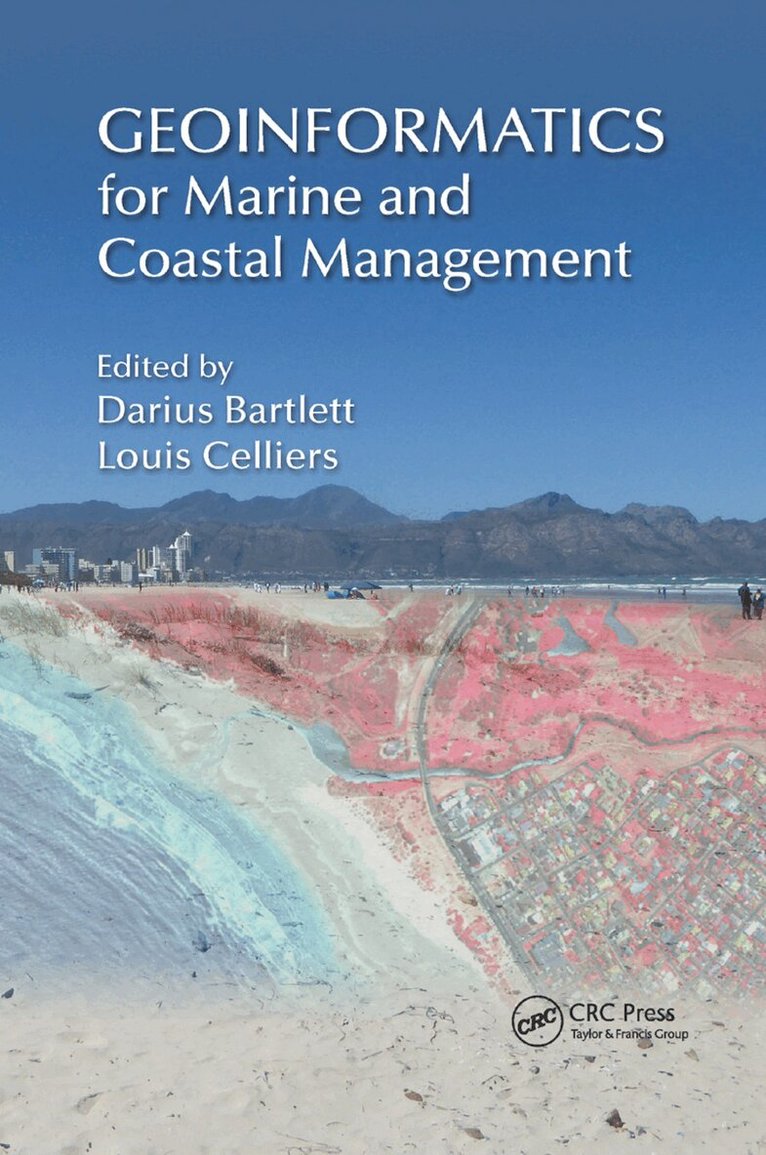
Geoinformatics for Marine and Coastal Management provides a timely and valuable assessment of the current state of the art geoinformatics tools and methods for the management of marine systems. This book focuses on the cutting-edge coverage of a wide spectrum of activities and topics such as GIS-based application of drainage basin analysis, contribution of ontology to marine management, geoinformatics in relation to fisheries management, hydrography, indigenous knowledge systems, and marine law enforcement. The authors present a comprehensive overview of the field of Geoinformatic Applications in Marine Management covering key issues and debates with specific case studies illustrating real-world applications of the GIS technology. This "box of tools" serves as a long-term resource for coastal zone managers, professionals, practitioners, and students alike on the management of oceans and the coastal fringe, promoting the approach of allowing sustainable and integrated use of oceans to maximize opportunities while keeping risks and hazards to a minimum.
1 136 kr
Läs direkt efter köp
2 451 kr
Skickas inom 5-8 vardagar
957 kr
Läs direkt efter köp
Geoinformatics for Marine and Coastal Management provides a timely and valuable assessment of the current state of the art geoinformatics tools and methods for the management of marine systems. This book focuses on the cutting-edge coverage of a wide spectrum of activities and topics such as GIS-based application of drainage basin analysis, contribution of ontology to marine management, geoinformatics in relation to fisheries management, hydrography, indigenous knowledge systems, and marine law enforcement. The authors present a comprehensive overview of the field of Geoinformatic Applications in Marine Management covering key issues and debates with specific case studies illustrating real-world applications of the GIS technology. This "box of tools" serves as a long-term resource for coastal zone managers, professionals, practitioners, and students alike on the management of oceans and the coastal fringe, promoting the approach of allowing sustainable and integrated use of oceans to maximize opportunities while keeping risks and hazards to a minimum.
637 kr
Skickas