Daromir Rudnyckyj - Böcker
Visar alla böcker från författaren Daromir Rudnyckyj. Handla med fri frakt och snabb leverans.
5 produkter
5 produkter
693 kr
Tillfälligt slut
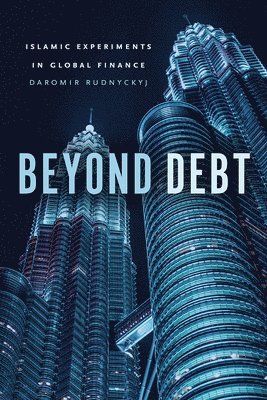
Recent economic crises have made the centrality of debt, and the instability it creates, increasingly apparent. This realization has led to cries for change—yet there is little popular awareness of possible alternatives. Beyond Debt describes efforts to create a transnational economy free of debt. Based on ethnographic fieldwork in Malaysia, Daromir Rudnyckyj illustrates how the state, led by the central bank, seeks to make the country’s capital Kuala Lumpur “the New York of the Muslim world”—the central node of global financial activity conducted in accordance with Islam. Rudnyckyj shows how Islamic financial experts have undertaken ambitious experiments to create more stable economies and stronger social solidarities by facilitating risk- and profit-sharing, enhanced entrepreneurial skills, and more collaborative economic action. Building on scholarship that reveals the impact of financial devices on human activity, he illustrates how Islamic finance is deployed to fashion subjects who are at once more pious Muslims and more ambitious entrepreneurs. In so doing, Rudnyckyj shows how experts seek to create a new “geoeconomics”—a global Islamic alternative to the conventional financial network centered on New York, London, and Tokyo. A groundbreaking analysis of a timely subject, Beyond Debt tells the captivating story of efforts to re-center international finance in an emergent Islamic global city and, ultimately, to challenge the very foundations of conventional finance.
234 kr
Skickas inom 7-10 vardagar
Recent economic crises have made the centrality of debt, and the instability it creates, increasingly apparent. This realization has led to cries for change—yet there is little popular awareness of possible alternatives. Beyond Debt describes efforts to create a transnational economy free of debt. Based on ethnographic fieldwork in Malaysia, Daromir Rudnyckyj illustrates how the state, led by the central bank, seeks to make the country’s capital Kuala Lumpur “the New York of the Muslim world”—the central node of global financial activity conducted in accordance with Islam. Rudnyckyj shows how Islamic financial experts have undertaken ambitious experiments to create more stable economies and stronger social solidarities by facilitating risk- and profit-sharing, enhanced entrepreneurial skills, and more collaborative economic action. Building on scholarship that reveals the impact of financial devices on human activity, he illustrates how Islamic finance is deployed to fashion subjects who are at once more pious Muslims and more ambitious entrepreneurs. In so doing, Rudnyckyj shows how experts seek to create a new “geoeconomics”—a global Islamic alternative to the conventional financial network centered on New York, London, and Tokyo. A groundbreaking analysis of a timely subject, Beyond Debt tells the captivating story of efforts to re-center international finance in an emergent Islamic global city and, ultimately, to challenge the very foundations of conventional finance.
896 kr
Skickas inom 10-15 vardagar
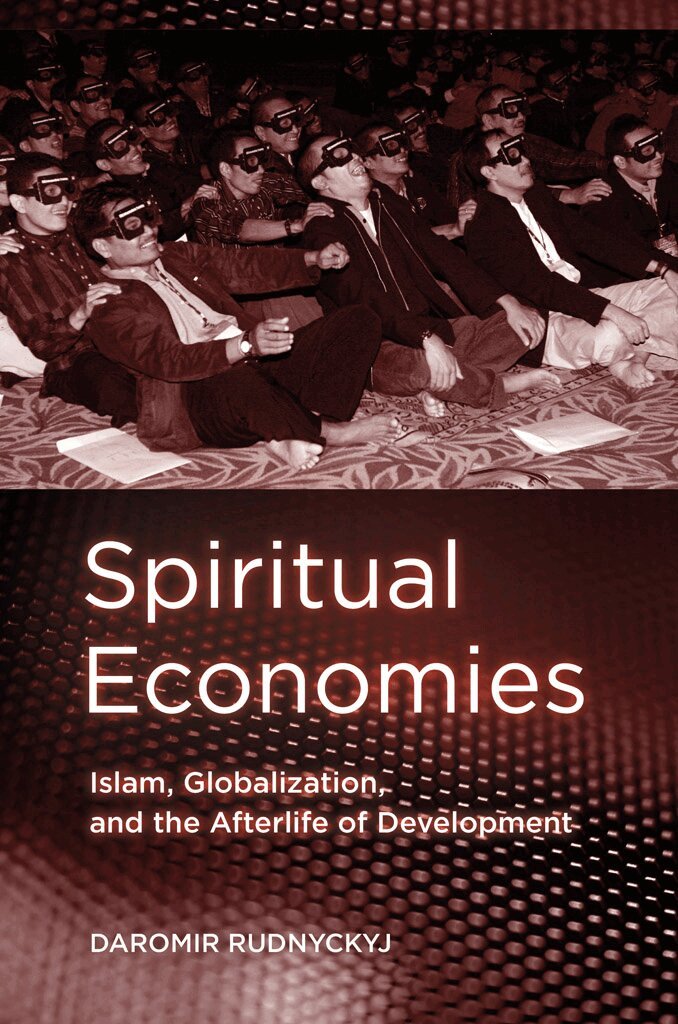
In Europe and North America Muslims are often represented in conflict with modernity—but what could be more modern than motivational programs that represent Islamic practice as conducive to business success and personal growth? Daromir Rudnyckyj's innovative and surprising book challenges widespread assumptions about contemporary Islam by showing how moderate Muslims in Southeast Asia are reinterpreting Islam not to reject modernity but to create a "spiritual economy" consisting of practices conducive to globalization.Drawing on more than two years of research in Indonesia, most of which took place at state-owned Krakatau Steel, Rudnyckyj shows how self-styled "spiritual reformers" seek to enhance the Islamic piety of workers across Southeast Asia and beyond. Deploying vivid description and a keen ethnographic sensibility, Rudnyckyj depicts a program called Emotional and Spiritual Quotient (ESQ) training that reconfigures Islamic practice and history to make the religion compatible with principles for corporate success found in Euro-American management texts, self-help manuals, and life-coaching sessions. The prophet Muhammad is represented as a model for a corporate CEO and the five pillars of Islam as directives for self-discipline, personal responsibility, and achieving "win-win" solutions.Spiritual Economies reveals how capitalism and religion are converging in Indonesia and other parts of the developing and developed world. Rudnyckyj offers an alternative to the commonly held view that religious practice serves as a refuge from or means of resistance against modernization and neoliberalism. Moreover, his innovative approach charts new avenues for future research on globalization, religion, and the predicaments of modern life.
365 kr
Skickas inom 10-15 vardagar
In Europe and North America Muslims are often represented in conflict with modernity—but what could be more modern than motivational programs that represent Islamic practice as conducive to business success and personal growth? Daromir Rudnyckyj's innovative and surprising book challenges widespread assumptions about contemporary Islam by showing how moderate Muslims in Southeast Asia are reinterpreting Islam not to reject modernity but to create a "spiritual economy" consisting of practices conducive to globalization.Drawing on more than two years of research in Indonesia, most of which took place at state-owned Krakatau Steel, Rudnyckyj shows how self-styled "spiritual reformers" seek to enhance the Islamic piety of workers across Southeast Asia and beyond. Deploying vivid description and a keen ethnographic sensibility, Rudnyckyj depicts a program called Emotional and Spiritual Quotient (ESQ) training that reconfigures Islamic practice and history to make the religion compatible with principles for corporate success found in Euro-American management texts, self-help manuals, and life-coaching sessions. The prophet Muhammad is represented as a model for a corporate CEO and the five pillars of Islam as directives for self-discipline, personal responsibility, and achieving "win-win" solutions.Spiritual Economies reveals how capitalism and religion are converging in Indonesia and other parts of the developing and developed world. Rudnyckyj offers an alternative to the commonly held view that religious practice serves as a refuge from or means of resistance against modernization and neoliberalism. Moreover, his innovative approach charts new avenues for future research on globalization, religion, and the predicaments of modern life.
1 271 kr
Skickas inom 7-10 vardagar
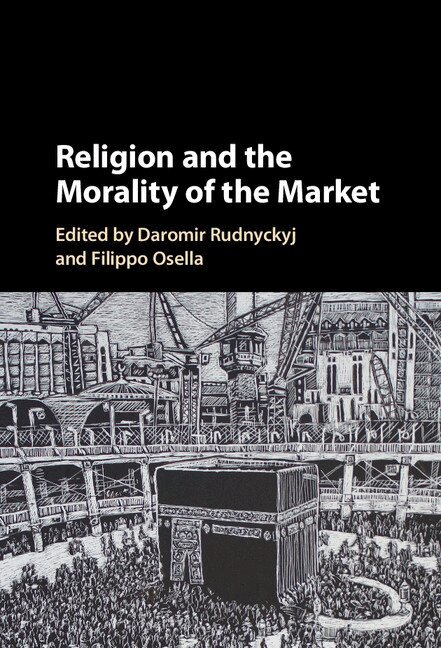
Since the collapse of the Berlin Wall, there has been a widespread affirmation of economic ideologies that conceive the market as an autonomous sphere of human practice, holding that market principles should be applied to human action at large. In the wake of the 2008 financial crisis, the ascendance of market reason has been countered by calls for reforms of financial markets and for the consideration of moral values in economic practice. This book intervenes in these debates by showing how neoliberal market practices engender new forms of religiosity, and how religiosity shapes economic actions. It reveals how religious movements and organizations have reacted to the increasing prominence of market reason in unpredictable, and sometimes counterintuitive, ways. Using a range of examples from different countries and religious traditions, the book illustrates the myriad ways in which religious and market moralities are closely imbricated in diverse global contexts.