Darryl Jarvis – författare
Visar alla böcker från författaren Darryl Jarvis. Handla med fri frakt och snabb leverans.
10 produkter
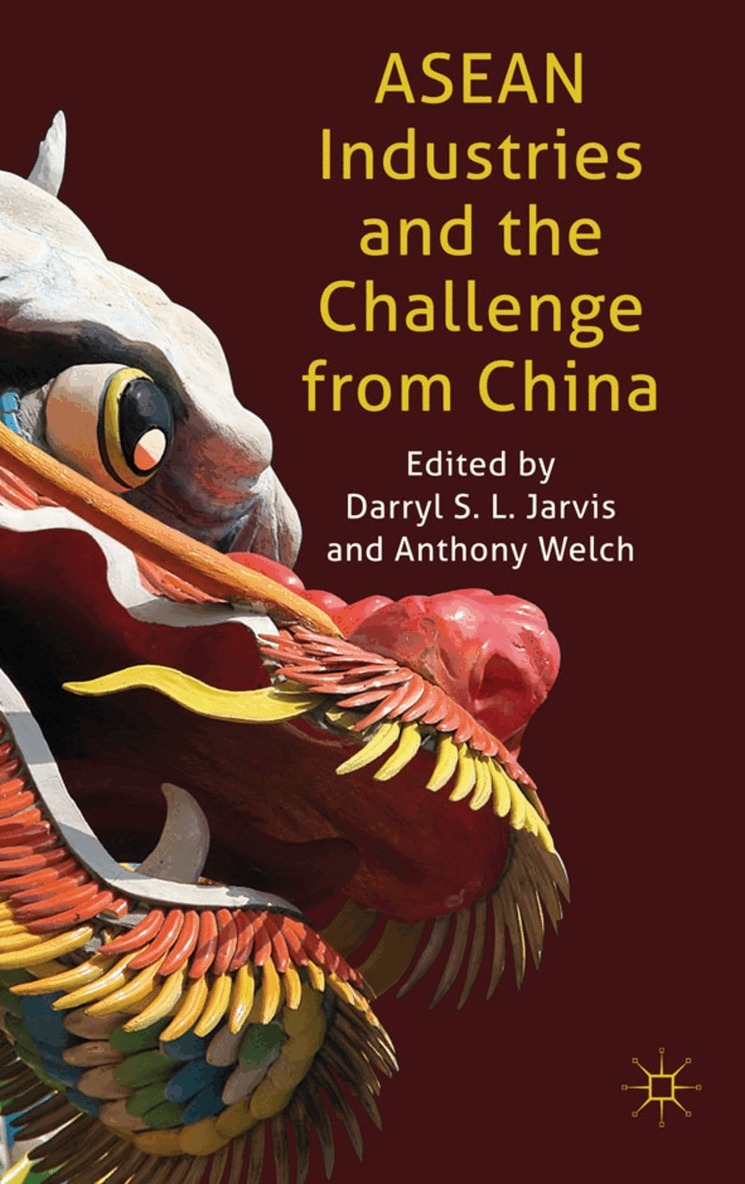
ASEAN Industries and the Challenge from China
Av Darryl Jarvis, D. Jarvis m. fl.
Inbunden, 2011
552 kr
Lägg i varukorg
This book explores the impact of the rise of China on South East Asia, addressing the consequences for some of Asia's key economic sectors, including educational services, bio-technology, financial services, and the food industry, among others.
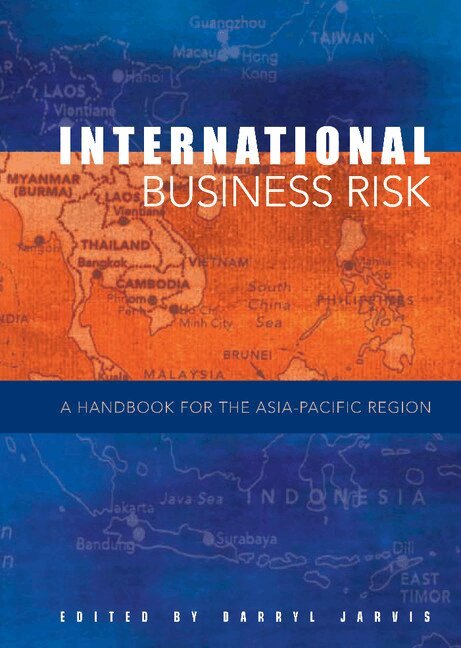
International Business Risk
A Handbook for the Asia-Pacific Region
Av Darryl Jarvis, D. S. L. Jarvis m. fl.
Inbunden, 2002
1677 kr
Lägg i varukorg
International Business Risk is an attempt to help investors and students of contemporary Asian affairs navigate the risk environments of Asia. Using highly relevant information and analytical techniques, the 2002 volume analyses the political, economic, regulatory, and security environments of 12 …
Financialisation and Development in Asia
Av Toby Carroll, Darryl Jarvis
Häftad, 2018
772 kr
Lägg i varukorg
Multilateral development agencies have increasingly focused on underdeveloped Asian countries as potential new sites for financial capital. Often referred to as ‘emerging markets’, these economies are seen as ripe for private sector investment and, at the same time, in need of foreign capital to …
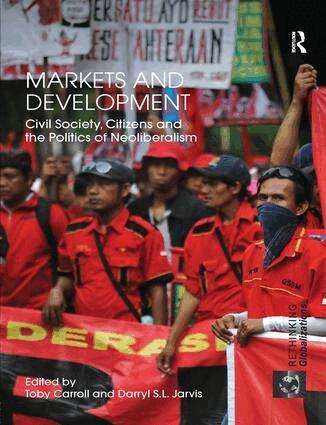
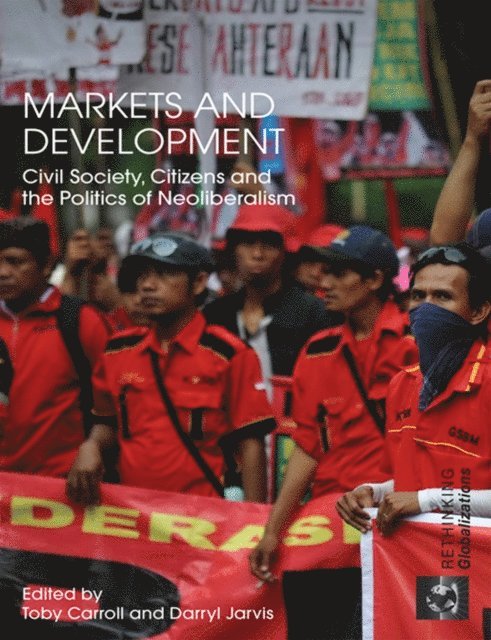
Markets and Development
Civil Society, Citizens and the Politics of Neoliberalism
Av Toby Carroll, Darryl Jarvis
Häftad, 2018
822 kr
Lägg i varukorg
Markets and Development presents a series of critical contributions focused on the political relationship between citizens, civil society, and neoliberal development policy’s latest form. The dramatic increase of ‘access to finance’ investments, newly gender-sensitive approaches to building …
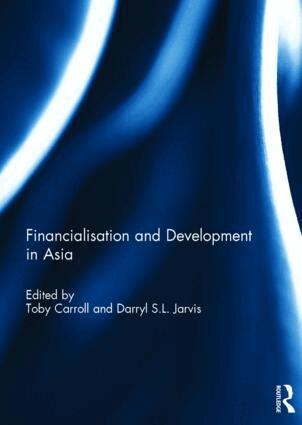
Financialisation and Development in Asia
Av Toby Carroll, Darryl Jarvis
Inbunden, 2015
2586 kr
Lägg i varukorg
Multilateral development agencies have increasingly focused on underdeveloped Asian countries as potential new sites for financial capital. Often referred to as ‘emerging markets’, these economies are seen as ripe for private sector investment and, at the same time, in need of foreign capital to …
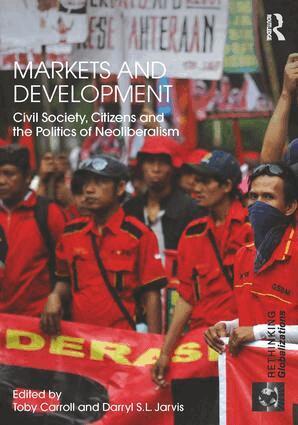
Markets and Development
Civil Society, Citizens and the Politics of Neoliberalism
Av Toby Carroll, Darryl Jarvis
Inbunden, 2015
2512 kr
Lägg i varukorg
Markets and Development presents a series of critical contributions focused on the political relationship between citizens, civil society, and neoliberal development policy’s latest form. The dramatic increase of ‘access to finance’ investments, newly gender-sensitive approaches to building …
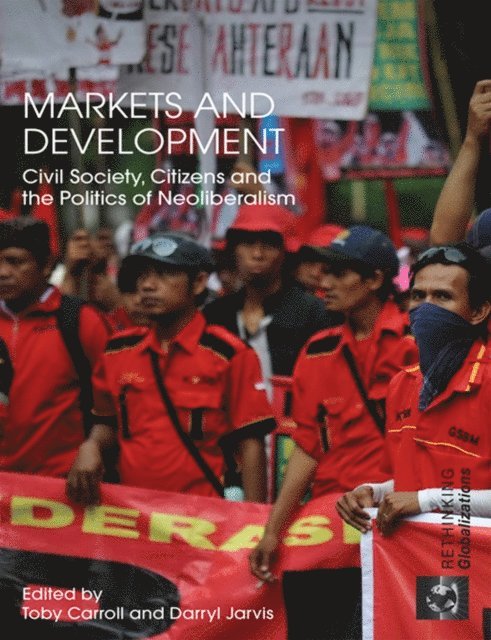
Markets and Development
Civil Society, Citizens and the Politics of Neoliberalism
Av Darryl Jarvis, Toby Carroll
E-bok, 2017
949 kr
Lägg i varukorg
Markets and Development presents a series of critical contributions focused on the political relationship between citizens, civil society, and neoliberal development policy’s latest form. The dramatic increase of ‘access to finance’ investments, newly gender-sensitive approaches to building …
Markets and Development
Civil Society, Citizens and the Politics of Neoliberalism
Av Darryl Jarvis, Toby Carroll
E-bok, 2017
970 kr
Lägg i varukorg
Markets and Development presents a series of critical contributions focused on the political relationship between citizens, civil society, and neoliberal development policy’s latest form. The dramatic increase of ‘access to finance’ investments, newly gender-sensitive approaches to building …
Financialisation and Development in Asia
Av Darryl Jarvis, Toby Carroll
E-bok, 2018
910 kr
Lägg i varukorg
Multilateral development agencies have increasingly focused on underdeveloped Asian countries as potential new sites for financial capital. Often referred to as ‘emerging markets’, these economies are seen as ripe for private sector investment and, at the same time, in need of foreign capital …
Financialisation and Development in Asia
Av Darryl Jarvis, Toby Carroll
E-bok, 2018
890 kr
Lägg i varukorg
Multilateral development agencies have increasingly focused on underdeveloped Asian countries as potential new sites for financial capital. Often referred to as ‘emerging markets’, these economies are seen as ripe for private sector investment and, at the same time, in need of foreign capital …