
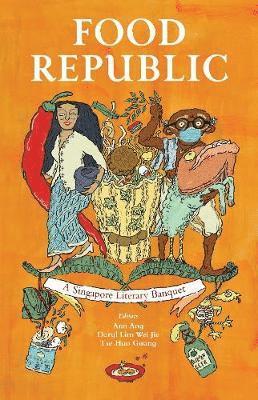
Food Republic is a generous serving of Singapore’s food culture: from the making and eating of food, to the sale and hawking of it, our love and hate of it, and the effects of its consumption and deprivation.Food has always been our safe space, our comfort zone: a place where we could freely engage in heated arguments about the best nasi lemak, the most fragrant cendol and whether the standard of the stall has dropped or not.Yet this anthology, featuring more than one hundred literary explorations of our food and food culture, also shows that when people write about food, they often aren’t just talking about food but usually about something else, closer to the heart. Or the bone.Curated from previously published work and selections from an open call, the poems, fiction and non-fiction in Food Republic range from the passionately realised to tantalisingly surreal.Think of it as a buffet, a banquet, an omakase, a smorgasbord, a nasi padang spread, a thali or a rijssttafel – we hope we’ve assembled one to your taste. Come. Eat.
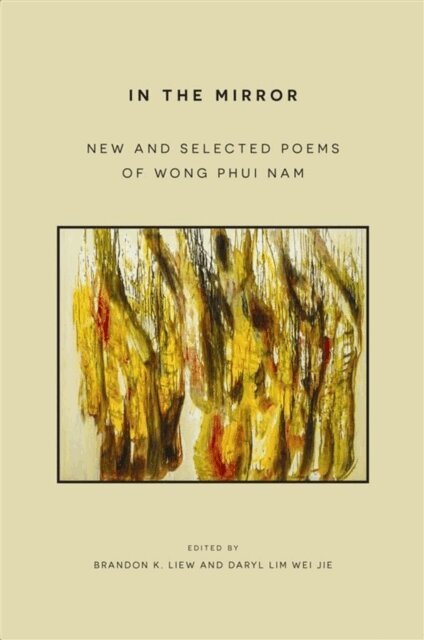
In a complete collection of works by one of Malaysia's foundational poets, Wong confronts the struggles of cultural displacement. The poetry of Wong Phui Nam is foundational to Malaysian literature in English. While his early work is often cited in this regard, this edited collection of his poetry and critical essays makes it clear that his lifelong trajectory as a poet and critic is of deep interest. In the Mirror by Wong Phui Nam is a critical exploration of Malaysia's fractured post-colonial identity and literary landscapes. Like many of his English-speaking peers at the University of Malaya, by the 1960s, Wong became disillusioned with the stark contradictions of writing in a colonial language while striving to build or maintain a national literary tradition. In 1969, when Malaysia's national cultural policy firmly emphasized the primacy of the Bahasa Malaysian language over English, Wong proclaimed, "e;I no longer wanted to write, at least not in a language I was told was a colonial leftover."e; Over the years, however, he returned to poetry in English, often publishing privately. He came to believe that English was the language "e;most capable of representing our predicament,"e; given the spiritual and cultural vacuums left by colonialism's great ruptures in the region, and the ongoing neocolonial structure of the state and economy. His work challenges the reader to confront the realities of cultural displacement and the complexities of a multi-ethnic society grappling with its past and future. This collection includes both recent works as well as some of his earlier achievements, starting with How the Hills are Distant, and also includes a foreword linking Wong's work with contemporary literary work in the region. An afterword by Wong's contemporary, Singaporean literary pioneer Edwin Thumboo, completes the volume.
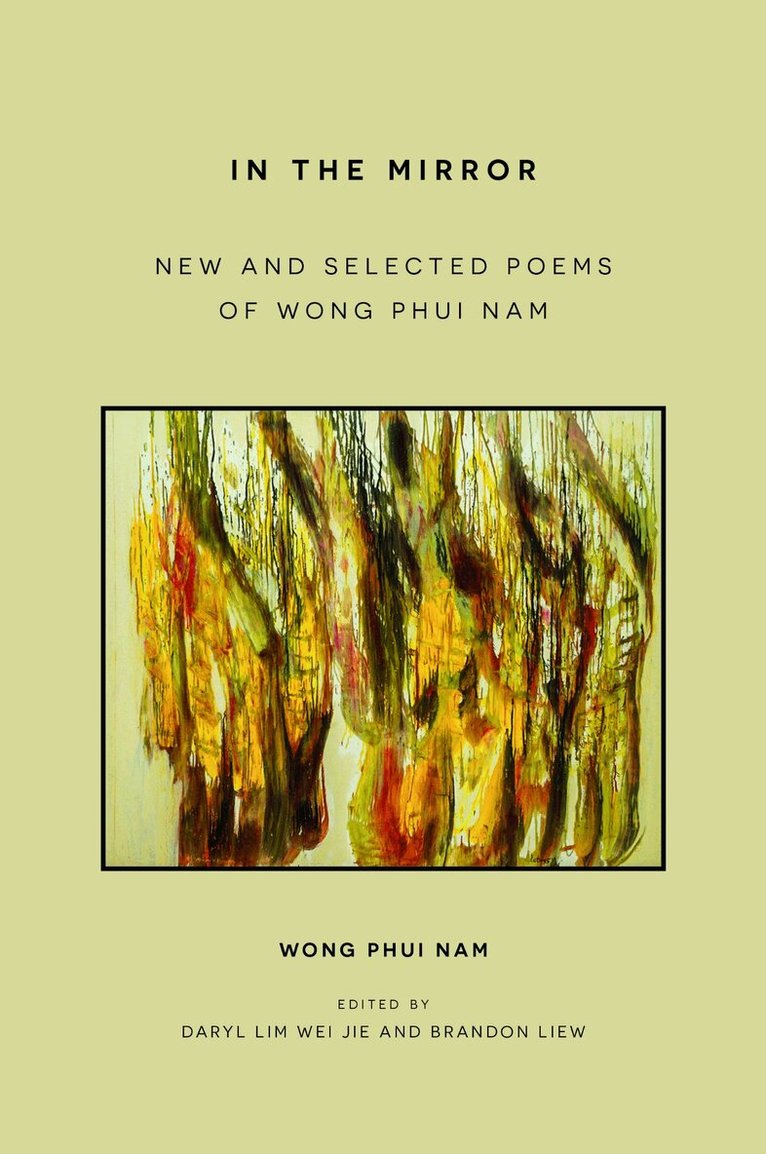
In a complete collection of works by one of Malaysia’s foundational poets, Wong confronts the struggles of cultural displacement.The poetry of Wong Phui Nam is foundational to Malaysian literature in English. While his early work is often cited in this regard, this edited collection of his poetry and critical essays makes it clear that his lifelong trajectory as a poet and critic is of deep interest. In the Mirror by Wong Phui Nam is a critical exploration of Malaysia's fractured post-colonial identity and literary landscapes.Like many of his English-speaking peers at the University of Malaya, by the 1960s, Wong became disillusioned with the stark contradictions of writing in a colonial language while striving to build or maintain a national literary tradition. In 1969, when Malaysia's national cultural policy firmly emphasized the primacy of the Bahasa Malaysian language over English, Wong proclaimed, "I no longer wanted to write, at least not in a language I was told was a colonial leftover."Over the years, however, he returned to poetry in English, often publishing privately. He came to believe that English was the language “most capable of representing our predicament,” given the spiritual and cultural vacuums left by colonialism's great ruptures in the region, and the ongoing neocolonial structure of the state and economy. His work challenges the reader to confront the realities of cultural displacement and the complexities of a multi-ethnic society grappling with its past and future.This collection includes both recent works as well as some of his earlier achievements, starting with How the Hills are Distant, and also includes a foreword linking Wong's work with contemporary literary work in the region. An afterword by Wong's contemporary, Singaporean literary pioneer Edwin Thumboo, completes the volume.
Food Republic is a generous serving of Singapore’s food culture: from the making and eating of food, to the sale and hawking of it, our love and hate of it, and the effects of its consumption and deprivation.Food has always been our safe space, our comfort zone: a place where we could freely engage in heated arguments about the best nasi lemak, the most fragrant cendol and whether the standard of the stall has dropped or not.Yet this anthology, featuring more than one hundred literary explorations of our food and food culture, also shows that when people write about food, they often aren’t just talking about food but usually about something else, closer to the heart. Or the bone.Curated from previously published work and selections from an open call, the poems, fiction and non-fiction in Food Republic range from the passionately realised to tantalisingly surreal.Think of it as a buffet, a banquet, an omakase, a smorgasbord, a nasi padang spread, a thali or a rijssttafel – we hope we’ve assembled one to your taste. Come. Eat.
In a complete collection of works by one of Malaysia's foundational poets, Wong confronts the struggles of cultural displacement. The poetry of Wong Phui Nam is foundational to Malaysian literature in English. While his early work is often cited in this regard, this edited collection of his poetry and critical essays makes it clear that his lifelong trajectory as a poet and critic is of deep interest. In the Mirror by Wong Phui Nam is a critical exploration of Malaysia's fractured post-colonial identity and literary landscapes. Like many of his English-speaking peers at the University of Malaya, by the 1960s, Wong became disillusioned with the stark contradictions of writing in a colonial language while striving to build or maintain a national literary tradition. In 1969, when Malaysia's national cultural policy firmly emphasized the primacy of the Bahasa Malaysian language over English, Wong proclaimed, "e;I no longer wanted to write, at least not in a language I was told was a colonial leftover."e; Over the years, however, he returned to poetry in English, often publishing privately. He came to believe that English was the language "e;most capable of representing our predicament,"e; given the spiritual and cultural vacuums left by colonialism's great ruptures in the region, and the ongoing neocolonial structure of the state and economy. His work challenges the reader to confront the realities of cultural displacement and the complexities of a multi-ethnic society grappling with its past and future. This collection includes both recent works as well as some of his earlier achievements, starting with How the Hills are Distant, and also includes a foreword linking Wong's work with contemporary literary work in the region. An afterword by Wong's contemporary, Singaporean literary pioneer Edwin Thumboo, completes the volume.
In a complete collection of works by one of Malaysia’s foundational poets, Wong confronts the struggles of cultural displacement.The poetry of Wong Phui Nam is foundational to Malaysian literature in English. While his early work is often cited in this regard, this edited collection of his poetry and critical essays makes it clear that his lifelong trajectory as a poet and critic is of deep interest. In the Mirror by Wong Phui Nam is a critical exploration of Malaysia's fractured post-colonial identity and literary landscapes.Like many of his English-speaking peers at the University of Malaya, by the 1960s, Wong became disillusioned with the stark contradictions of writing in a colonial language while striving to build or maintain a national literary tradition. In 1969, when Malaysia's national cultural policy firmly emphasized the primacy of the Bahasa Malaysian language over English, Wong proclaimed, "I no longer wanted to write, at least not in a language I was told was a colonial leftover."Over the years, however, he returned to poetry in English, often publishing privately. He came to believe that English was the language “most capable of representing our predicament,” given the spiritual and cultural vacuums left by colonialism's great ruptures in the region, and the ongoing neocolonial structure of the state and economy. His work challenges the reader to confront the realities of cultural displacement and the complexities of a multi-ethnic society grappling with its past and future.This collection includes both recent works as well as some of his earlier achievements, starting with How the Hills are Distant, and also includes a foreword linking Wong's work with contemporary literary work in the region. An afterword by Wong's contemporary, Singaporean literary pioneer Edwin Thumboo, completes the volume.