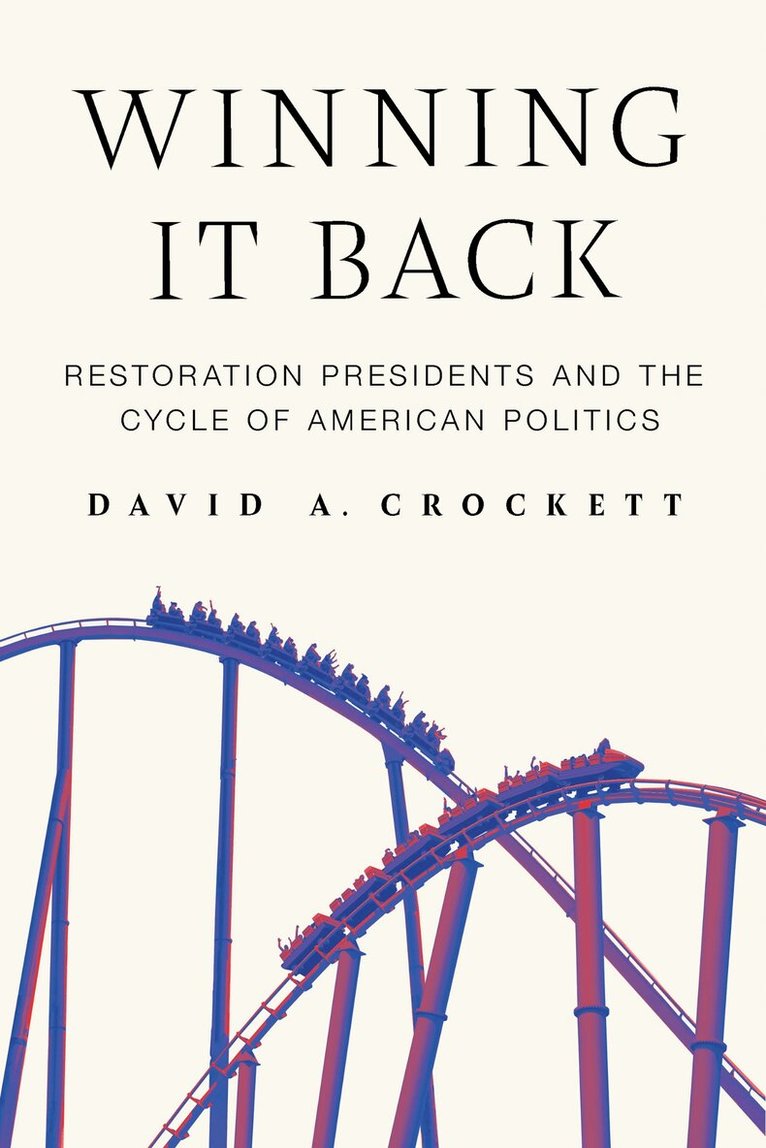
In Winning It Back, David A. Crockett explores why presidents who promise to set things aright—to "restore"—so often usher in the opposite.Since the earliest days of the United States, presidencies have seemingly unfolded in a cyclical manner, with features from prior eras recurring in later ones. Building on the idea of "political time"—that presidential terms fall within particular regime cycles—Crockett shows that presidents often fall into one of two roles: opposition presidents and restoration presidents. Opposition presidents belong to the political party not representing the dominant governing philosophy of a specific political era—for example, Republican presidents during the New Deal era (e.g., Eisenhower, Nixon) and Democratic presidents during the Reagan era (e.g., Clinton, Obama). Restoration presidents, conversely, belong to the dominant party, come to power after opposition presidents and, as such, face the task of "restoring" the dominant party's governing agenda.But that return is rarely smooth. Restoration presidents—like Kennedy after Eisenhower, or George W. Bush after Clinton—inherit both the hope of a comeback and the burden of pent-up expectations. Crockett argues that these leaders often overreach in their urgency to restore what was, inadvertently setting the stage for backlash and, eventually, the unraveling of their own political order.With sharp historical analysis and a wide-angle view of presidential politics from Jackson to today, Winning It Back offers timely insights on leadership legacies and the risks of nostalgia—and a clarion call for what (and who) may come next.
When a president's governing philosophy is out of step with the dominant ideology of the culture, his options for leadership are much different from those of a leader more in sync with the times. Such ""opposition leaders"" face distinctive challenges and opportunities. They should be judged by different standards, argues political scientist David A. Crockett. Crockett has analyzed presidents from Whig times through the Clinton presidency to develop a model for understanding presidential success and the strategies that are appropriate to the circumstances. Focusing on the terms of twelve opposition presidents, Crockett details the approaches they have taken to maximize their own goals and maintain political power. He illustrates vividly how these leaders must balance personal and partisan success, and he lays out the relationship between personality or character and the larger political context. All opposition presidents face roughly the same type of leadership situation_governing in an era in which they do not control the power to define politics_but Crockett's broad historical perspective demonstrates that they do not all handle this situation in the same way. Studying the presidency in such a political context enables Crockett to break free of the one-size-fits-all model of presidential leadership. Leadership strategies are contingent and context-bound, and the wise president understands the constraints history places on his leadership. In the case of opposition presidents, history demonstrates that pursuing a path of moderation is far healthier than launching a frontal assault on the governing party. It is healthier for the president and his party and healthier for the political system as a whole. Breaking free of the standard focus on post_World War II presidencies, this volume offers challenging understandings of presidential effectiveness. Students of American politics will join historians and scholars of the presidency in welcoming its tightly argued perspectives.
In Winning It Back, David A. Crockett explores why presidents who promise to set things aright—to "restore"—so often usher in the opposite.Since the earliest days of the United States, presidencies have seemingly unfolded in a cyclical manner, with features from prior eras recurring in later ones. Building on the idea of "political time"—that presidential terms fall within particular regime cycles—Crockett shows that presidents often fall into one of two roles: opposition presidents and restoration presidents. Opposition presidents belong to the political party not representing the dominant governing philosophy of a specific political era—for example, Republican presidents during the New Deal era (e.g., Eisenhower, Nixon) and Democratic presidents during the Reagan era (e.g., Clinton, Obama). Restoration presidents, conversely, belong to the dominant party, come to power after opposition presidents and, as such, face the task of "restoring" the dominant party's governing agenda.But that return is rarely smooth. Restoration presidents—like Kennedy after Eisenhower, or George W. Bush after Clinton—inherit both the hope of a comeback and the burden of pent-up expectations. Crockett argues that these leaders often overreach in their urgency to restore what was, inadvertently setting the stage for backlash and, eventually, the unraveling of their own political order.With sharp historical analysis and a wide-angle view of presidential politics from Jackson to today, Winning It Back offers timely insights on leadership legacies and the risks of nostalgia—and a clarion call for what (and who) may come next.
When a president's governing philosophy is out of step with the dominant ideology of the culture, his options for leadership are much different from those of a leader more in sync with the times. Such ""opposition leaders"" face distinctive challenges and opportunities. They should be judged by different standards, argues political scientist David A. Crockett. Crockett has analyzed presidents from Whig times through the Clinton presidency to develop a model for understanding presidential success and the strategies that are appropriate to the circumstances. Focusing on the terms of twelve opposition presidents, Crockett details the approaches they have taken to maximize their own goals and maintain political power. He illustrates vividly how these leaders must balance personal and partisan success, and he lays out the relationship between personality or character and the larger political context. All opposition presidents face roughly the same type of leadership situation_governing in an era in which they do not control the power to define politics_but Crockett's broad historical perspective demonstrates that they do not all handle this situation in the same way. Studying the presidency in such a political context enables Crockett to break free of the one-size-fits-all model of presidential leadership. Leadership strategies are contingent and context-bound, and the wise president understands the constraints history places on his leadership. In the case of opposition presidents, history demonstrates that pursuing a path of moderation is far healthier than launching a frontal assault on the governing party. It is healthier for the president and his party and healthier for the political system as a whole. Breaking free of the standard focus on post_World War II presidencies, this volume offers challenging understandings of presidential effectiveness. Students of American politics will join historians and scholars of the presidency in welcoming its tightly argued perspectives.