David A. Silbersweig – författare
1 907 kr
Läs direkt efter köp
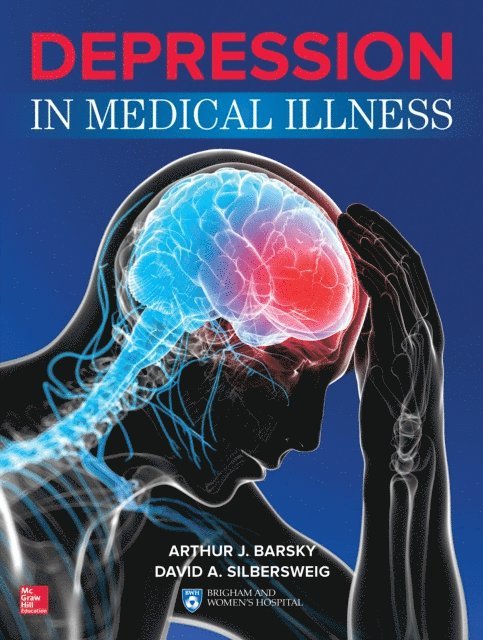
An authoritative guide to understanding and treating depression in the medically ill
Depression in Medical Illness is based on the fact that depression and medical illness are inextricably bound together and must be viewed through a single lens in order to truly understand, diagnose, and treat them.
Throughout the book, the authors emphasize not simply a critical distillation and balanced summary of the available empirical data, but equally important, an active synthesis, formulation, and analysis of that evidence.This informs a contemporary biomedical understanding, as well as diagnostic and therapeutic approaches. All of the chapters are authored by members of the Department of Psychiatry at the world-renowned Brigham and Women’s Hospital. In chapters devoted to specific medical disorders, psychiatrists with particular expertise in those areas have been joined by other eminent Brigham medical and surgical specialists or subspecialists. This makes these chapters valuable not just to psychiatrists and other mental health professionals, but to a wide range of medical specialists as well.
Logically Organized Into Five Sections:
Core Concepts – provides a conceptual and intellectual framework for understanding depressive illness in the context of medical illness
Assessment and Treatment of Depression in Medically Ill Patients – discusses the general principles of depression diagnosis and treatment
Depression in Medical Illness – Assesses what we know about depression when it is comorbid with the full range of major medical disorders
Special Populations and Settings – Is devoted to special patient populations and the importance of the settings in which care is delivered
New Directions – A fascinating glimpse into the future of the care of medically ill patients who are depressed
1 693 kr
Skickas inom 5-8 vardagar
1 939 kr
Läs direkt efter köp
The Textbook of Medical Psychiatry was written for the wide range of clinicians who grapple with the diagnostic and treatment challenges inherent in this clinical reality: medical and psychiatric illnesses do not occur in isolation from one another. Because assessment in these cases may be challenging, the book addresses general medical conditions that directly cause psychiatric illness and the medical differential diagnosis of common psychiatric illnesses. In addition, the book describes how the presentation and treatment of both psychiatric and medical disorders are modified by the presence of comorbid conditions. The editors, who are at the forefront of the field, have assembled an outstanding group of contributors, all of whom share the objective of helping psychiatrists, internists, neurologists, trainees, and other health care providers recognize the medical issues facing patients with psychiatric symptoms, and vice versa. Proper assessment and treatment are dependent on the skillful application of this knowledge.
Written in down-to-earth, clinically grounded prose, this text Provides a comprehensive exploration of approaches to the patient, including perspectives from internists and neurologists on dealing with diagnostic uncertainty and special chapters on the neurological examination, cognitive testing, neuroimaging, laboratory testing, and toxicological syndromes. Presents a review of medical disorders that can directly or indirectly affect the clinical presentation and course of psychiatric disorders. Presents a review of psychiatric disorders that can be caused by medical illnesses or affect the clinical presentation and course of medical disorders. Includes chapters on pain, insomnia, and somatoform disorders, conditions that accompany many psychiatric and medical illnesses and that fall in the boundary between these practice settings.
In clinics and offices every day, physicians encounter patients whose presentations are atypical or whose symptoms are not responsive to usual care. When facing the challenges of accurately assessing complicated symptoms and managing the care of complex patients, clinicians often seek advice from colleagues whose perspectives and expertise they trust. The chapters in the Textbook of Medical Psychiatry can be consulted in much the same fashion, expanding clinicians'' knowledge base and helping them to more effectively diagnose and care for their patients.