David Arter - Böcker
Visar alla böcker från författaren David Arter. Handla med fri frakt och snabb leverans.
10 produkter
10 produkter
2 353 kr
Skickas inom 10-15 vardagar
Recent years have witnessed substantial work in the legislative studies field. But what do we know about legislatures today and are there clear criteria for comparing and classifying them? This is a new review of the state of our knowledge of parliament and tackles key questions: Do legislatures matter in legislative terms, and, if so, how much? What is the extent of the legislature’s control of the legislative process. How can we classify legislatures on the basis of their relative legislative performance. Five measures of the policy power of parliaments are applied in the country/region chapters.This book was previously published as a special issue of the leading Journal of Legislative Studies.
617 kr
Skickas inom 10-15 vardagar
Recent years have witnessed substantial work in the legislative studies field. But what do we know about legislatures today and are there clear criteria for comparing and classifying them? This is a new review of the state of our knowledge of parliament and tackles key questions: Do legislatures matter in legislative terms, and, if so, how much? What is the extent of the legislature’s control of the legislative process. How can we classify legislatures on the basis of their relative legislative performance. Five measures of the policy power of parliaments are applied in the country/region chapters.This book was previously published as a special issue of the leading Journal of Legislative Studies.
671 kr
Skickas inom 10-15 vardagar
This book is unique in analysing the new Scottish Parliament from a systematically comparative perspective. Its basic premise is that since devolution in 1999 Scotland can be considered a Scandinavian-style democracy with several features of a Scandinavian-style parliament. The basic research question, therefore, is: 'Has the Scottish Parliament in its first four-year term manifested a Scandinavian-style politics in the sense that there has been a high incidence of inter-party negotiation within Parliament?'The architects of the Scottish Parliament saw the committees as the motor of a 'new politics' and gave them extensive powers. Outside Austria, only the Swedish and Icelandic committees have comparable powers. Accordingly, the study sets out to describe and analyse the workings of the committees in the Scottish, Swedish and Icelandic Parliaments. The concluding chapter also discusses the operation of the Danish, Finnish and Norwegian committees.
2 155 kr
Skickas inom 10-15 vardagar
This book is unique in analysing the new Scottish Parliament from a systematically comparative perspective. Its basic premise is that since devolution in 1999 Scotland can be considered a Scandinavian-style democracy with several features of a Scandinavian-style parliament. The basic research question, therefore, is: 'Has the Scottish Parliament in its first four-year term manifested a Scandinavian-style politics in the sense that there has been a high incidence of inter-party negotiation within Parliament?'The architects of the Scottish Parliament saw the committees as the motor of a 'new politics' and gave them extensive powers. Outside Austria, only the Swedish and Icelandic committees have comparable powers. Accordingly, the study sets out to describe and analyse the workings of the committees in the Scottish, Swedish and Icelandic Parliaments. The concluding chapter also discusses the operation of the Danish, Finnish and Norwegian committees.
1 077 kr
Skickas inom 7-10 vardagar
This book is about the distinctive features of Scandinavian democracy, the state of Scandinavian democracy and the classification of the Scandinavian democracies. It breaks new ground in challenging the established status of the Scandinavian countries as ‘consensus model democracies’. The book poses three main questions. First, what are the distinctive features of the five Scandinavian political systems when compared with the Westminster model of democracy? Next, how well does the evidence from recent commissions suggest that Scandinavian democracy is working in practice? Finally, is Scandinavian democracy consensual, majoritarian or mixed? The nature of legislative-executive relations is explored, with a particular focus on the role of the parliamentary opposition and its involvement in policy-making. The central conclusion is that all the Nordic states are majoritarian democracies, albeit with varying amounts of consensual legislative behaviour.
354 kr
Skickas inom 5-8 vardagar
This book is about the distinctive features of Scandinavian democracy, the state of Scandinavian democracy and the classification of the Scandinavian democracies. It breaks new ground in challenging the established status of the Scandinavian countries as ‘consensus model democracies’. The book poses three main questions. First, what are the distinctive features of the five Scandinavian political systems when compared with the Westminster model of democracy? Next, how well does the evidence from recent commissions suggest that Scandinavian democracy is working in practice? Finally, is Scandinavian democracy consensual, majoritarian or mixed? The nature of legislative-executive relations is explored, with a particular focus on the role of the parliamentary opposition and its involvement in policy-making. The central conclusion is that all the Nordic states are majoritarian democracies, albeit with varying amounts of consensual legislative behaviour.
421 kr
Skickas inom 5-8 vardagar
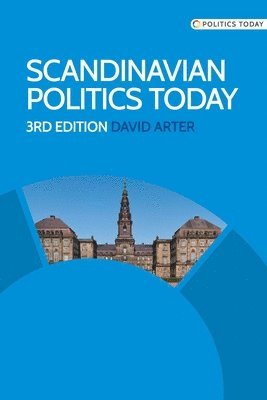
This completely revised and updated third edition of Scandinavian politics today follows the format of earlier editions by providing a uniquely comparative, thematic and insightful treatment of politics and government in the five nation-states of Denmark, Finland, Iceland, Norway and Sweden, along with the three Home Rule territories of Greenland, Faeroes and Åland that together make up the Nordic region or Norden.Thirteen chapters cover Scandinavia past and present; parties in developmental perspective; the Scandinavian party system model; the Nordic model of government; the Nordic welfare model; legislative-executive relations in the region; the changing security environment and the transition from Cold War ‘security threats’ to the ‘security challenges' of today; and a concluding chapter looks at regional co-operation, Nordic involvement in the ‘European project’ and the Nordic states as ‘moral superpowers’.This new edition will be of relevance to topical UK debates on the Nordic model, welfare system change, Scottish independence and the challenges facing small-state systems in a globalised world.
From Farmyard to City Square? The Electoral Adaptation of the Nordic Agrarian Parties
Inbunden, Engelska, 2001
1 294 kr
Skickas inom 10-15 vardagar
How successful have the Nordic Agrarian-Centre Parties been in transforming themselves from class parties to catchall parties drawing significant support from voters engaged in the non-primary sectors of the economy? Using case studies from five comparable countries, David Arter provides an insightful account of an historic group of parties who still wield distinctive strength in the Nordic region. This detailed profile, the first ever in English, makes a unique contribution to the topical issues of party adaptation and institutional modernization.
From Farmyard to City Square? The Electoral Adaptation of the Nordic Agrarian Parties
Häftad, Engelska, 2017
441 kr
Skickas inom 10-15 vardagar
How successful have the Nordic Agrarian-Centre Parties been in transforming themselves from class parties to catchall parties drawing significant support from voters engaged in the non-primary sectors of the economy? Using case studies from five comparable countries, David Arter provides an insightful account of an historic group of parties who still wield distinctive strength in the Nordic region. This detailed profile, the first ever in English, makes a unique contribution to the topical issues of party adaptation and institutional modernization.
1 167 kr
Skickas inom 5-8 vardagar
This completely revised and updated third edition of Scandinavian politics today follows the format of earlier editions by providing a uniquely comparative, thematic and insightful treatment of politics and government in the five nation-states of Denmark, Finland, Iceland, Norway and Sweden, along with the three Home Rule territories of Greenland, Faeroes and Åland that together make up the Nordic region or Norden.Thirteen chapters cover Scandinavia past and present; parties in developmental perspective; the Scandinavian party system model; the Nordic model of government; the Nordic welfare model; legislative-executive relations in the region; the changing security environment and the transition from Cold War ‘security threats’ to the ‘security challenges' of today; and a concluding chapter looks at regional co-operation, Nordic involvement in the ‘European project’ and the Nordic states as ‘moral superpowers’.This new edition will be of relevance to topical UK debates on the Nordic model, welfare system change, Scottish independence and the challenges facing small-state systems in a globalised world.