David Axe – författare
Visar alla böcker från författaren David Axe. Handla med fri frakt och snabb leverans.
17 produkter
17 produkter
Häftad, Engelska, 2010
340 kr
Skickas inom 3-6 vardagar
E-bok
Engelska, 201074 kr
Läs direkt efter köp
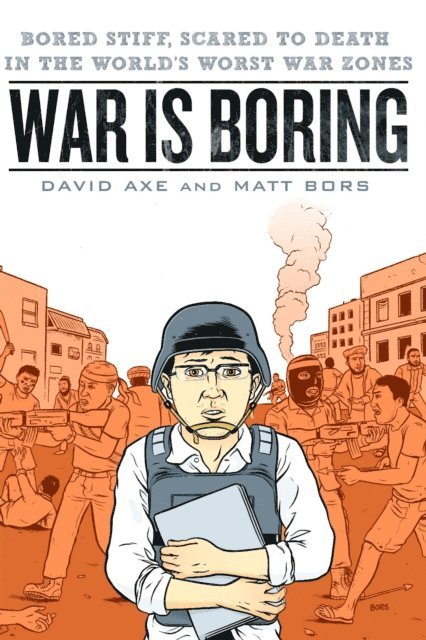
Read David Axe''s blogs and other content on the Penguin Community.The war memoir as graphic novel-an utterly unforgettable and highly original look at war in the 21st century. Street battles with spears and arrows in sweltering East Timor. Bone- jarring artillery duels in Afghanistan''s mountains. Long patrols on the sandy wastes of southern Iraq. For four years, war was life for David Axe. He was alternately bored out of his mind and completely terrified. It was strangely addictive. As a correspondent for The Washington Times, C-SPAN and BBC Radio, Axe flew from conflict to conflict, reveling in death, danger, and destruction abroad while, back in D.C., his apartment gathered dust, his plants died, and his relationships withered. War reporting was physically, emotionally, and financially draining-and disillusioning. Loosely based on the web comic of the same name, with extensive new material, War Is Boring takes us to Lebanon and Somalia; to arms bazaars across the United States; to Detroit, as David tries to reconnect with his family-and to Chad, as David attempts to bring attention to the Darfur genocide.
Watch a Video
Inbunden, Engelska, 2023
272 kr
Skickas
Orbital fortresses poised to fry entire cities with no warning using giant mirrors. Bombers that take off from Earth, punch through the thin border between the atmosphere and vacuum and take advantage of that lofty altitude to speed across the globe on missions of mass destruction.These and other exotic orbital weapons were under consideration, or even active development, in the early decades of humanity's push into space.And no wonder. The era of frantic, dueling, American and Soviet space-exploration efforts -- which stretched from the end of World War II to the United States' successful Moon landing in July 1969 -- had its roots in Nazi Germany, a country that pinned its hope for global conquest on equally ambitious superweapons.In the decades following World War II, the top scientists in the U.S. and Soviet space programs were ex-Nazis most notably rocket-designer Wernher von Braun, who sided with the Americans. The basic technologies of the space race derived from Nazi superweapons, in particular von Braun's V-2 rocket.But orbital war never broke out in those heady decades of intense space competition. It's possible to triangulate the moment the seemingly inevitable became evitable. July 29, 1958. The day U.S. president Dwight Eisenhower reluctantly signed the law creating the National Aeronautics and Space Administration.Starting that day, the U.S. military gradually ceded to NASA, a civilian agency, leadership of American efforts in space. Even von Braun, once a leading advocate of orbital warfare, went along. Space-based superweapons and their architects, and the high-stakes politics that reined them in, are the subject of this brief book.
E-bok
Engelska, 2023179 kr
Läs direkt efter köp
Orbital fortresses poised to fry entire cities with no warning using giant mirrors. Bombers that take off from Earth, punch through the thin border between the atmosphere and vacuum and take advantage of that lofty altitude to speed across the globe on missions of mass destruction. These and other exotic orbital weapons were under consideration, or even active development, in the early decades of humanity’s push into space. And no wonder. The era of frantic, dueling, American and Soviet space-exploration efforts -- which stretched from the end of World War II to the United States’ successful Moon landing in July 1969 -- had its roots in Nazi Germany, a country that pinned its hope for global conquest on equally ambitious superweapons. In the decades following World War II, the top scientists in the U.S. and Soviet space programs were ex-Nazis—most notably rocket-designer Wernher von Braun, who sided with the Americans. The basic technologies of the space race derived from Nazi superweapons, in particular von Braun’s V-2 rocket. But orbital war never broke out in those heady decades of intense space competition. It’s possible to triangulate the moment the seemingly inevitable became evitable. July 29, 1958. The day U.S. president Dwight Eisenhower reluctantly signed the law creating the National Aeronautics and Space Administration. Starting that day, the U.S. military gradually ceded to NASA, a civilian agency, leadership of American efforts in space. Even von Braun, once a leading advocate of orbital warfare, went along. Space-based superweapons and their architects, and the high-stakes politics that reined them in, are the subject of this brief book.
E-bok
PDF, Engelska, 2023173 kr
Läs direkt efter köp
Orbital fortresses poised to fry entire cities with no warning using giant mirrors. Bombers that take off from Earth, punch through the thin border between the atmosphere and vacuum and take advantage of that lofty altitude to speed across the globe on missions of mass destruction. These and other exotic orbital weapons were under consideration, or even active development, in the early decades of humanity’s push into space. And no wonder. The era of frantic, dueling, American and Soviet space-exploration efforts -- which stretched from the end of World War II to the United States’ successful Moon landing in July 1969 -- had its roots in Nazi Germany, a country that pinned its hope for global conquest on equally ambitious superweapons. In the decades following World War II, the top scientists in the U.S. and Soviet space programs were ex-Nazis—most notably rocket-designer Wernher von Braun, who sided with the Americans. The basic technologies of the space race derived from Nazi superweapons, in particular von Braun’s V-2 rocket. But orbital war never broke out in those heady decades of intense space competition. It’s possible to triangulate the moment the seemingly inevitable became evitable. July 29, 1958. The day U.S. president Dwight Eisenhower reluctantly signed the law creating the National Aeronautics and Space Administration. Starting that day, the U.S. military gradually ceded to NASA, a civilian agency, leadership of American efforts in space. Even von Braun, once a leading advocate of orbital warfare, went along. Space-based superweapons and their architects, and the high-stakes politics that reined them in, are the subject of this brief book.
Inbunden, Engelska, 2021
219 kr
Skickas
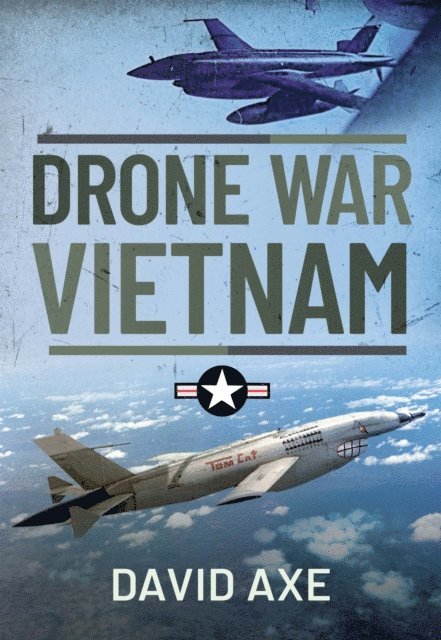
While the use of drones is now commonplace in modern warfare, it was in its infancy during the Vietnam War, not to mention revolutionary and top secret. Drones would play an important - and today largely unheralded - role in the bloody, two-decade US air war over Vietnam and surrounding countries in the 1960s and '70s. Drone aircraft spotted targets for manned US bombers, jammed North Vietnamese radars and scattered propaganda leaflets, among other missions. This book explores that obscure chapter of history. DRONE WAR: VIETNAM is based on military records, official histories and published first-hand accounts from early drone operators, as well as on a close survey of existing scholarship on the topic. In their fledgling efforts to send robots instead of human beings on the most dangerous aerial missions, US operators in South-East Asia in the 1960s and '70s wrote the first chapter in the continuing tale of autonomous warfare.
E-bok
Engelska, 2021147 kr
Läs direkt efter köp
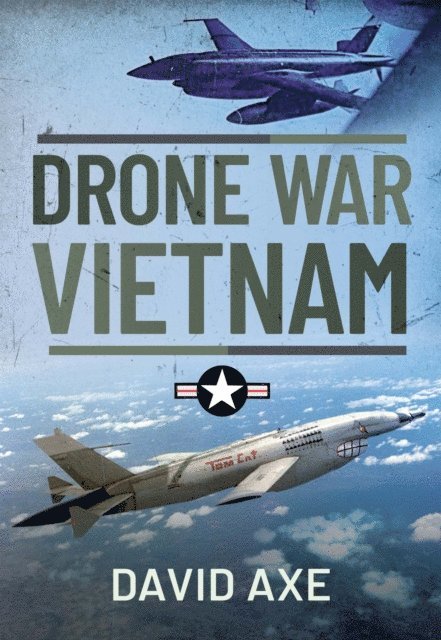
While the use of drones is now commonplace in modern warfare, it was in its infancy during the Vietnam War, not to mention revolutionary and top secret. Drones would play an important – and today largely unheralded – role in the bloody, two-decade US air war over Vietnam and surrounding countries in the 1960s and ’70s. Drone aircraft spotted targets for manned US bombers, jammed North Vietnamese radars and scattered propaganda leaflets, among other missions. This book explores that obscure chapter of history. DRONE WAR: VIETNAM is based on military records, official histories and published first-hand accounts from early drone operators, as well as on a close survey of existing scholarship on the topic. In their fledgling efforts to send robots instead of human beings on the most dangerous aerial missions, US operators in South-East Asia in the 1960s and ’70s wrote the first chapter in the continuing tale of autonomous warfare.
E-bok
PDF, Engelska, 2021147 kr
Läs direkt efter köp
While the use of drones is now commonplace in modern warfare, it was in its infancy during the Vietnam War, not to mention revolutionary and top secret. Drones would play an important – and today largely unheralded – role in the bloody, two-decade US air war over Vietnam and surrounding countries in the 1960s and ’70s. Drone aircraft spotted targets for manned US bombers, jammed North Vietnamese radars and scattered propaganda leaflets, among other missions. This book explores that obscure chapter of history. DRONE WAR: VIETNAM is based on military records, official histories and published first-hand accounts from early drone operators, as well as on a close survey of existing scholarship on the topic. In their fledgling efforts to send robots instead of human beings on the most dangerous aerial missions, US operators in South-East Asia in the 1960s and ’70s wrote the first chapter in the continuing tale of autonomous warfare.
Häftad, Engelska, 2001
147 kr
Skickas inom 5-8 vardagar
Inbunden, Engelska, 2011
290 kr
Skickas inom 5-8 vardagar
Logistics includes the planning and practice of moving "stuff"—raw materials, tools, finished products, and even people—from one place to another. It carried American settlers over the sparsely populated Great Plains to connect the East Coast to the West Coast and has underpinned our domestic prosperity ever since. Logistics also solidified the global power and influence of the United States by guaranteeing our ability to rapidly reinforce Europe in the world wars, by helping us win the Cold War, and by enabling the current U.S. military to fight two wars at once. Further, logistics undergirds the world economy as swelling populations vie for shrinking resources, including energy, water, arable land, food, and cheap labor. Natural disasters urgently increase such demand.From A to B is the story of modern American logistics, which will continue to shape the nation's role in this century. The book begins with a U.S. Army transportation company in Iraq during the height of insurgent attacks on American supply networks. Then it tours the shipyards, railways, highways, airports, classrooms, corporate boardrooms, and laboratories that make up our complex and colorful transportation culture. With competition stiffening and our national transportation infrastructure crumbling, we must find ways to move resources and products even more efficiently if we are to thrive. From A to B presents this challenge.
Häftad, Engelska, 2013
201 kr
Skickas inom 5-8 vardagar
Joseph Kony is the most dangerous guerilla leader in modern African history.It started with a visit from spirits. In 1991, Kony claimed that spiritual beings had come to him with instructions: he was to lead his group of rebels, the Lord's Resistance Army, in a series of brutal raids against ordinary Ugandan civilians. Decades later, Kony has sown chaos throughout Central Africa, kidnapping and terrorizing countless innocents-especially children. Yet despite an enormous global outcry, the Kony 2012 movement, and an international military intervention, the carnage has continued. Drawn from on-the-ground reporting by war correspondent David Axe and starkly illustrated by Tim Hamilton, Army of God is the first-ever graphic account of the global phenomenon surrounding Kony-from the devastation he has left behind to the long campaign to defeat him for good.
E-bok
Engelska, 2012250 kr
Läs direkt efter köp
Logistics includes the planning and practice of moving "stuff"—raw materials, tools, finished products, and even people—from one place to another. It carried American settlers over the sparsely populated Great Plains to connect the East Coast to the West Coast and has underpinned our domestic prosperity ever since. Logistics also solidified the global power and influence of the United States by guaranteeing our ability to rapidly reinforce Europe in the world wars, by helping us win the Cold War, and by enabling the current U.S. military to fight two wars at once. Further, logistics undergirds the world economy as swelling populations vie for shrinking resources, including energy, water, arable land, food, and cheap labor. Natural disasters urgently increase such demand.From A to B is the story of modern American logistics, which will continue to shape the nation's role in this century. The book begins with a U.S. Army transportation company in Iraq during the height of insurgent attacks on American supply networks. Then it tours the shipyards, railways, highways, airports, classrooms, corporate boardrooms, and laboratories that make up our complex and colorful transportation culture. With competition stiffening and our national transportation infrastructure crumbling, we must find ways to move resources and products even more efficiently if we are to thrive. From A to B presents this challenge.
E-bok
Engelska, 2013312 kr
Läs direkt efter köp
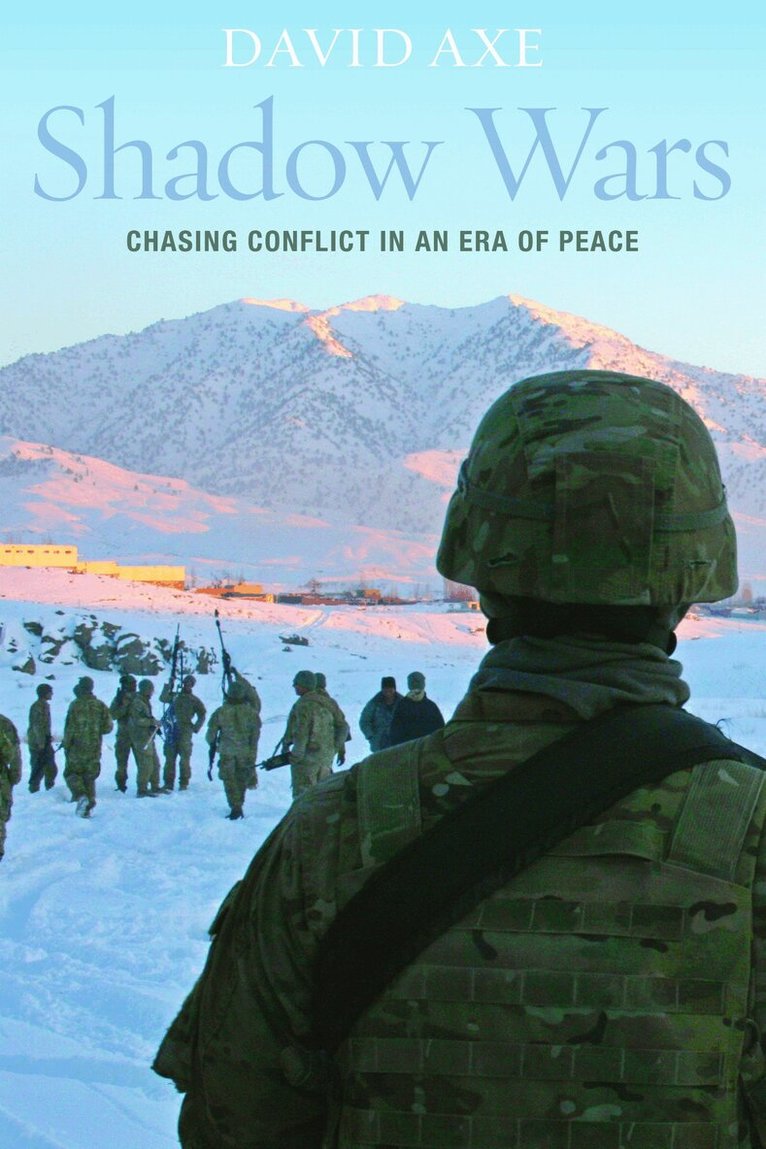
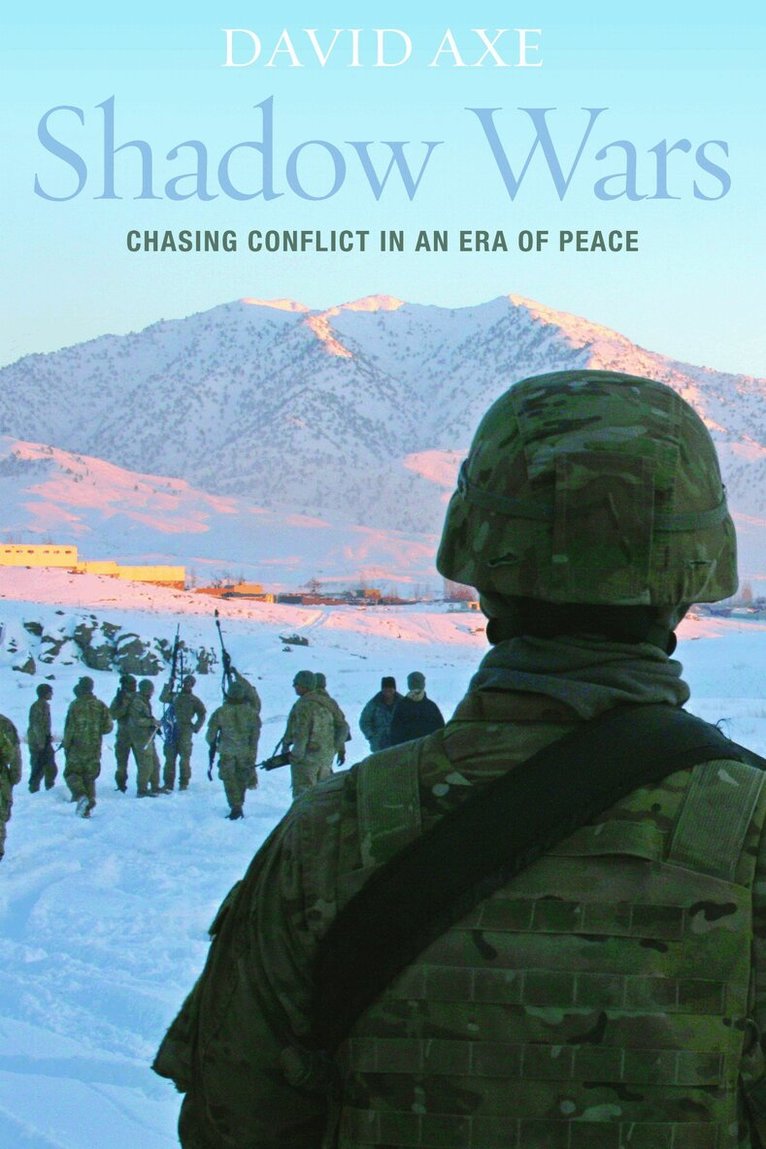
Warfare’s evolution, especially since 2001, has irrevocably changed the meaning of war. In the twentieth century-humankind’s bloodiest-231 million people died in armed conflicts. Battlefield deaths since then have been steadily declining, despite the wars in Iraq and Afghanistan, and by 2012 less than 1 person in a million dies in war every year. This drastic change has led some academics to label our era one of peace, recalling the erroneously named “Hundred Years’ Peace” or “Pax Britannica” of the nineteenth century, which nonetheless saw many violent conflicts. But war hasn’t gone extinct. It has merely evolved. In Shadow Wars, journalist David Axe tells the story of the new war era-one of insurgents and counterinsurgents, terrorists and their hunters, pirates, mercenaries, smugglers, and slavers wreaking havoc on regions where conditions are brutal, people are poor, governments are weak, and the world rarely pays attention. Axe shows us what war has become in our era of peace. The mainstream media, meanwhile, ignores it. This book profoundly challenges readers’ conceptions of war and peace in the twenty-first century.
Häftad, Engelska, 2018
193 kr
Skickas
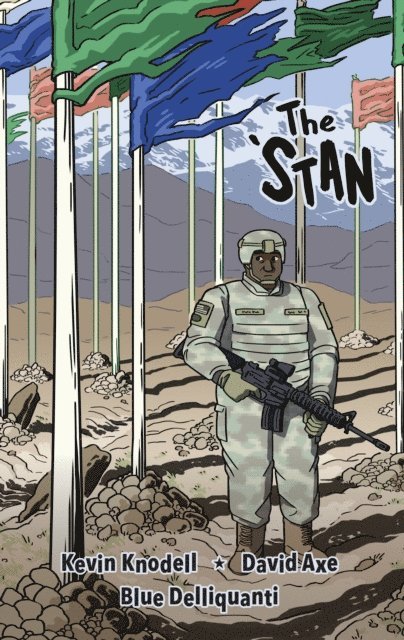
The 'Stan is a collection of short comics about America's longest war. The tales in this book--based on reporting by David Axe and Kevin Knodell and drawn by artist Blue Delliquanti—are all true and took place in roughly the first decade of the U.S. military intervention in Afghanistan. While the stories are from the recent past, The 'Stan is still very much about Afghanistan's, and America's, present. And likely future.
E-bok
Engelska, 2018120 kr
Läs direkt efter köp
The ''Stan is a collection of short comics about America''s longest war. Individual stories highlight different perspectives--one through the eyes of a Taliban ambassador and others through the eyes of Afghan and U.S. Army soldiers--but every account highlights the human element of war. The tales in this book--based on reporting by David Axe and Kevin Knodell and drawn by artist Blue Delliquanti--are all true and took place in roughly the first decade of the U.S. military intervention in Afghanistan. While the stories are from the recent past, The ''Stan is still very much about Afghanistan''s and America''s present--and likely their future.
Häftad, Engelska, 2008
357 kr
Skickas inom 5-8 vardagar
Häftad, Engelska, 2012
204 kr
Tillfälligt slut
In 2010 a 32-year-old, socially awkward, unemployed African-American Army Veteran, who had been kicked out of the service and was living with his father in the South Carolina countryside while facing federal pornography charges, spent a significant portion of his life's savings on the filing fee to run for U.S. Senate in the Democratic primary to challenge incumbent tea party kingmaker Jim DeMint. Alvin Greene didn't campaign, didn't have a website and no one knew who he was.Until he won.