David B. Weaver - Böcker
Visar alla böcker från författaren David B. Weaver. Handla med fri frakt och snabb leverans.
6 produkter
6 produkter
1 446 kr
Skickas inom 7-10 vardagar
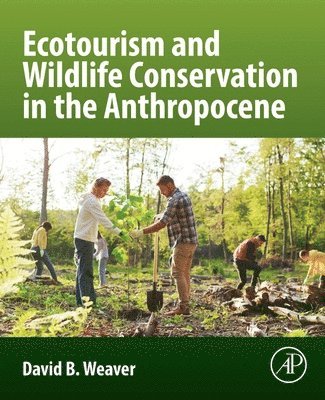
Ecotourism and Wildlife Conservation in the Anthropocene innovates by demonstrating ecotourism as an inclusive industry positioned to mobilize all people as agents of wildlife conservation. The Anthropocene and post-1950 "Great Acceleration" of human populations have dramatically altered our planet, and ecotourism is often framed as a niche activity that has limited potential to promote conservation of regional biodiversity. By showing that ecotourism as a sustainable, educational, and nature-focused activity can occur anywhere, the sector can better support the preservation and rehabilitation of diverse environments, networks, and natural communities. Accordingly, Ecotourism and Wildlife Conservation in the Anthropocene presents a cogent argument for a new management paradigm based on broader parameters of engagement. Here, all people are empowered to co-create a better future. Concurrently, the book provides practical advice for achieving this future through the examination of relevant real-world management considerations. For students and young professionals in the wildlife conservation discipline, the book conveys the growing importance of ecotourism as a vehicle for preserving and rehabilitating threatened habitats, flora, and fauna. Frequent case studies focused on Crawford Lake provide a focal point that personifies the parameters and possibilities of ecotourism in the Anthropocene and helps to integrate the comprehensive scope of this book.. Illustrates the linkages between ecotourism, biodiversity, and wildlife conservation . Demonstrates the necessity and practicality of expanding the settings and markets constituting ecotourism . Establishes an inclusive framework for global stakeholder engagement with ecotourism . Empowers local communities, businesses, and ordinary people to co-create and engage in beneficial ecotourism and conservation . Facilitates student learning with clear chapter structure, keyword definitions, discussion boxes, case studies, and chapter review questions
1 457 kr
Skickas inom 7-10 vardagar
Ecotourism is the result of increasing interest amongst consumers in developed countries in exploring the natural world as an alternative to more conventional holidays, along with a desire to reduce the environmental and cultural impact of their activities. It is, therefore, a relatively new sector of the tourism industry. This book is unique in defining, describing and analysing ecotourism in the less developed countries and its effects, in all parts of the world. The first three chapters set the broader industry context and geographical scope of the book. This is followed by country case studies on Costa Rica, Kenya, Nepal and Thailand and a chapter on the Caribbean and South Pacific. In the final chapter, the common themes and patterns which emerge are discussed with regard to strategies for future developments. This book is essential reading for lecturers, advanced students and researchers in tourism and for those actively involved in ecotourism in less developed countries. It will also be valuable to other tourism industry staff, geographers, development economists and government and regional policy makers.
1 096 kr
Skickas inom 7-10 vardagar
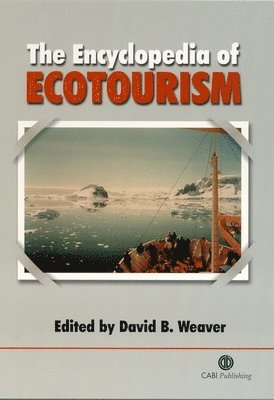
The Encyclopedia of Ecotourism provides an expert, state-of-the-art and comprehensive knowledge base of the rapidly growing global ecotourism sector. It is divided into eight major sections, and contains 41 chapters, individually authored by international researchers and practitioners in ecotourism. Each chapter combines theory and practice in a complementary way. The scope of the encyclopedia includes definitions and other contextual material, regional perspectives, venues, impacts, planning and management considerations, and issues associated with ecotourism businesses, research and training.
1 418 kr
Skickas inom 7-10 vardagar
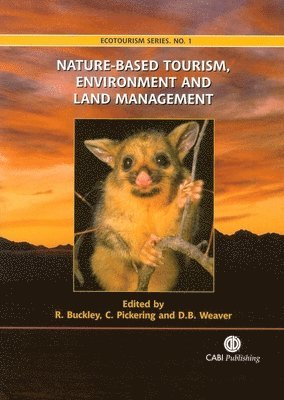
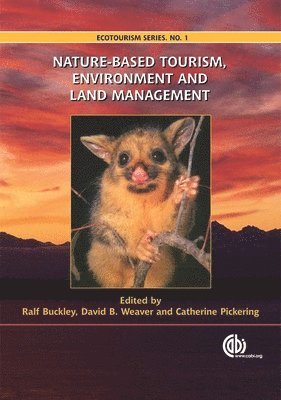
Tourism based on natural environments is a huge international industry and this industry needs access to land with scenery, native plants and wildlife. In turn, land managers need money to maintain their land and its natural resources. This book looks at the economic, social and environmental consequences of nature-based tourism. It discusses the importance of links and partnerships, as well as the conflicts,between commercial tourism interests and land management agencies. Born from the Fenner conference on Nature Tourism and the Environment, held in Canberra, Australia, 2001, the book includes selected proceedings which have been refereed and substantially revised.
1 411 kr
Skickas inom 7-10 vardagar
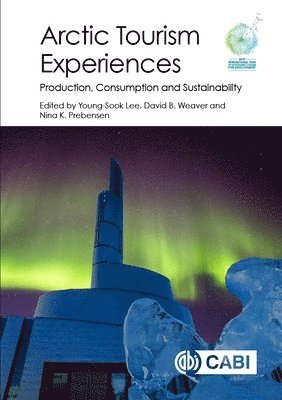
An exploration of Arctic tourism, focusing on tourist experiences and industry provision of those experiences; this is the first compilation to concentrate on the fundamental essence of the Arctic as being a geographical periphery, but also an experiential core that offers peak tourism experiences. Part 1 investigates the depth and dimensions of tourist experiences in the Arctic. Chapters examine the essence of diverse peak experiences and delve into the factors that give rise to these experiences. Part 2 considers the links between these core experiences and the tourism industry that seeks to sustain itself by facilitating such satisfying outcomes.
533 kr
Skickas inom 7-10 vardagar
Tourism based on natural environments is a significant and growing international industry, and one that requires access to land with scenery, native plants and wildlife. In turn, land managers need money to maintain their land and its natural resources. This book looks at the economic, social and environmental consequences of nature-based tourism, and its effects on land managers. It discusses the importance of links and partnerships, as well as the conflicts between commercial tourism interests and land management agencies. Now in paperback, this book will be an essential resource for tourism students, as well as researchers and industry practitioners.